Who Recognised the Dangers of Vatican II and Tried to Resist or Correct Them?
Short Answer
Yes. The controversies surrounding Vatican II were not invented decades later by traditional Catholics looking back at the Council.
During the Council itself, a significant minority of cardinals, bishops and theologians warned that important proposed formulations concerning
episcopal collegiality,
religious liberty,
ecumenism and
the liturgy
departed from, obscured, or endangered principles that the Catholic Church had previously taught.
Among the most important were
Cardinal Alfredo Ottaviani (1890–1979), Secretary of the Holy Office;
Cardinal Giuseppe Siri (1906–1989), Archbishop of Genoa;
Archbishop Marcel Lefebvre (1905–1991);
Bishop Antônio de Castro Mayer (1904–1991);
Archbishop Geraldo de Proença Sigaud (1909–1999); and
Bishop Luigi Maria Carli (1914–1986).
Several became associated with, supported, or worked alongside the Coetus Internationalis Patrum—the International Group of Fathers—which attempted to coordinate the traditional minority at the Council. Historical research identifies the Coetus as the principal organised opposition group within Vatican II.
Their resistance was not entirely unsuccessful. Objections from the minority contributed to revisions of various texts, delays in voting, and important clarifications. Most notably, the controversy over episcopal collegiality resulted in the Nota Explicativa Praevia—the Preliminary Explanatory Note—being attached to Lumen Gentium to safeguard the Pope's primacy and explain how the disputed teaching on the episcopal college was to be understood. Minority pressure also contributed to substantial reconsideration of the religious-liberty schema.
Nevertheless, the minority did not succeed in reversing the Council's overall direction.
Dignitatis Humanae ultimately declared a civil right to religious freedom grounded in the dignity of the human person;
Unitatis Redintegratio committed Catholics to participation in the ecumenical movement;
Lumen Gentium retained episcopal collegiality; and
Sacrosanctum Concilium authorised principles of liturgical reform that would subsequently be implemented much more extensively.
This distinction is essential:
the resistance changed some texts and obtained some safeguards, but it did not prevent the disputed principles from entering the final conciliar documents.
Why This Question Matters
A reader encountering traditional Catholic criticism of Vatican II might reasonably ask:
If the Council really contained serious problems, why did nobody notice them at the time?
The historical answer is that some Council Fathers noticed them immediately.
They debated them publicly.
They submitted written amendments.
They organised petitions.
They attempted to coordinate votes.
They appealed directly to Paul VI.
They warned that certain formulations were difficult to reconcile with previous Catholic teaching.
They tried to preserve the traditional understanding of papal primacy, Catholic social doctrine, missionary activity, the uniqueness of the Catholic Church and the traditional Roman liturgy.
This matters because it changes the historical question. The issue is not simply whether later traditionalists disliked the consequences of Vatican II. The more important question is:
What exactly were Catholic bishops warning about while the disputed texts were still being written—and did the subsequent history of the Church confirm any of their concerns?
That question deserves to be examined from the documentary record rather than through retrospective caricature.
What the Catholic Church Taught Before Vatican II
The Council Fathers who resisted particular innovations did not believe they were defending personal preferences. Their objections were generally based upon what they understood to be established Catholic teaching.
Three principles were especially important.
The Pope Possesses Supreme Authority Over the Universal Church
The First Vatican Council (1869–1870) solemnly defined the primacy and universal jurisdiction of the Roman Pontiff. Pope Leo XIII subsequently explained in Satis Cognitum (1896) that Christ established Peter and his successors as the visible principle of the Church's unity.
Leo XIII wrote that Christ:
“appointed Peter to be that head of the Church.”
He further explained that the Roman Pontiff possesses supreme authority over the entire Church by divine right. This was the doctrinal background against which Ottaviani, Siri, Lefebvre and others examined proposals concerning episcopal collegiality. Pope Leo XIII, Satis Cognitum (1896)
The Catholic Church Is the One Church Founded by Christ
The traditional Catholic doctrine was not that the Church of Christ was divided among several Christian denominations which together constituted Christianity. Leo XIII taught that Christ did not establish:
“several communities similar in nature, but in themselves distinct.”
Rather, Christ founded one visible Church, united in faith, government and communion.
Pope Pius XI reiterated this principle in Mortalium Animos (1928), teaching that Christian unity could not be achieved by treating separated Christian communities as components of a larger Christian whole. Pope Pius XI, Mortalium Animos (1928)
This was the doctrinal background against which some Council Fathers evaluated the new approach to ecumenism.
Civil Society Has Duties Toward the True Religion
Traditional Catholic teaching also distinguished between:
the natural freedom of the act of faith, which cannot legitimately be forced,
and
a supposed natural right to propagate religious error, which earlier Popes rejected.
Pope Leo XIII explained in Libertas Praestantissimum (1888) that civil society itself remains subject to God and that religious error does not possess rights simply because it is sincerely held.
At the same time, Catholic teaching recognised that governments could tolerate false religions when the common good required it. Leo XIII therefore distinguished toleration of religious error from recognising error as possessing an intrinsic right equal to truth. Pope Leo XIII, Libertas Praestantissimum (1888)
This distinction became central to the controversy over Dignitatis Humanae.
The Opposition Was Not One Unified Party
It would be historically inaccurate to imagine that everyone who resisted particular Vatican II proposals held identical views. They did not.
Some opposed particular formulations while ultimately accepting the Council.
Others became increasingly critical after the Council.
Archbishop Lefebvre eventually became the most internationally prominent traditionalist critic of Vatican II while continuing to recognise the postconciliar papal claimants.
Bishop de Castro Mayer eventually joined Lefebvre in resistance to postconciliar developments.
Archbishop Thục ultimately went considerably further and publicly adopted the position that the Apostolic See was vacant.
Cardinal Siri remained within the postconciliar establishment and did not become a sedevacantist.
Therefore the historical argument must not be:
“All these men were sedevacantists.”
They were not. The relevant historical point is narrower:
important members of the hierarchy recognised serious problems in the conciliar direction while Vatican II was actually taking place.
Cardinal Alfredo Ottaviani: The Most Prominent Defender of Roman Orthodoxy
Cardinal Alfredo Ottaviani (1890–1979) was one of the most important figures resisting theological innovation at Vatican II.
As Secretary of the Holy Office, he occupied the office principally responsible for safeguarding Catholic doctrine.
Ottaviani became particularly concerned about collegiality.
The question was not whether bishops possess genuine authority. Catholic doctrine had always recognised that diocesan bishops possess ordinary jurisdiction over their dioceses.
The controversy concerned whether the bishops collectively constituted, by episcopal consecration itself, a permanent college possessing supreme authority over the universal Church together with the Pope.
Ottaviani feared that imprecise formulations could weaken the unique primacy and universal jurisdiction of the Roman Pontiff.
During the debates he challenged the suggestion that episcopal collegiality in the proposed juridical sense was already established Catholic doctrine. Contemporary reporting records him warning that the theory had not been defined and questioning its scriptural basis.
His opposition was therefore not simply institutional resistance by a Roman bureaucrat.
The theological issue was fundamental:
Is supreme jurisdiction in the Church vested uniquely in Peter and his successors, or does a permanent episcopal college possess a parallel subject of supreme authority?
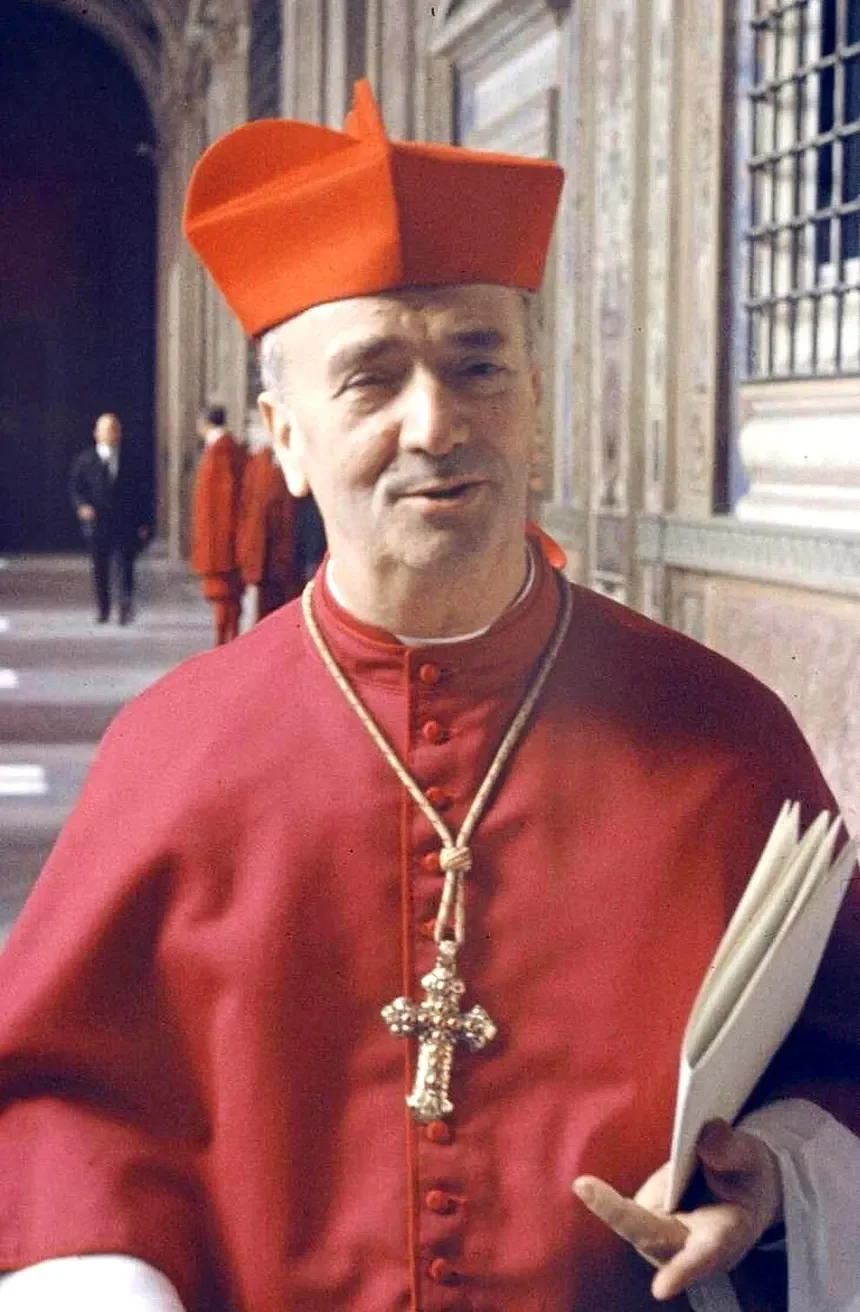
Cardinal Alfredo Ottaviani (1890–1979) — Secretary of the Holy Office and one of the most prominent defenders of traditional Catholic doctrine at Vatican II. He strongly opposed ambiguous formulations on episcopal collegiality and other proposed innovations, warning that they could weaken established Catholic teaching and papal primacy.
The Nota Praevia: A Significant Concession to the Minority
The dispute became sufficiently serious that an explanatory note was added to Lumen Gentium. This was the Nota Explicativa Praevia. The Note explicitly clarified that “college” was not to be understood as:
“a group of equals”
and insisted that the parallel between Peter and the Apostles, and between the Pope and bishops, did not imply equality between the head and members.
It further emphasised that the episcopal college cannot act independently of its head. The official text therefore demonstrates that the minority's concerns over collegiality were serious enough to require an authoritative interpretative safeguard. Lumen Gentium and the Nota Explicativa Praevia
Historical accounts of the final stages of the third session likewise record that Paul VI intervened to satisfy minority concerns, including the addition of the Nota Praevia.
What Did the Minority Achieve?
They achieved an important clarification protecting papal primacy.
What Did They Not Achieve?
They did not remove collegiality from Lumen Gentium. This distinction is essential.
The Nota Praevia restricted how collegiality could legitimately be interpreted, but the disputed concept remained embedded in the conciliar constitution.
Cardinal Giuseppe Siri: A More Complicated Figure
Cardinal Giuseppe Siri (1906–1989), Archbishop of Genoa, also recognised serious dangers in the direction of the Council.
Siri served on the Central Preparatory Commission, subsequently became a member of the Council's Presidency, and intervened repeatedly during the conciliar sessions. His concerns included the liturgy, collegiality, religious liberty, ecumenism and the relationship between Scripture and Tradition.
Siri feared that exaggerated collegiality could diminish papal primacy.
He also opposed treating religious liberty as an unrestricted right of the individual and warned against an ecumenism that might obscure the unique claims of the Catholic Church.
But Siri must be presented accurately.
He was sympathetic to many concerns associated with the traditional minority, and later scholarship identifies him among the cardinals who supported the Coetus. Yet he maintained an independent position rather than simply becoming one of its principal organisers.
More importantly, Siri did not reject Vatican II after the Council and did not become a sedevacantist.
His significance for this article is therefore not that he reached the same conclusions as Lefebvre or Thục.
His significance is that a cardinal deeply formed under Pius XII perceived serious theological dangers while the Council was occurring.
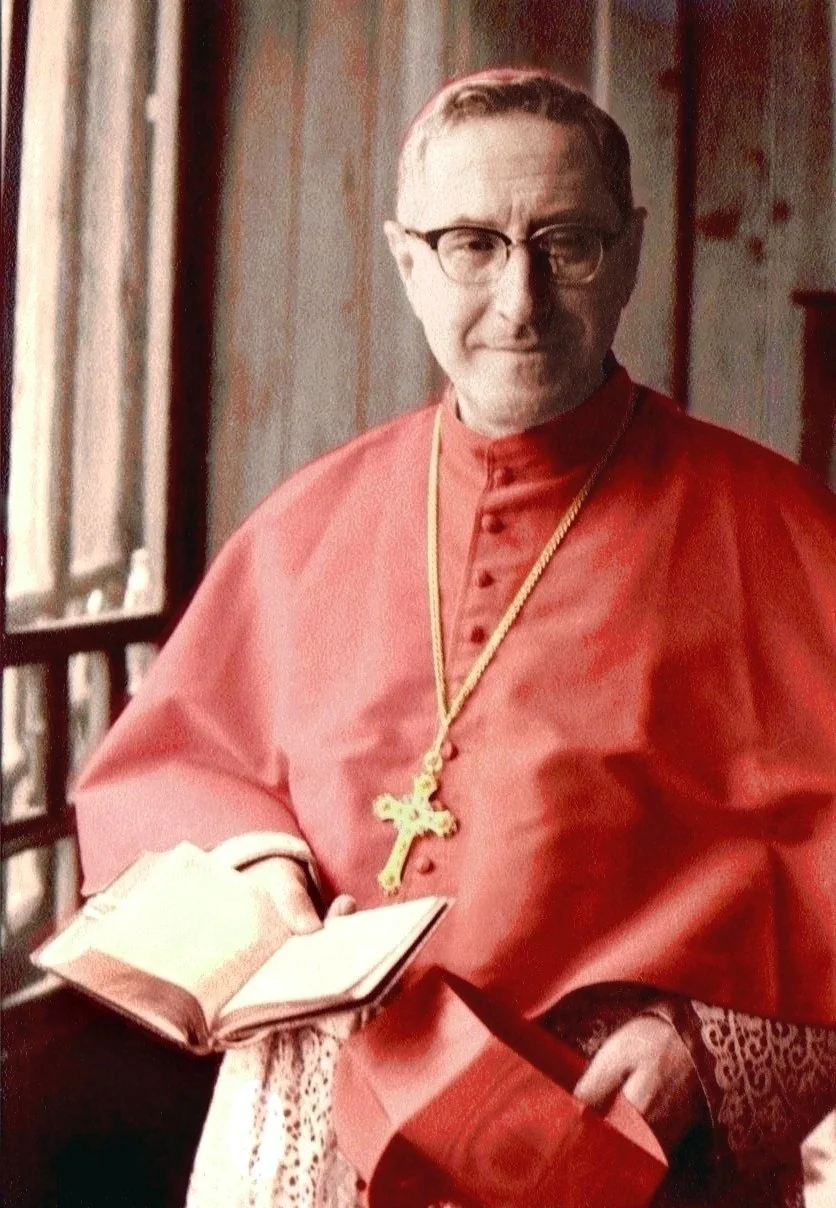
Cardinal Giuseppe Siri (1906–1989) — Archbishop of Genoa and an influential conservative voice at Vatican II. Siri raised serious concerns about episcopal collegiality, religious liberty, ecumenism and liturgical reform, fearing that ambiguous formulations could weaken papal primacy and obscure established Catholic teaching.
The Coetus Internationalis Patrum
The most important organised resistance came from the Coetus Internationalis Patrum, usually abbreviated CIP.
Its important figures included:
Archbishop Marcel Lefebvre;
Archbishop Geraldo de Proença Sigaud;
Bishop Antônio de Castro Mayer;
Bishop Luigi Maria Carli;
together with other bishops, theologians and sympathetic cardinals.
Historical research describes the Coetus as the principal organised opposition within Vatican II.
It was not merely a discussion circle.
The group established a secretariat, circulated theological studies, coordinated interventions, prepared proposed amendments or modi, organised meetings and petitions, and attempted to persuade other Council Fathers to oppose or modify problematic schemas.
Its members were particularly concerned about:
| Issue | Principal Concern |
|---|---|
| Collegiality | Possible weakening of papal primacy and creation of a second subject of supreme authority |
| Religious liberty | Replacing Catholic toleration of error with a natural civil right to religious freedom |
| Ecumenism | Risk of obscuring the necessity and uniqueness of the Catholic Church |
| Liturgy | Vernacularisation, expanded episcopal-conference authority, concelebration, Communion under both kinds and extensive liturgical alteration |
| Communism | Failure of the Council explicitly to condemn Communist ideology |
| Church and modern world | Accommodation to modern principles previously criticised by the Magisterium |
The Coetus therefore represents important historical evidence that the later traditionalist objections to Vatican II were already present inside the Council itself.
Archbishop Marcel Lefebvre
Archbishop Marcel Lefebvre (1905–1991) became one of the principal figures of the conciliar minority. He had served as Apostolic Delegate for French-speaking Africa and Archbishop of Dakar and had been appointed to the Central Preparatory Commission before Vatican II.
At the Council he became particularly concerned about collegiality and religious liberty. On 15 September 1965, speaking on the proposed declaration on religious liberty, Lefebvre argued that the schema was presenting a new conception based upon human dignity and civil equality among religions. His objection was that Catholic doctrine had traditionally distinguished between:
the rights of truth and the true religion
and
the prudent toleration of religious error for sufficient reasons of the common good.
Archbishop Lefebvre's intervention on religious liberty, 15 September 1965
This objection should be compared directly with what Dignitatis Humanae eventually declared. The Council stated:
“the human person has a right to religious freedom.”
It further declared that this right was founded:
“in the very dignity of the human person”
and was to be recognised in constitutional law as a civil right.
The document simultaneously stated that it left untouched traditional Catholic teaching concerning the duties of individuals and societies toward the true religion. That produces the precise theological question which traditional Catholic critics continue to ask:
Can the new right proclaimed in Dignitatis Humanae be reconciled with the earlier teaching of Pius IX and Leo XIII, or does it constitute a doctrinal reversal?
That question is treated separately in the FAQ article on religious liberty.
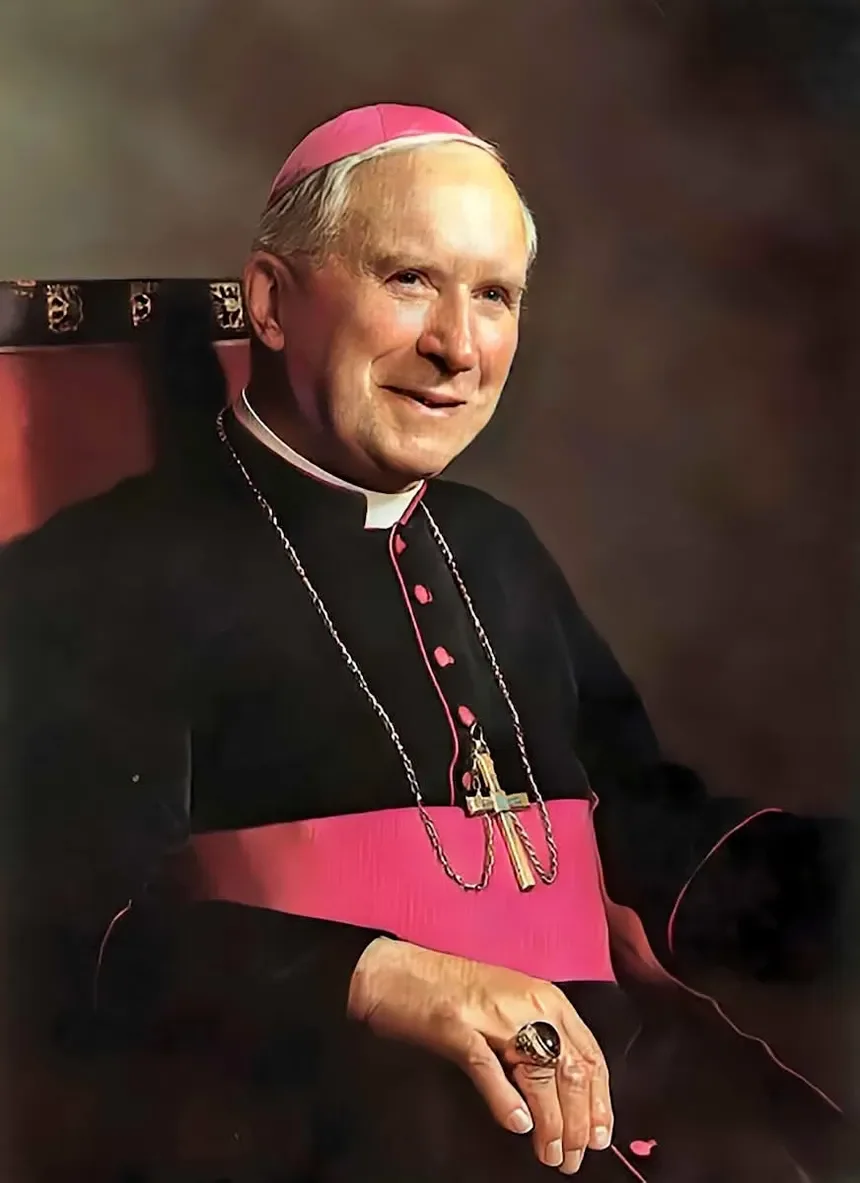
Archbishop Marcel Lefebvre (1905–1991) — Former Apostolic Delegate to French Africa and one of the leading figures of the traditional minority at Vatican II. He opposed key conciliar proposals on religious liberty and episcopal collegiality and helped organise the Coetus Internationalis Patrum to defend traditional Catholic doctrine during the Council.
Bishop Antônio de Castro Mayer
Bishop Antônio de Castro Mayer (1904–1991) of Campos, Brazil, was another important member of the traditional minority. Historical accounts describe him as deeply involved in examining the Council's schemas and preparing responses to proposals he considered incompatible with traditional theology. Vatican Radio's historical account credits him with approximately thirty conciliar interventions. His concerns included:
episcopal collegiality;
religious liberty;
the liturgical reforms;
the constitution of the Church;
and the relationship between Catholic doctrine and the modern world.
Together with Sigaud and Lefebvre, he became one of the significant figures associated with the Coetus Internationalis Patrum.
After Vatican II, de Castro Mayer continued resisting the liturgical and doctrinal transformation of Catholic life and preserved the traditional Roman Mass in his diocese for many years. His later cooperation with Lefebvre culminated in his participation in the 1988 episcopal consecrations at Écône.
But for the purposes of this article, his importance begins much earlier:
he was already opposing the disputed tendencies while the Council was still deliberating.
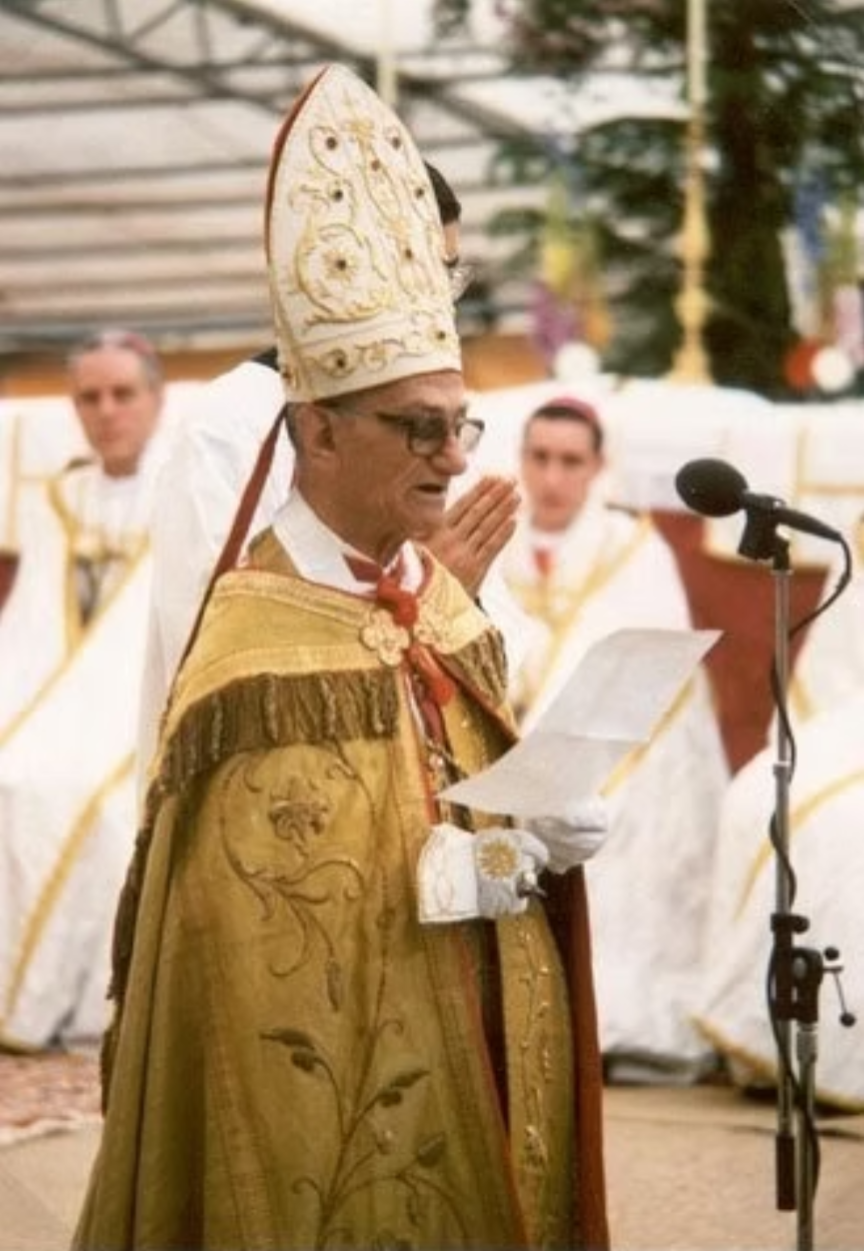
Bishop Antônio de Castro Mayer (1904–1991) — Bishop of Campos, Brazil, and a leading member of the traditional minority at Vatican II. Working closely with Archbishop Marcel Lefebvre and the Coetus Internationalis Patrum, he opposed innovations concerning religious liberty, collegiality and the liturgy, and later became a prominent defender of the traditional Roman Mass.
Archbishop Geraldo de Proença Sigaud
Archbishop Geraldo de Proença Sigaud (1909–1999) of Diamantina, Brazil, deserves mention because of his organisational importance.
Academic historical research describes him as one of the principal catalysts who brought conservative Council Fathers together to resist the dominant reforming tendencies. Sigaud worked closely with de Castro Mayer and Lefebvre in developing the Coetus.
His role illustrates an important development. At first, traditional-minded Council Fathers were numerous but comparatively uncoordinated. The progressive theological networks were generally better organised.
The Coetus represented an attempt to correct that imbalance by circulating documentation, coordinating interventions and encouraging bishops to vote together on particularly serious questions.
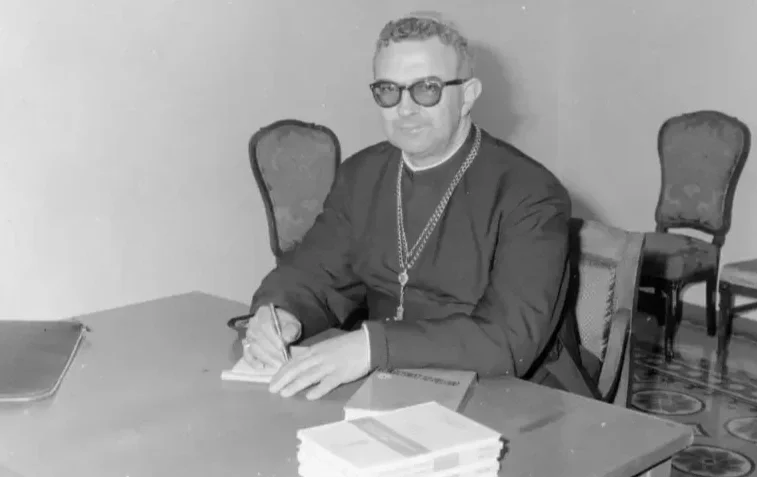
Archbishop Geraldo de Proença Sigaud (1909–1999) — Archbishop of Diamantina, Brazil, and a key organiser of the traditional minority at Vatican II. He worked closely with Archbishop Lefebvre and Bishop de Castro Mayer in the Coetus Internationalis Patrum, coordinating efforts to resist or amend conciliar proposals they believed endangered traditional Catholic doctrine.
Bishop Luigi Maria Carli and Other Important Fathers
Bishop Luigi Maria Carli (1914–1986) of Segni was another significant figure associated with the Coetus. He intervened particularly on ecclesiology and collegiality.
Other Council Fathers—including Cardinals Ernesto Ruffini, Arcadio Larraona, Michael Browne, and others—also resisted various innovations.
Not every conservative Council Father belonged formally to the Coetus, and historians should not artificially turn the entire minority into a single organised faction. What can be documented is that a substantial network of bishops and cardinals shared concerns about particular conciliar proposals and sometimes coordinated their efforts.
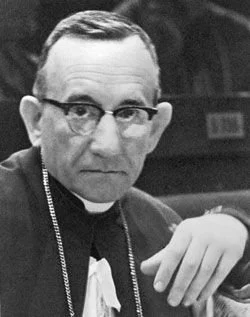
Bishop Luigi Maria Carli (1914–1986) — Bishop of Segni, Italy, and an active member of the traditional minority at Vatican II. Associated with the Coetus Internationalis Patrum, he intervened particularly on questions of ecclesiology and episcopal collegiality, seeking to safeguard papal primacy and traditional Catholic teaching.
What Did They Object to in the Liturgy?
The liturgical controversy began before the later Novus Ordo Missae of 1969 existed. The Council Fathers were debating Sacrosanctum Concilium, not the final form of the later Novus Ordo. Traditional-minded Fathers expressed concerns regarding:
extensive vernacularisation;
increased liturgical authority for episcopal conferences;
concelebration;
Communion under both kinds;
alteration of sacramental rites;
simplification of the Divine Office;
and the danger that extensive experimentation could weaken liturgical unity.
Historical research into the Coetus identifies precisely these issues among the principal objections raised by its members and sympathisers.
Yet Sacrosanctum Concilium declared that the Council saw:
“particularly cogent reasons for undertaking the reform and promotion of the liturgy.” Sacrosanctum Concilium
The later question—whether the postconciliar reform faithfully implemented Sacrosanctum Concilium or went substantially beyond it—is a separate historical and theological question.
It should not be confused with the narrower fact that concerns about the direction of liturgical reform already existed during Vatican II.
What Did They Object to in Ecumenism?
The traditional doctrine taught that Christ founded one Church, and that Christian unity ultimately required those separated from Catholic unity to enter or return to that Church.
Pius XI had warned against forms of inter-Christian activity that appeared to place the Catholic Church alongside other Christian bodies as though all were components of a divided Christianity. Yet Unitatis Redintegratio described the modern ecumenical movement positively and instructed Catholics to participate actively and intelligently in it.
It spoke of separated Christians as “brethren” and allowed, under specified circumstances, common prayer. Unitatis Redintegratio
The document also explicitly rejected false irenicism and insisted that Catholic doctrine must be presented completely.
That qualification should not be omitted. The controversy is therefore not properly represented as:
“Vatican II said all religions are the same.”
It did not. The more precise traditional objection is that Vatican II introduced a new conception and method of ecumenical engagement which critics believed obscured the earlier Catholic model of conversion and return to the one Church.
What Did the Minority Actually Accomplish?
Their resistance was neither completely successful nor completely futile.
Collegiality
They helped force clarification through the Nota Explicativa Praevia.
This was a significant achievement. But collegiality remained.
Religious Liberty
Their opposition delayed the schema and contributed to repeated revisions. Historical research indicates that the text underwent numerous rewritings and that minority resistance materially influenced its final form.
But the fundamental proposition remained:
religious freedom was declared a civil right grounded in human dignity.
Ecumenism
Minority concerns contributed to modifications during the final stages of drafting. Paul VI himself intervened during the final week of the third session and amendments were introduced.
But the Council's commitment to the ecumenical movement remained.
Liturgy
The minority failed to prevent the opening toward extensive liturgical reform.
Communism
The Coetus repeatedly sought an explicit conciliar condemnation of Communism. Its efforts did not result in the explicit condemnation it wanted.
The overall pattern is therefore clear:
the minority could sometimes moderate wording, insert safeguards, delay votes or obtain amendments, but it could not reverse the Council's fundamental direction.
What About Archbishop Pierre Martin Ngô Đình Thuc?
Archbishop Pierre Martin Ngô Đình Thục (1897–1984) requires separate treatment. He was a Council Father and attended Vatican II, but the documentary evidence does not justify presenting him as one of the principal leaders of the organised conciliar resistance alongside Lefebvre, Sigaud, de Castro Mayer and Carli.
His significance becomes much greater after Vatican II. Thục's later actions show that he eventually concluded that the crisis had reached the question of the papal office itself. By the early 1980s he had associated himself with explicitly sedevacantist conclusions and performed episcopal consecrations intended to preserve traditional Catholic episcopal succession.
A 1983 notification of the Congregation for the Doctrine of the Faith records that Thục had issued a declaration dated 25 February 1982 asserting that the Apostolic See was vacant. The same Roman documentation records episcopal consecrations performed by him without papal mandate.
This does not prove merely by itself that Thục's theological conclusion was correct. Nor should his later position be projected backwards as though he had publicly adopted sedevacantism during Vatican II.
His importance is different. Thục represents one of the bishops who eventually concluded that the postconciliar crisis could not adequately be explained merely as:
a good Pope implementing a good Council badly.
He ultimately believed the problem concerned the identity and authority of the postconciliar hierarchy itself. That larger question is examined in the later FAQ articles on public heresy, membership in the Church, ecclesiastical office and sedevacantism.
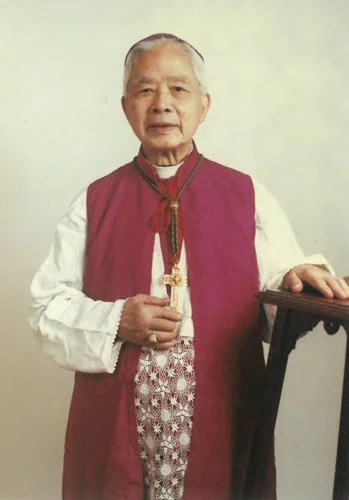
Archbishop Pierre Martin Ngô Đình Thục (1897–1984) — Vietnamese archbishop and Council Father at Vatican II who later became a significant figure in the traditionalist crisis. By 1982 he publicly declared the Apostolic See vacant and performed episcopal consecrations intended to preserve traditional Catholic episcopal succession.
From Conciliar Resistance to the Deeper Question
This reveals an important historical progression.
| Stage | Question |
|---|---|
| During Vatican II | Are these proposed formulations compatible with traditional Catholic doctrine? |
| Final Council sessions | Can amendments and safeguards make the texts acceptable? |
| Early postconciliar period | Are later developments merely abuses, or do they flow from principles within the Council? |
| Liturgical revolution | Can the transformation of Catholic worship be reconciled with the Church's traditional liturgical theology? |
| Doctrinal developments | Can religious liberty, ecumenism and the new ecclesiology be reconciled with the previous Magisterium? |
| Recognise-and-resist response | Can Catholics recognise the hierarchy while systematically resisting its teaching, laws and worship? |
| Sedevacantist question | If public departure from the Catholic Faith becomes institutional and universal, what does traditional Catholic theology say about Church membership and ecclesiastical office? |
The last conclusion does not automatically follow merely because Ottaviani objected to collegiality or Lefebvre opposed religious liberty. Each theological step must be established separately. But historically, the progression explains why the sedevacantist question eventually arose.
The Main Objection
The strongest objection is straightforward.
Vatican II was an ecumenical council approved by Paul VI and accepted by the overwhelming majority of Catholic bishops.
The Council repeatedly affirmed traditional Catholic principles.
Dignitatis Humanae expressly stated that it left untouched traditional Catholic doctrine concerning the duties of men and societies toward the true religion.
Unitatis Redintegratio rejected false irenicism.
Lumen Gentium affirmed papal primacy.
The Nota Praevia explicitly safeguarded the Pope's supreme authority.
Therefore, the argument continues, the objections of Ottaviani, Lefebvre and the Coetus demonstrate nothing more than legitimate theological debate during the drafting process. Once the final texts were clarified and promulgated, Catholics were entitled to interpret them according to continuity with previous teaching.
This is the strongest form of the hermeneutic of continuity argument.
Response
The existence of qualifying language certainly matters and must not be concealed. But neither does it settle the historical or theological question. The proper method is to compare the texts.
For example:
Leo XIII: civil society has duties toward the true religion and error does not possess rights merely because it is sincerely held.
Dignitatis Humanae: the human person possesses a civil right to religious freedom grounded in human dignity, even when he fails in his obligation to seek and embrace religious truth.
Likewise:
Pius XI: Christian unity is found by entering the one Church of Christ.
Vatican II: Catholics are instructed to participate in an ecumenical movement involving dialogue, cooperation and, under specified conditions, common prayer with separated Christians.
The question therefore cannot be answered merely by saying:
“Vatican II must be interpreted traditionally.”
The question is whether the actual propositions can in fact be reconciled with the previous Magisterium without changing the meaning of either the earlier or later teaching.
That comparison belongs in the dedicated FAQ articles on each disputed doctrine. The importance of the present article is more limited but historically significant:
the apparent difficulty was recognised before the Council documents had even been promulgated.
What We Can and Cannot Conclude
What We Can Establish Historically
Cardinal Ottaviani opposed formulations concerning collegiality and other innovations.
Cardinal Siri expressed serious concerns regarding collegiality, liturgical change, religious liberty and ecumenism.
Archbishop Lefebvre publicly opposed the proposed doctrine of religious liberty.
Bishop de Castro Mayer and Archbishop Sigaud actively participated in the conciliar minority.
The Coetus Internationalis Patrum organised resistance to several major conciliar schemas.
Its members submitted interventions, amendments, petitions and voting recommendations.
Minority resistance materially affected some texts.
The Nota Explicativa Praevia was added to clarify collegiality.
The religious-liberty schema was delayed and repeatedly revised.
Nevertheless, collegiality, religious liberty, ecumenism and liturgical reform remained in the final conciliar texts.
Archbishop Thục later publicly adopted a sedevacantist conclusion, but he should not retrospectively be portrayed as one of the principal leaders of the organised traditional opposition during Vatican II.
What These Facts Do Not Establish by Themselves
They do not by themselves prove that every Vatican II document is heretical.
They do not prove that every Council Father understood the disputed passages identically.
They do not prove that every later liturgical abuse was explicitly demanded by Vatican II.
They do not establish that Ottaviani, Siri, Lefebvre, de Castro Mayer and Thục ultimately held identical theological positions. They did not.
Nor does the existence of opposition by respected bishops by itself prove sedevacantism.
The sedevacantist conclusion requires a separate theological argument concerning:
the nature and indefectibility of the Church;
papal authority;
heresy;
Church membership;
ecclesiastical jurisdiction;
public profession of the Catholic Faith;
and the consequences of public defection from that Faith.
Those questions must be established from traditional Catholic theology rather than inferred merely from the fact that Vatican II encountered opposition.
Conclusion
The claim that serious objections to Vatican II appeared only decades later is historically untenable.
The warnings were already being given inside St Peter's while the Council was taking place.
Cardinal Ottaviani warned about collegiality and doctrinal innovation.
Cardinal Siri feared that collegiality, religious liberty, ecumenism and liturgical experimentation could undermine established Catholic principles.
Archbishop Lefebvre challenged religious liberty and collegiality.
Bishop de Castro Mayer, Archbishop Sigaud, Bishop Carli and others worked through the Coetus Internationalis Patrum to organise resistance, submit amendments and influence votes.
They achieved some important modifications. The Nota Explicativa Praevia is perhaps the clearest example. But they did not succeed in stopping the larger transformation.
Religious liberty remained.
Collegiality remained.
The new ecumenical orientation remained.
The programme of liturgical reform remained.
The years following Vatican II therefore raised a still more serious question. If these developments were merely isolated ambiguities, they might have been corrected. But if the disputed principles became embedded in the teaching, worship, discipline and institutional life of the postconciliar Church, the question ceased to be merely:
“Were there problems at Vatican II?”
It became:
“What happens when Catholics find themselves apparently required to accept doctrines, disciplines and worship which they believe conflict with the Catholic Faith previously taught by the Church?”
Lefebvre answered that question through organised resistance while continuing to recognise the postconciliar papal claimants.
Thục eventually reached the conclusion that the Apostolic See itself was vacant.
The next stage of the enquiry must therefore move beyond personalities. The decisive question is not whether Ottaviani, Siri, Lefebvre, de Castro Mayer or Thục personally sensed that something was wrong.
The decisive question is:
Were their objections objectively justified when the texts of Vatican II are compared with the Catholic teaching that preceded them?
That is the question the following articles must examine document by document.
Primary Sources
Pope Leo XIII, Libertas Praestantissimum, 20 June 1888
Traditional Catholic teaching concerning human liberty, religious liberty, civil society and the rights of truth. Read the text
Pope Leo XIII, Satis Cognitum, 29 June 1896
On the unity, visibility and government of the Catholic Church and the primacy of Peter. Read the text
Pope Pius XI, Mortalium Animos, 6 January 1928
Traditional Catholic teaching concerning Christian unity and ecumenical activity. Read the text
Pope Pius XII, Mystici Corporis Christi, 29 June 1943
On the Mystical Body of Christ and the Catholic Church. Read the text
Second Vatican Council, Sacrosanctum Concilium, 4 December 1963
The conciliar constitution initiating the programme of liturgical reform. Read the text
Second Vatican Council, Lumen Gentium, 21 November 1964
Including the teaching on episcopal collegiality and the Nota Explicativa Praevia. Read the text
Second Vatican Council, Unitatis Redintegratio, 21 November 1964
The Council's decree on ecumenism. Read the text
Second Vatican Council, Dignitatis Humanae, 7 December 1965
The Council's declaration on religious liberty. Read the text
Archbishop Marcel Lefebvre, Intervention on Religious Liberty, 15 September 1965
One of Lefebvre's documented conciliar objections to the proposed doctrine of religious freedom. Read the intervention
Further Reading
Philippe Roy-Lysencourt, studies of the Coetus Internationalis Patrum
Roy-Lysencourt's archival research is particularly useful for distinguishing what the Coetus actually did from later traditionalist reconstructions of its activities.
Rodrigo Coppe Caldeira, studies of Archbishop Geraldo de Proença Sigaud and the Coetus Internationalis Patrum
Useful academic historical research on the organisation and activity of the conciliar minority.
These sources should be read alongside the Council documents themselves. The strongest case does not depend upon speculation concerning secret motives. It depends upon comparing what the Church taught before Vatican II with what Vatican II actually promulgated.
Related Questions
What Did the Catholic Church Teach Before Vatican II?
What Actually Happened at Vatican II?
Did Vatican II Change Catholic Teaching on Religious Liberty?
Did Vatican II Change Catholic Teaching on Ecumenism?
Did Vatican II Change the Catholic Doctrine of the Church?
How Did Vatican II Prepare the Way for the Liturgical Revolution?
Can Catholics Recognise a Man as Pope While Habitually Resisting His Teaching, Laws and Worship?
Does Public Heresy Separate a Person From the Church and Prevent Him From Holding Ecclesiastical Office?