Were There Attempts to Infiltrate or Weaken the Church Before Vatican II?
Short Answer
Yes. Long before the Second Vatican Council, the Catholic Church repeatedly warned that organised movements were attempting not merely to criticise Catholicism from outside, but to weaken its influence, spread principles contrary to the Faith, undermine Christian society and, in some cases, penetrate Catholic institutions themselves.
This is not dependent upon modern “conspiracy theories.”
Popes from Clement XII through Pius XII confronted Freemasonry and related secret societies, revolutionary anti-clerical movements, Modernism operating within Catholic circles, and atheistic Communism.
Pope Leo XIII (1810–1903) described Freemasonry as an organised adversary of the Church.
Pope St Pius X (1835–1914) warned that Modernism had adherents within the Church itself.
Pope Pius XI (1857–1939) warned explicitly that Communists attempted to penetrate even Catholic and religious organisations. These are matters of documentary record.
There are also more controversial historical claims.
The Permanent Instruction of the Alta Vendita, associated with the nineteenth-century Carbonari, describes a long-term strategy of influencing the clergy and eventually producing a generation imbued with revolutionary principles.
Other claims concern Freemasonic influence upon individual churchmen, Communist infiltration of seminaries, intelligence activity surrounding the Vatican, and irregularities at the conclave of 1958.
These matters must not all be placed on the same evidentiary level. Some are established historical facts. Some rest upon substantial but incomplete evidence. Others remain disputed historical claims.
Most importantly, the Catholic case concerning the post-Vatican II crisis does not depend upon proving that a secret organisation successfully engineered Vatican II. Public doctrine, legislation, liturgical reform and ecclesiastical practice can be compared directly with what the Catholic Church taught and practised beforehand.
The more careful question is therefore not:
“Can we prove one enormous conspiracy explaining everything?”
It is:
“Were there identifiable movements before Vatican II that deliberately sought to weaken, penetrate or transform the Catholic Church?”
To that more precise question, the historical answer is clearly yes.
Why This Question Matters
A person encountering the crisis in Catholicism after Vatican II may naturally ask:
How could such an enormous transformation occur?
The Church entering the twentieth century had repeatedly condemned
religious indifferentism,
naturalism,
Liberalism,
Modernism,
Communism and
the religious principles associated with Freemasonry.
Yet within several decades of Vatican II, Catholics encountered radically altered attitudes towards
religious liberty,
ecumenism,
non-Catholic religions,
relations with secular states and
liturgical worship.
This naturally raises another question:
Did these ideas simply appear spontaneously during the 1960s, or had forces promoting them been working for generations?
History shows that many of the intellectual currents that later became important did indeed long predate Vatican II.
Similarity between an earlier revolutionary programme and a later ecclesiastical development does not automatically prove direct causation.
If a nineteenth-century revolutionary predicted that Catholicism would eventually accommodate religious pluralism, and something resembling that later occurred, the resemblance deserves examination—but resemblance alone does not prove that the revolutionary organisation caused the later change. The strongest case therefore proceeds from what can actually be demonstrated.
The Church Herself Warned of Organised Enemies
The idea that organised forces were attempting to undermine Catholicism was not invented by twentieth-century traditionalists. The Popes themselves repeatedly warned of it.
Clement XII and the First Condemnation of Freemasonry
In 1738, Pope Clement XII (1652–1740) issued In Eminenti Apostolatus Specula, condemning Freemasonry. The condemnation was subsequently renewed by Benedict XIV, Pius VII, Leo XII, Pius VIII, Gregory XVI, Pius IX and later Popes.
Leo XII's Quo Graviora (1825) reproduced earlier condemnations and dealt not only with Freemasonry but also with the Carbonari, another secret revolutionary organisation active particularly in Italy.
The Vatican's historical text records that the Carbonari were considered at least an offshoot or imitation of societies already condemned by the Church.
This establishes an important point. The conflict between the Catholic Church and secret revolutionary societies was real historical conflict, not a retrospective invention.
Pius IX and Secret Societies
Pope Pius IX (1792–1878) continued these warnings. In Qui Pluribus (1846), he spoke of secret societies seeking to corrupt both the religious and civil order and explicitly reaffirmed earlier papal condemnations.
The nineteenth century was a period of enormous political upheaval.
The Papal States themselves were attacked.
Revolutionary movements sought the transformation of Europe's confessional political order.
Anti-clerical governments confiscated ecclesiastical property, suppressed religious orders and attempted to reduce the Church's influence upon education and public life.
Consequently, when nineteenth-century Popes spoke about organised enemies of the Church, they were frequently responding to movements whose existence and activities were public historical realities.
Leo XIII and Freemasonry
The most important papal treatment is Pope Leo XIII's Humanum Genus, promulgated on 20 April 1884.
Leo XIII described the struggle in fundamentally spiritual terms:
two opposing kingdoms—one ordered towards God and His law,
the other towards rebellion against God.
He then identified Freemasonry as one of the principal organised manifestations of this conflict in contemporary society.
Importantly, Leo did not base his judgment merely upon rumours. He wrote that the nature of the Masonic movement had become known through its actions, laws, rites, publications and testimony from persons acquainted with its internal workings. He also explained that different organisations might possess different names and structures while nevertheless sharing fundamental principles and objectives.
The central conflict concerned such matters as:
religious naturalism;
religious indifferentism;
secularisation of society;
separation of public life from Catholic truth;
weakening Christian education;
rejection of the Church's authority;
and the reconstruction of society upon principles independent of divine revelation.
This matters enormously for understanding later Catholic history. The papal objection to Freemasonry was not simply that Masons held secret meetings. It was principally doctrinal and philosophical.
The Church opposed the principles upon which the movement sought to reconstruct society.
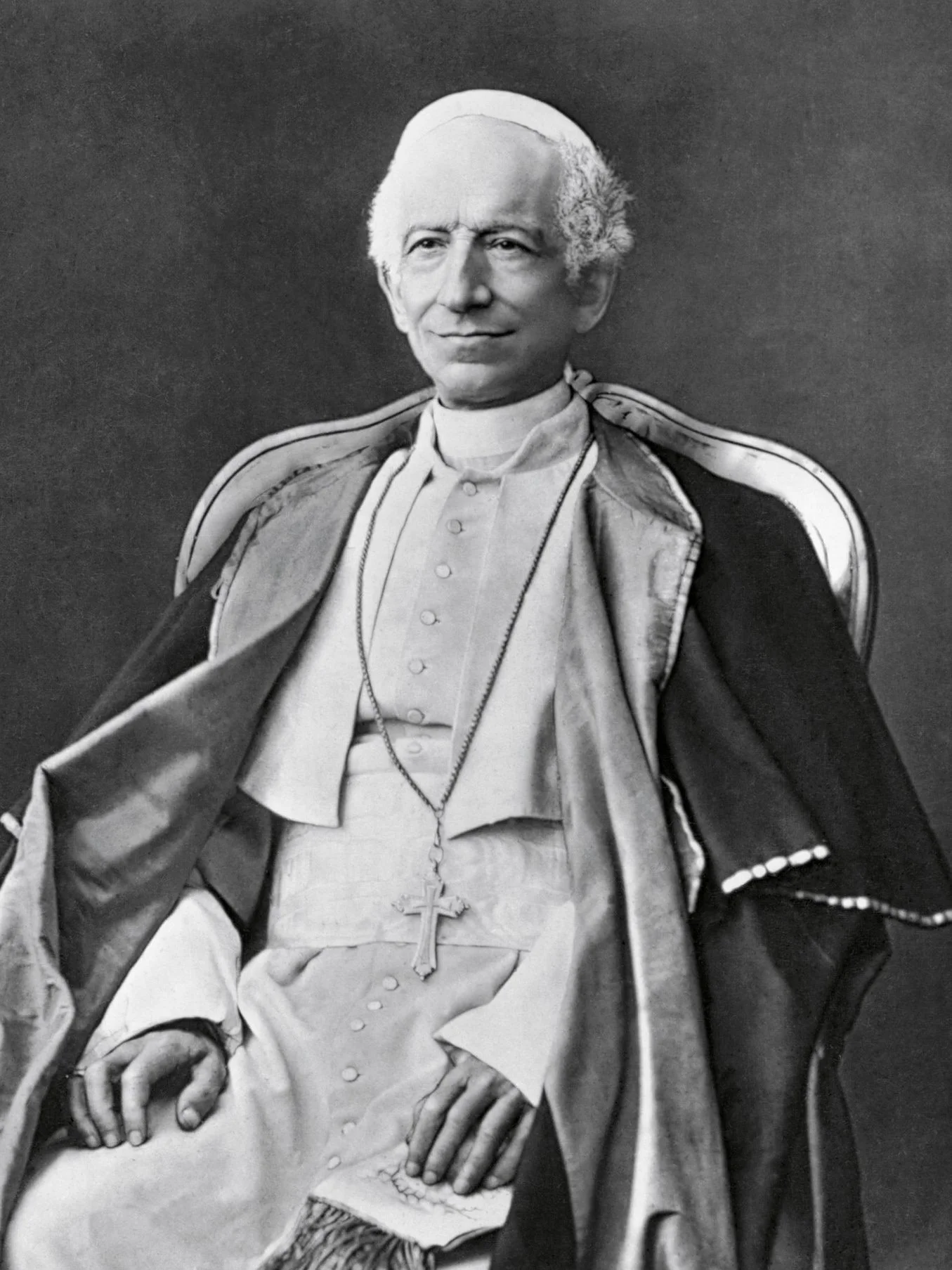
Pope Leo XIII, whose 1884 encyclical Humanum Genus presented one of the Church’s most extensive papal condemnations of Freemasonry, identifying its naturalism, religious indifferentism and secularising programme as fundamentally opposed to the Catholic order. Leo explicitly described Freemasonry as a widespread organised movement acting against the Church.
The Alta Vendita: A Programme for Transformation From Within
Among the most striking documents associated with nineteenth-century revolutionary secret societies is the Permanent Instruction of the Alta Vendita.
The Alta Vendita was associated with the Carbonari milieu condemned by the Church. The documents became publicly known during the nineteenth century and were published by the Catholic historian Jacques Crétineau-Joly in L'Église romaine en face de la Révolution (1859–1860).
Crétineau-Joly, L'Église romaine en face de la Révolution
The version supplied for this article describes papers said to have come into ecclesiastical possession during the pontificate of Gregory XVI and subsequently to have been published by Crétineau-Joly.
The document is remarkable because the proposed strategy is not primarily to recruit an openly Masonic pope. It envisages something subtler. The objective is to influence the intellectual environment in which future clergy are formed.
The text speaks of gaining access to young clergy and monasteries so that, over time, a new generation would rise through ecclesiastical positions and eventually participate in selecting a pontiff.
The strategy might therefore be summarised as:
influence ideas → influence formation → influence clergy → influence future bishops and cardinals → eventually obtain an ecclesiastical leadership naturally sympathetic to revolutionary principles
That distinction is important. The document does not simply imagine a secret Mason putting on a cassock and fraudulently becoming Pope. Rather, it envisages
“changing the intellectual climate so thoroughly that churchmen themselves eventually absorb principles originating outside Catholic tradition.”
The Instruction famously envisages a future “revolution in tiara and cope”—a transformation appearing to proceed under Catholic forms while carrying revolutionary ideas into ecclesiastical life.
How Much Does the Alta Vendita Prove?
The document provides evidence of a revolutionary programme or aspiration.
It does not, by itself, prove that the programme succeeded.
Still less does it prove that every later Catholic churchman advocating Liberalism, Modernism, ecumenism or religious liberty was secretly a Freemason.
Three separate propositions must not be confused:
A revolutionary programme existed.
Ideas resembling parts of that programme subsequently entered Catholic intellectual circles.
The programme directly caused those later developments.
The evidence for the first proposition is substantially stronger than the evidence required to establish the third. That distinction makes the historical argument more credible, not less.
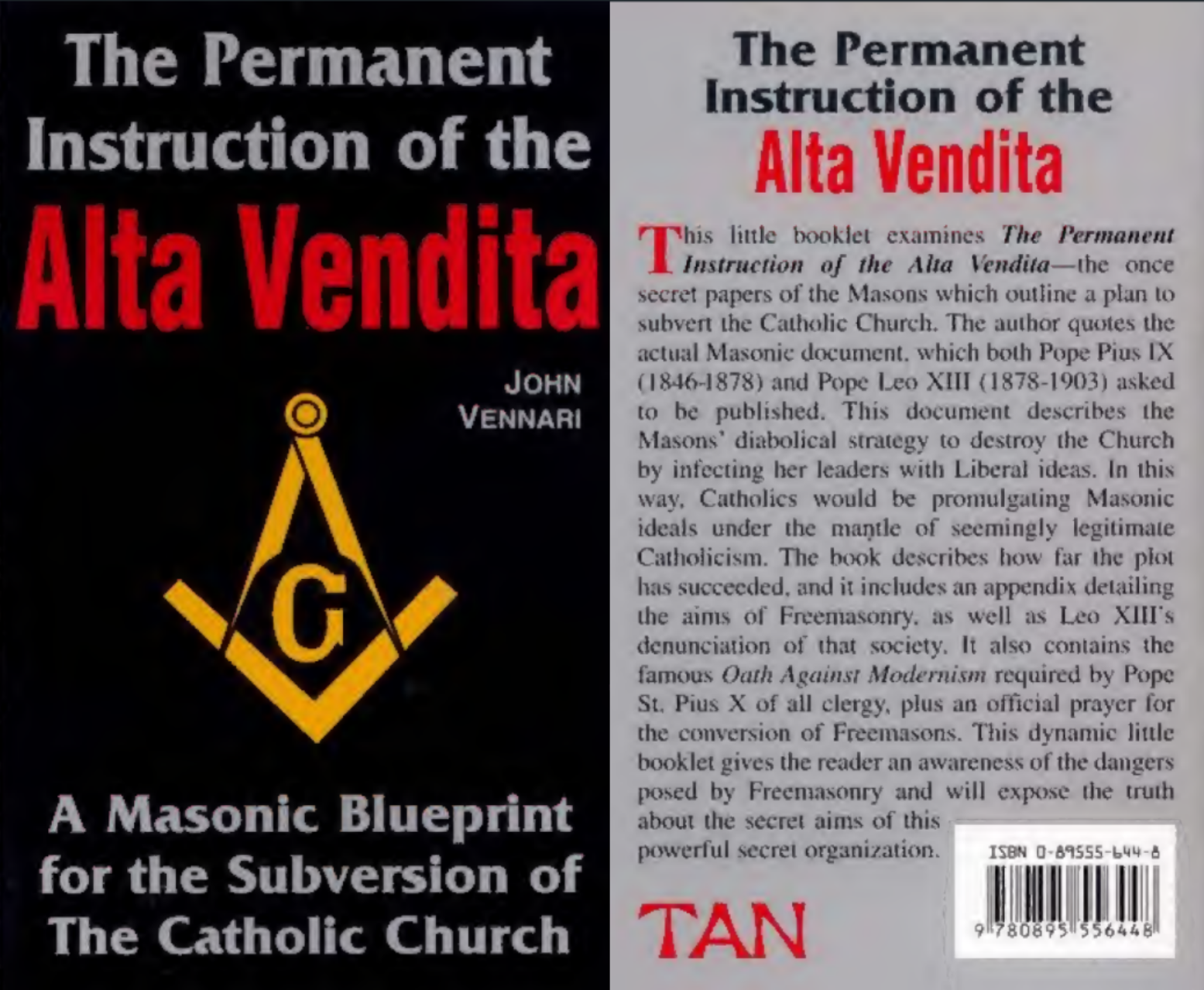
The Alta Vendita — A nineteenth-century revolutionary document associated with the Carbonari milieu, describing a long-term strategy of influencing Catholic clergy and institutions so that revolutionary principles might eventually advance from within the Church itself. Its historical significance should be distinguished from later claims about how fully such a programme was actually implemented.
The More Serious Problem: Ideas Entering the Church
There is another form of infiltration that is much easier to demonstrate historically. It does not require proving membership in a secret society.
Ideas can penetrate an institution even when the people adopting them have never belonged to the organisation from which those ideas originated.
This becomes particularly important with Modernism.
St Pius X: The Enemy Was Already Within
In 1907, Pope St Pius X issued Pascendi Dominici Gregis against Modernism.
His concern was not principally with external enemies. Modernist ideas had appeared among Catholics themselves. Modernism attempted to reinterpret revelation, dogma, Scripture and ecclesiastical authority through philosophical assumptions radically different from traditional Catholic theology.
Pius X described Modernists operating within Catholic intellectual life and warned of their efforts to weaken confidence in Tradition and the Magisterium. Whatever one concludes about Freemasonic infiltration, the existence of internal doctrinal subversion through Modernism does not depend upon a conspiracy theory at all.
The Pope himself identified it. Modernism could therefore accomplish internally something analogous to what external revolutionary movements desired:
Catholic terminology could remain while the meaning attached to it gradually changed.
This subject is examined more fully in:
Related Question: What Was Modernism, and Why Did the Church Condemn It?
Communism: An Openly Anti-Christian Adversary
The second major organised threat came from Communism. Marxist Communism was explicitly materialist and atheistic.
After the Bolshevik Revolution of 1917, hostility towards Christianity was no longer merely theoretical. Communist regimes confiscated Church property, closed religious institutions, persecuted clergy and attempted to replace Christian belief with atheistic ideology.
Pope Pius XI's Divini Redemptoris (1937) provides particularly important evidence. He described international Communist propaganda as highly organised and directed from a common centre. He referred to organisations, publications, cinema, radio, educational institutions and trained activists being used to disseminate Communist ideas.
More significantly for our present question, Pius XI warned that Communist organisations attempted to enter environments that would otherwise reject Communism. He specifically described attempts to penetrate even Catholic and religious organisations, sometimes under humanitarian or charitable pretexts. That is an explicit pre-Vatican II papal warning about infiltration.
Pius XI, Divini Redemptoris (1937)
Communist Governments Also Tried to Control Catholic Clergy
Historical documentation after the Second World War shows that Communist governments did more than persecute Catholicism openly. They also attempted to control, divide or neutralise the Church internally.
In Communist Czechoslovakia, for example, the regime exerted state control over clergy, imprisoned resistant churchmen, suppressed religious orders and established organisations of regime-friendly “patriotic priests.”
A later declassified CIA country study records the creation of the Catholic Clergy for Peace as a Communist-backed front and describes the state's efforts to control clerical appointments and remove resistant priests.
In Poland, American diplomatic records described government propaganda aimed at weakening the Church and discrediting its connection with Rome.
In 1944, an American diplomatic memorandum even recorded a Soviet-associated journalist discussing the usefulness of a state-controlled Orthodox structure as a means of countering Vatican influence.
None of this proves that Moscow secretly controlled the Vatican. It proves something narrower but important:
Communist governments demonstrably regarded organised religion—and particularly the Catholic Church—as a strategic adversary and used political, propaganda and institutional methods against it.
Pius XII and the Open Conflict With Communism
Under Pope Pius XII (1876–1958) the conflict became unmistakable. In 1949 the Holy Office issued its well-known decree concerning Communism. Contemporary U.S. diplomatic correspondence records Vatican officials explaining that Communism and Catholicism were irreconcilable and that the decree could intensify persecution behind the Iron Curtain.
The historical record therefore gives us no reason to imagine that Communist hostility towards Catholicism was invented later by traditionalists. It was openly recognised by both sides.
What About Western Governments and Intelligence Agencies?
The Vatican was also inevitably an object of interest to Western governments and intelligence services. This should not be surprising.
By the mid-twentieth century the Catholic Church was a worldwide institution with enormous influence, particularly in Italy, France, Germany, Poland, Latin America and other strategically important regions.
The Cold War made the Vatican geopolitically significant. American diplomatic records explicitly discussed the Vatican's role in resistance to Communism. In 1951, for example, the United States described the Vatican as vigorously engaged in the struggle against Communism when explaining the proposed establishment of formal diplomatic representation. This demonstrates political and intelligence interest in Vatican affairs.
It does not automatically establish covert control over papal elections, bishops or Catholic doctrine. Again the evidentiary distinction is essential:
diplomatic interest — documented
intelligence collection — historically unsurprising and in various contexts documented
covert manipulation of particular ecclesiastical decisions — requires evidence for each particular claim
control of the Catholic Church — not established merely by the existence of intelligence interest
Read “Former FBI Consultant Claims: U.S. Intel Docs show Cardinal Siri elected Pope Gregory XVII in 1958.”
The 1958 Conclave and Cardinal Siri
One of the most persistent claims concerns the conclave following the death of Pope Pius XII on 9 October 1958. The conclave officially elected Cardinal Angelo Giuseppe Roncalli as John XXIII on 28 October 1958.
But something unusual happened two days earlier.
What Is Documented
On 26 October 1958, smoke emerging from the Sistine Chapel was interpreted as white. Contemporary observers believed that a Pope had been elected. Vatican Radio reportedly announced that the smoke was white and that there appeared to be no doubt that an election had occurred.
No Pope appeared. The signal was subsequently treated as an error, and the conclave continued.
Contemporary newspaper reporting confirms that there was genuine confusion over the smoke signals. Even Novus Ordo Watch's presentation of the incident reproduces contemporary reporting of the event. Thus:
The anomalous smoke incident is historical fact.
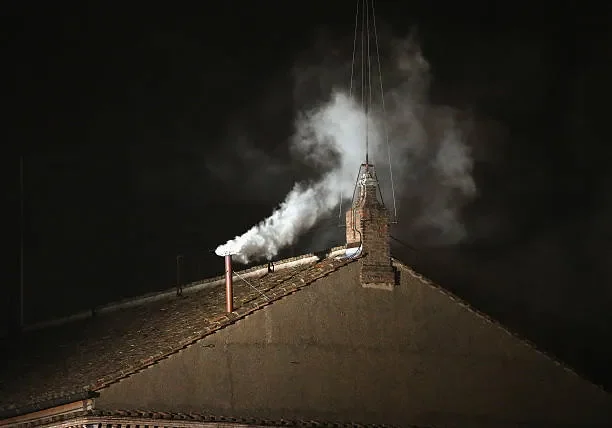
White smoke over the Vatican, 26 October 1958 — During the conclave following the death of Pius XII, smoke interpreted by observers as white appeared from the Sistine Chapel, leading to widespread expectation that a pope had been elected. No pope appeared, and the conclave continued. Later writers have connected the incident with claims that Cardinal Giuseppe Siri (1906–1989) had been elected and subsequently prevented from accepting or assuming the papacy, but this remains a disputed historical claim, not an established fact.
Was Cardinal Giuseppe Siri Actually Elected?
That is a different question. Later claims maintain that Cardinal Giuseppe Siri (1906–1989) was elected, intended to take the name Gregory XVII, and was then pressured into renouncing or prevented from assuming the papacy.
Author Paul L. Williams claimed that declassified American intelligence records supported this account.
However, an important difficulty remains. Novus Ordo Watch itself acknowledges that attempts to obtain copies of the purported intelligence documents were unsuccessful and therefore states that it cannot verify whether Williams accurately represented them. Consequently, the responsible classification is:
White/ambiguous smoke and contemporary confusion: established historical fact.
An earlier successful election during the conclave: possible interpretation requiring further evidence.
Siri was elected Pope Gregory XVII: disputed historical claim.
Siri was forced to renounce because of threats against Catholics behind the Iron Curtain: disputed historical claim resting upon evidence that has not been independently verified.
The sedevacantist case however does not depend upon the Siri thesis.
If John XXIII or subsequent claimants are to be evaluated, they should principally be evaluated according to Catholic doctrine concerning faith, heresy, membership in the Church and ecclesiastical office—not upon an unproven reconstruction of a secret conclave.
Novus Ordo Watch — 1958 Conclave Smoke Evidence
Novus Ordo Watch — Cardinal Siri and Alleged Intelligence Documents
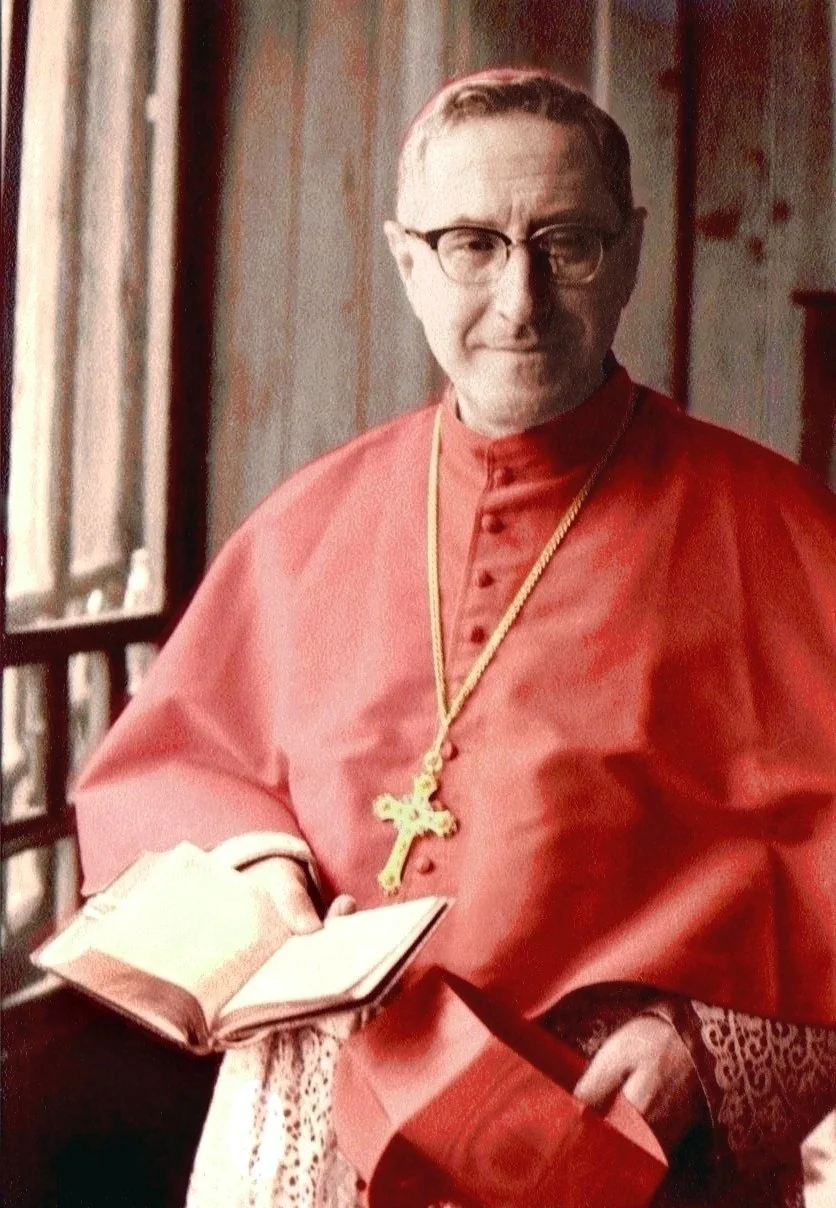
Cardinal Giuseppe Siri, Archbishop of Genoa and a prominent conservative cardinal at the 1958 conclave. Later claims that Siri was elected pope and prevented from assuming the papacy have generated considerable controversy, but the available evidence does not establish the alleged election as historical fact.
What About Annibale Bugnini and Freemasonry?
Claims that Archbishop Annibale Bugnini (1912–1982), a principal architect of twentieth-century liturgical reform, was a Freemason are frequently repeated in traditional Catholic literature.
These allegations should not simply be asserted as proven fact without documentary evidence sufficient to establish membership. The supplied study Freemasons and the Conciliar Church collects such claims and draws parallels between earlier Masonic objectives and later conciliar developments. It also cites Bugnini's own explanation of liturgical reform.
But two questions must remain distinct:
Was Bugnini personally a Freemason?
and:
Did the liturgical reforms associated with Bugnini objectively move Catholic worship in directions that earlier revolutionaries or religious liberals would have welcomed?
The second question can be investigated without establishing the first. That is the stronger method.
Examine the actual traditional Roman rite.
Examine Sacrosanctum Concilium.
Examine the Consilium's work.
Examine Bugnini's memoirs.
Examine the 1969 Novus Ordo Missae.
Then compare doctrine, prayers, rubrics and theological emphasis.
If there is a substantial rupture, it remains a rupture whether Bugnini possessed a Masonic membership card or not.
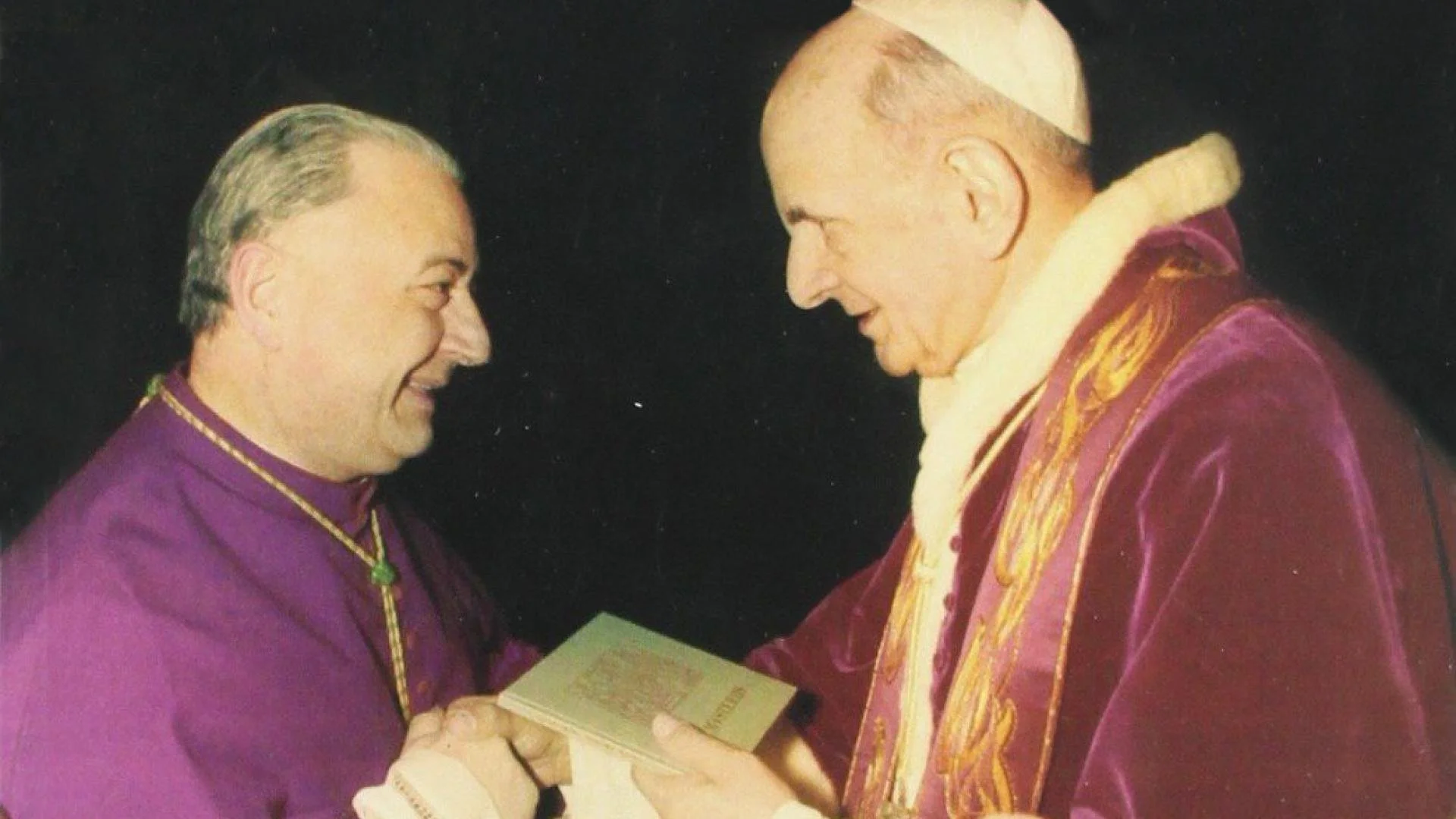
Archbishop Annibale Bugnini, C.M. (1912–1982) — An influential architect of the twentieth-century liturgical reforms and secretary of the Consilium responsible for implementing the post-Vatican II reform of the Roman liturgy. Allegations that Bugnini was a Freemason have circulated widely in traditional Catholic literature, but should be distinguished from the documented historical record of his central role in the liturgical reform.
Were Jews Behind the Infiltration of the Church?
Some polemical literature concerning Freemasonry, Communism and revolutionary movements has attempted to attribute responsibility collectively to Jews.
Historical responsibility belongs to particular persons, organisations, governments, movements and ideologies, according to evidence. A person of Jewish ancestry who participated in a revolutionary movement is responsible for his own actions. That does not make “the Jews” responsible.
Likewise, Catholics, Protestants, atheists and people of many different backgrounds participated in revolutionary and anti-clerical movements. The Catholic principle is moral rather than racial.
As St Paul teaches:
“Our wrestling is not against flesh and blood; but against principalities and powers, against the rulers of the world of this darkness, against the spirits of wickedness in the high places.” Ephesians 6:12
The deepest Catholic interpretation of the crisis is therefore spiritual and doctrinal.
A Pattern Emerges Before Vatican II
By the eve of Vatican II, several distinct historical currents had therefore converged.
| Movement | Objective or Effect | Evidentiary Status |
|---|---|---|
| Freemasonry and related secret societies | Opposition to Catholic social and religious principles | Extensively documented and repeatedly condemned by the Popes |
| Carbonari / Alta Vendita milieu | Revolutionary transformation; documents attributed to this milieu describe long-term influence upon clergy | Historical documentary tradition exists; precise provenance and causal influence require care |
| Liberal Catholicism | Reconciliation of Catholicism with principles earlier condemned by the Church | Documented theological and historical movement |
| Modernism | Reinterpretation of revelation, dogma, Scripture and authority | Documented and formally condemned by St Pius X |
| Atheistic Communism | Destruction or political neutralisation of Christianity | Extensively documented |
| Communist penetration/control of religious institutions | Regime-friendly clergy, front organisations, propaganda and institutional control | Documented in multiple Communist states |
| Western political/intelligence interest in the Vatican | Strategic interest because of the Church's international influence | Documented; specific allegations of manipulation require separate proof |
| 1958 conclave smoke anomaly | Apparent election signal two days before Roncalli's election | Documented historical incident |
| Siri elected Gregory XVII | Alleged suppressed papal election | Disputed and presently unverified |
| Bugnini as Freemason | Alleged direct Masonic involvement in liturgical reform | Historical allegation; should not be treated as established without stronger documentation |
This table reveals why the simplistic alternatives are inadequate. One need not choose between:
“There was one gigantic conspiracy controlling everything”
and:
“There was absolutely no organised attempt to influence or weaken the Church.”
History is considerably more complex.
The Main Objection
A reasonable objection is:
“All institutions have enemies. Freemasons and Communists opposed the Church, but that does not prove Vatican II was infiltrated or that the Council resulted from a conspiracy. The changes of the 1960s can be explained by theological development, social change, secularisation and legitimate attempts to adapt the Church to the modern world.”
This objection contains an important truth. The existence of enemies before Vatican II does not itself prove that those enemies controlled Vatican II. Nor does similarity between an earlier anti-Catholic programme and a later ecclesiastical policy establish direct organisational continuity.
Response
But the opposite conclusion would also be unwarranted. It would be historically false to suggest that concern about organised attempts to weaken Catholicism is merely a retrospective traditionalist fantasy. The Popes themselves repeatedly warned about precisely such movements.
The crucial historical sequence is:
external revolutionary philosophies
↓
organised movements promoting those philosophies
↓
Liberal Catholic attempts at accommodation
↓
Modernist penetration of Catholic theology
↓
papal condemnation and suppression
↓
continued theological currents beneath the surface
↓
the dramatic transformation surrounding Vatican II
The legitimate historical question is therefore whether ideas previously condemned by the Church eventually obtained influence within Catholic institutions—even if many later proponents had no direct connection whatsoever with Freemasonry or Communism.
That question must be answered by examining the ideas themselves.
What did the Church teach before Vatican II?
What did Vatican II teach?
What happened to the Mass?
What happened to Catholic missionary theology?
What happened to Catholic teaching and practice concerning ecumenism?
What happened regarding religious liberty?
What happened to relations with non-Christian religions?
What happened to the understanding of Church membership?
Those comparisons are more important than discovering a secret membership list.
What We Can and Cannot Conclude
Established Historical Fact
The Catholic Church repeatedly condemned Freemasonry and related secret societies. Freemasonry and revolutionary anti-clerical movements openly opposed important elements of Catholic doctrine and Catholic social influence.
Communist governments persecuted Catholicism and attempted in various countries to manipulate or control religious institutions.
Modernism arose among Catholic clergy and intellectuals before Vatican II and was condemned by St Pius X.
The Vatican was an important geopolitical institution watched closely by governments and intelligence services.
There was genuine confusion involving apparently white smoke during the 1958 conclave.
Strong Historical Evidence
Certain revolutionary circles did contemplate achieving change not merely through direct persecution but through long-term ideological influence.
The Alta Vendita material is important evidence in this discussion and deserves serious historical consideration.
Reasonable Historical Inference
Ideas can penetrate institutions without the people adopting those ideas being formal members of the organisations that originally promoted them.
Consequently, proving that a particular bishop, theologian or liturgist was a Freemason is unnecessary before comparing his ideas with principles previously condemned by the Church.
Disputed Historical Claims
That Cardinal Siri was secretly elected Pope in 1958.
That a valid Siri election was suppressed by political threats.
That particular Vatican II churchmen or liturgical reformers were secretly Freemasons unless reliable evidence establishes their membership.
That one intelligence service or secret society directly controlled Vatican II.
What We Cannot Conclude
We cannot legitimately attribute responsibility collectively to Jews, Freemasons' families, particular nationalities, ethnic populations or other broad groups.
Nor can we know the internal motives of individual churchmen merely from their theological positions.
What Is Not Necessary to Establish the Argument
It is not necessary to prove a master conspiracy in order to investigate the post-Vatican II crisis.
The public evidence is sufficient.
The documents exist.
The rites exist.
The teachings exist.
The disciplinary changes exist.
They can be compared with what preceded them.
Conclusion
Were there attempts to infiltrate or weaken the Catholic Church before Vatican II? Yes.
The historical record establishes organised Freemasonic and revolutionary hostility towards Catholicism, repeated papal condemnations of secret societies, internal Modernist activity condemned by St Pius X, and Communist programmes aimed at destroying, neutralising or manipulating Christianity.
Some revolutionary writings went further and envisaged influencing Catholic clergy over generations so that revolutionary principles might eventually advance through ecclesiastical structures themselves.
That possibility cannot simply be dismissed as something Catholics invented after Vatican II. The Popes were warning about these dangers generations beforehand. But neither should Catholics build their understanding of the present crisis upon every sensational historical allegation.
The Faith does not require us to prove that Cardinal Siri was secretly Pope Gregory XVII.
It does not require an alleged Masonic membership card for every architect of ecclesiastical change.
It does not require a single secret organisation coordinating every event.
The more fundamental question is simpler:
Did principles once condemned by the Catholic Church eventually appear within institutions claiming to represent that same Church?
That question can be answered from public evidence. And that leads naturally to the next stage of the investigation:
What actually happened at Vatican II—and how do its teachings compare with the Catholic doctrine taught before the Council?
For someone sincerely seeking the Catholic Faith, that comparison matters far more than speculation about secret motives.
Christ promised that His Church would endure.
The Catholic response to a crisis must therefore ultimately be neither fascination with conspiracy nor despair, but fidelity:
“Jesus Christ, yesterday, and today; and the same for ever.” — Hebrews 13:8
Primary Sources
Pope Leo XII, Quo Graviora (1825). Reproduces and confirms earlier condemnations of Freemasonry and deals with the Carbonari. Quo Graviora — Vatican text
Pope Pius IX, Qui Pluribus (1846). Addresses revolutionary errors and secret societies hostile to Church and civil order. Qui Pluribus — Vatican text
Pope Leo XIII, Humanum Genus (1884). Principal papal treatment of Freemasonry and its underlying religious and social philosophy. Humanum Genus — Vatican text
Pope St Pius X, Pascendi Dominici Gregis (1907). Condemnation and analysis of Modernism within Catholicism. Pascendi Dominici Gregis — Vatican text
Pope Pius XI, Divini Redemptoris (1937). Condemnation of atheistic Communism, including its propaganda methods and attempts to penetrate Catholic organisations. Divini Redemptoris — Vatican text
Jacques Crétineau-Joly, L'Église romaine en face de la Révolution (1859–1860). Nineteenth-century publication associated with the documentary history of the Alta Vendita. Digitised historical edition
United States Department of State, Foreign Relations of the United States. Contemporary diplomatic documentation concerning the Vatican, Communism and Communist pressure upon Catholic institutions.
Further Reading
The Permanent Instruction of the Alta Vendita. Useful for examining the traditional Catholic interpretation of the Alta Vendita documents. Claims concerning provenance, implementation and later fulfilment should be distinguished from the text itself. Alta Vendita
Novus Ordo Watch, “A Conspiracy against the Catholic Church? The True Popes Speak.” Useful collection of pre-Vatican II papal statements concerning organised opposition and secret societies; primary papal documents should be consulted wherever possible. Read the article
Novus Ordo Watch, “Smoke Signals: The White Smoke of Oct. 26, 1958.” Provides contemporary reporting concerning the unusual smoke signals while also advancing interpretations that should be distinguished from the documented incident itself. Read the article
The St. Gallen Mafia: Exposing the Secret Reformist Group Within the Church by by Julia Meloni.
The St. Gallen Network: The Secret Reformist Group that Transformed the Catholic Church by Rev. John Beaconhills
Related Questions
What Was Modernism, and Why Did the Church Condemn It?
What Was the Nouvelle Théologie?
How Did the Liturgical Movement Prepare the Way for the Later Liturgical Revolution?
What Was Catholicism Like Before Vatican II?
Why Was Vatican II Called, and What Happened at the Council?
Did Vatican II Contradict Earlier Catholic Teaching?
How Did the Traditional Mass Become the Novus Ordo?
Does Public Heresy Separate a Person From the Church and Prevent Him From Holding Ecclesiastical Office?