How Did the Liturgical Movement Prepare the Way for the Post-Vatican II Liturgical Revolution?
Short Answer
The Liturgical Movement did not begin as a revolt against the Catholic Mass. Its early aims included many things that were entirely legitimate: helping Catholics understand the sacred liturgy, restoring Gregorian chant, encouraging frequent and worthy reception of Holy Communion, fostering the use of hand missals, and enabling the faithful to unite themselves more intelligently and prayerfully with the Holy Sacrifice of the Mass.
Pope St Pius X encouraged the faithful's participation in the Church's public worship, and Pope Pius XII explicitly praised the genuine achievements of the Liturgical Movement in Mediator Dei (1947). Pius XII nevertheless issued important warnings.
Liturgical renewal must remain subject to the Church's authority;
external activity must not be confused with the essence of participation;
Latin remained an important sign of unity; and
ancient practices must not be restored merely because they were ancient.
He specifically condemned what became known as liturgical antiquarianism or archaeology.
During the 1940s and 1950s, however, liturgical renewal increasingly became connected with the actual reconstruction and simplification of rites. The experimental restoration of the Easter Vigil in 1951, the substantial reform of Holy Week in 1955, simplification of the calendar and rubrics in the same period, and the further rubrical changes of 1960–1962 meant that alteration of inherited liturgical forms had already become an accepted instrument of pastoral policy before Vatican II.
Vatican II's Sacrosanctum Concilium (1963) then adopted several themes long associated with the Liturgical Movement:
active participation,
simplification,
restoration of earlier elements,
pastoral intelligibility,
increased Scripture, and
expanded use of the vernacular.
Yet the Council simultaneously required that Latin be preserved and declared that innovations should occur only when genuinely required and should grow organically from existing forms.
What followed after the Council went vastly beyond the limited modifications familiar to ordinary Catholics before it. Within several years, the Roman Mass underwent an extensive reconstruction, culminating in Paul VI's promulgation of the new Roman Missal in 1969. Paul VI himself acknowledged that the preceding Roman Missal had nourished Catholic worship for four centuries and that its essential arrangement reached back to St Gregory the Great.
It is therefore historically too crude to describe the whole Liturgical Movement as a revolt. But it is equally inadequate to describe everything that culminated in the new liturgy merely as modest organic “reform.” The more important question is:
How did a movement that began by trying to bring Catholics more deeply into the traditional liturgy eventually contribute to a programme that substantially reconstructed the liturgy itself?
That is where legitimate liturgical renewal eventually gives way to what can reasonably be described, in its scale and consequences, as a liturgical revolution.
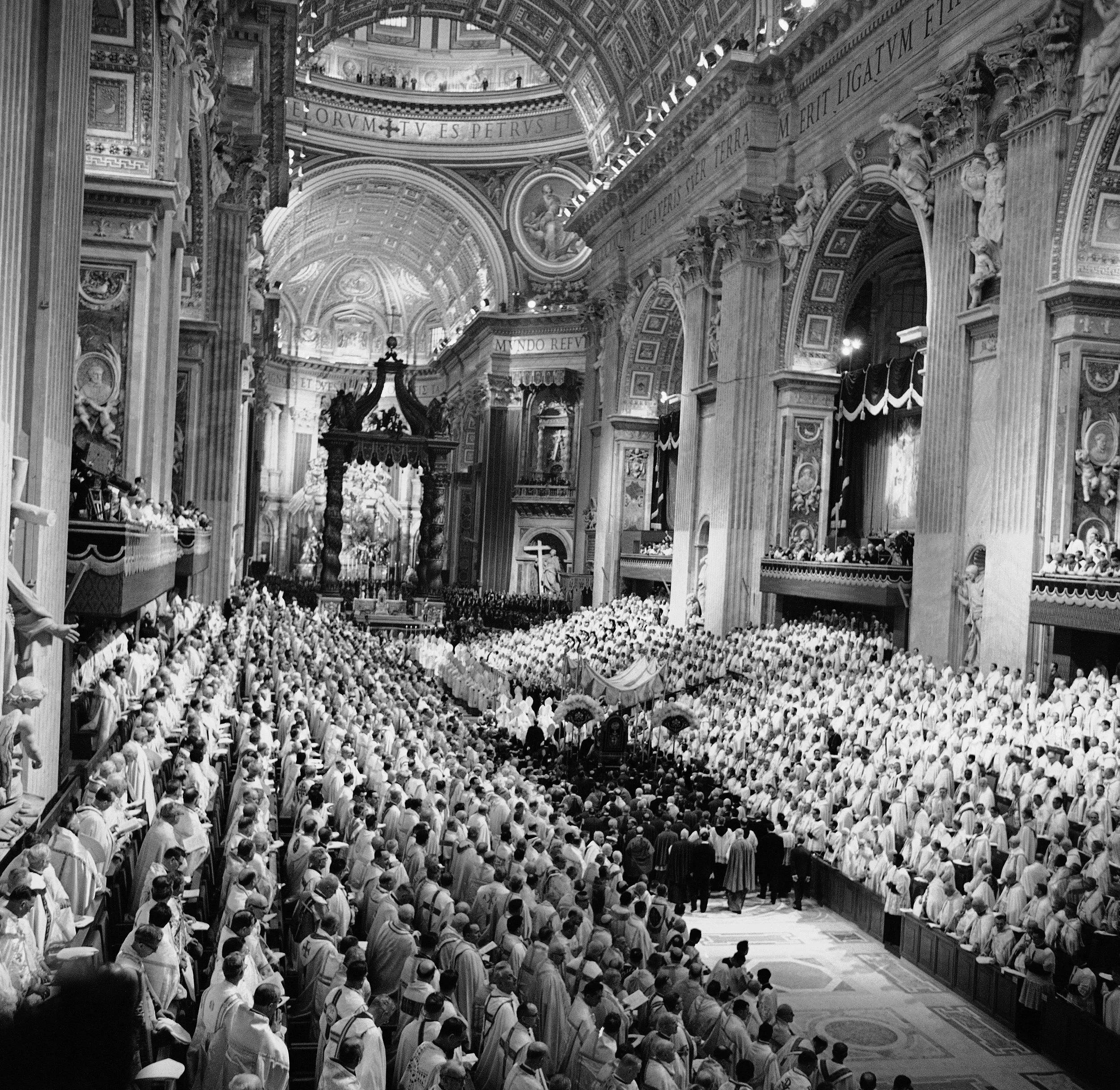
The Second Vatican Council (1962–1965) assembled in St Peter’s Basilica. Its Constitution on the Sacred Liturgy, Sacrosanctum Concilium, promulgated on 4 December 1963, made “full, conscious, and active participation” a central objective of liturgical restoration and authorised substantial revision of the rites, while also requiring that Latin be preserved and that new forms grow organically from existing ones.
Why This Question Matters
A Catholic investigating Vatican II may naturally ask:
Where did the new Mass come from?
It did not suddenly appear in 1969. Nor did the transformation begin simply because parish priests spontaneously started experimenting after Vatican II.
Long before the Council there existed an international Liturgical Movement involving monasteries, theologians, liturgical scholars and pastoral reformers. Its earliest phases produced genuine Catholic renewal. But within parts of that movement there gradually developed ideas about participation, pastoral adaptation, historical restoration and simplification that would eventually become principles for changing the rites themselves. The history is therefore more complicated than either of two simplistic narratives:
Traditionalist oversimplification:
“Everything connected with the Liturgical Movement was corrupt from the beginning.”
That is historically indefensible. But the opposite account is also inadequate:
Progressive oversimplification:
“Vatican II merely brought the ancient Catholic liturgy naturally to maturity.”
That conclusion also requires examination. The crucial distinction is between:
renewing Catholics through the liturgy
and
renewing the liturgy itself through reconstruction.
Those are not necessarily the same thing.
What the Catholic Church Traditionally Understood the Liturgy to Be
Before considering liturgical reform, we must understand what was being reformed.
The Catholic liturgy is not principally a communal gathering created by Christians to express their religious feelings. It is the Church's public worship of Almighty God. At its centre stands the Holy Sacrifice of the Mass: the unbloody sacramental representation of the one Sacrifice of Christ upon Calvary.
The priest acts sacramentally in the person of Christ. Christ is both Priest and Victim. The Mass therefore exists first for the worship of God: adoration, thanksgiving, propitiation and petition.
The sanctification of the faithful flows from this divine worship.
The Biblical Pattern of Catholic Worship
The traditional Mass belongs to a biblical pattern far older than Christianity considered merely as a historical institution. Throughout Scripture, God determines how He is to be worshipped.
The Old Covenant contained:
priesthood → altar → sacrifice → victim → sacred sanctuary → prescribed ritual
These realities reached their fulfilment in Christ.
| Type / Shadow | Old Covenant | Greater Fulfilment |
|---|---|---|
| Melchizedek | Priest offering bread and wine | Christ, the eternal High Priest |
| Passover lamb | A spotless victim is slain | Christ, the Lamb of God |
| Blood of the lamb | Israel is delivered from death | Christ's Blood redeems mankind |
| Sacrificial victim eaten | Israel consumes the Passover lamb | Christ gives Himself in Holy Communion |
| Manna | Bread from heaven sustains Israel | Christ gives the true Bread from Heaven |
| Temple and altar | Sacrificial worship offered to God | Christ's Sacrifice sacramentally represented in the Mass |
| Old Covenant priesthood | Priests offer sacrifice | Christ's eternal priesthood continued sacramentally through ordained priests |
The movement is therefore:
shadow → fulfilment
and ultimately:
Passover → manna → altar and sacrifice → Last Supper → Calvary → Mass → heavenly worship of the Lamb
This sacrificial conception is indispensable when evaluating later liturgical changes. A Catholic liturgy cannot be judged merely by whether people understand it easily, participate externally, hear more Scripture, or experience a stronger sense of community.
The primary question remains:
Does the rite express and safeguard the Catholic reality of sacrificial worship?
The Early Liturgical Movement Was Not a Revolt
The modern Liturgical Movement is commonly traced particularly to Benedictine centres of liturgical scholarship and spirituality. One important figure was Dom Lambert Beauduin, O.S.B. (1873–1960).
At the Catholic Congress of Malines in 1909, Beauduin delivered an influential address on the liturgy as the true prayer of the Church. His programme emphasised educating Catholics so that they understood and participated more intelligently in the Church's worship. Historians commonly identify the Malines address as an important beginning of the twentieth-century Liturgical Movement.
The original programme included such things as:
greater knowledge of the Mass;
liturgical education;
use of hand missals;
appreciation of the Church's liturgical year;
Gregorian chant;
congregational responses;
participation in the Church's public prayer;
deeper understanding of the Eucharistic Sacrifice.
None of those things inherently constituted an attack upon Catholic tradition. Indeed, they drew encouragement from Pope St Pius X.
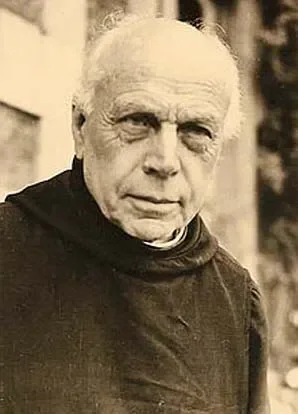
Dom Lambert Beauduin, O.S.B. (1873–1960), Belgian Benedictine monk and an important pioneer of the twentieth-century Liturgical Movement. His influential 1909 address at Malines promoted greater understanding of the Church’s liturgy and more conscious participation by the faithful—objectives that initially sought to renew Catholic life through the existing liturgy.
St Pius X and Active Participation
The expression active participation did not originate at Vatican II.
Pope St Pius X had already associated participation in the Church's public and solemn prayer with the restoration of genuine Christian life. The important point, however, is what participation originally meant. It did not mean that everyone must constantly do something externally.
The faithful participate principally by joining themselves interiorly to the Sacrifice being offered by the priest. They may also participate outwardly through:
responses;
chant;
bodily postures;
following the prayers;
receiving Holy Communion;
other actions proper to the faithful.
But external activity serves interior participation rather than replacing it. This distinction would become increasingly important.
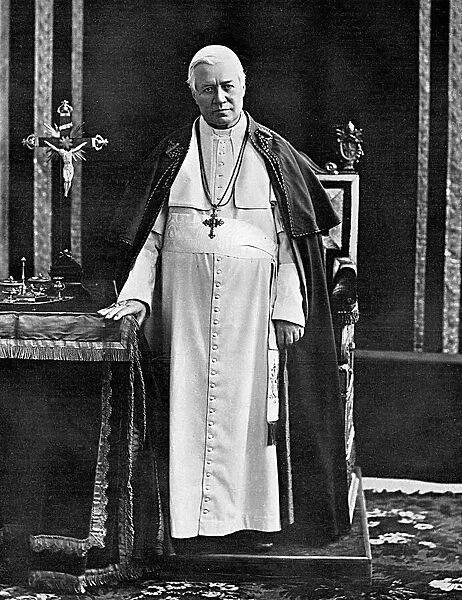
Pope St Pius X (1835–1914) encouraged the restoration of Gregorian chant, frequent reception of Holy Communion and a deeper participation of the faithful in the Church’s liturgical life. These initiatives show that authentic liturgical renewal did not begin as an attempt to replace the traditional Roman liturgy, but to draw Catholics more deeply into it.
Pius XII: The Great Papal Assessment of the Liturgical Movement
Pope Pius XII's encyclical Mediator Dei of 20 November 1947 is essential for understanding this entire controversy. Pius XII did not condemn the Liturgical Movement. Quite the opposite.
He acknowledged that the movement had produced “salutary fruits.” It had helped Catholics understand the ceremonies of the altar, appreciate liturgical prayer and participate more deeply in the Church's sacramental life.
But the same encyclical erected important boundaries around legitimate liturgical renewal.
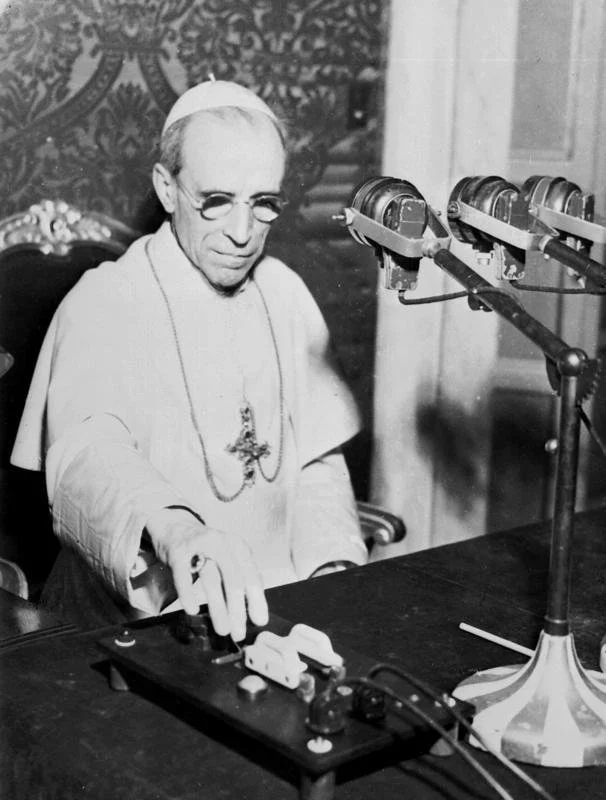
Pope Pius XII (1876–1958) issued Mediator Dei in 1947, the first papal encyclical devoted entirely to the sacred liturgy. He praised the genuine fruits of the Liturgical Movement while insisting upon the primacy of interior worship and warning against indiscriminate restoration of ancient practices merely because they were ancient.
Participation Is More Than External Activity
Pius XII encouraged congregational responses and singing where appropriate. He praised Catholics who followed the Mass through the Roman Missal. Yet he warned against treating one particular external form of participation as indispensable.
A dialogue Mass, for example, could be valuable, but Pius XII explicitly rejected the idea that it was necessary for the Mass to possess its public and social character. The essential participation of the faithful remained spiritual:
uniting themselves with Christ the High Priest and offering themselves with Him.
That distinction matters enormously. The danger arises when:
participation
quietly becomes:
external activity
and then:
external activity becomes the criterion according to which the rite itself must be redesigned.
Those propositions are not identical.
Pius XII Defended Latin
Pius XII also described Latin as a significant sign of the Church's unity and a protection for doctrinal integrity. He permitted that the vernacular could sometimes be useful, but insisted that such decisions belonged to the Apostolic See. Again, therefore, the traditional principle was not:
vernacular = evil.
It was:
the Roman Church possesses a sacred liturgical language whose preservation serves important theological and ecclesial purposes, although competent authority can permit limited vernacular use.
This distinction would later become significant because the limited concession eventually developed into widespread vernacularisation.
Pius XII's Warning Against Liturgical Archaeology
Perhaps the most important section of Mediator Dei for understanding what followed concerns antiquarianism.
Pius XII rejected the idea that an ancient practice is automatically better merely because it is ancient. Christian liturgy had developed legitimately over centuries. The medieval and later Roman liturgy was therefore not a corruption simply because certain features had not existed in exactly the same form in the early Church.
Pius XII warned that it would be wrong to attempt to restore ancient rites indiscriminately. He even gave concrete examples. He criticised proposals such as restoring the altar simply to the form of a primitive table, eliminating black vestments merely because they were later developments, removing sacred images, or rejecting later forms of sacred music simply because earlier Christians had not possessed them.
This principle is fundamental:
older does not automatically mean more Catholic.
The liturgy is a living inheritance. Its legitimate development across centuries possesses theological significance.
Organic Development Versus Liturgical Reconstruction
We can therefore distinguish two approaches.
Organic Development
A liturgical tradition grows gradually. Prayers, ceremonies, feasts and devotional expressions develop across generations. Later generations receive what previous generations handed down and make limited modifications where genuinely necessary.
The basic presumption is:
preserve what has been received.
Constructed Reform
A committee examines the inherited rite according to historical, pastoral and theological criteria. It decides which elements are:
repetitive;
insufficiently ancient;
pastorally ineffective;
difficult to understand;
historically secondary;
unnecessarily complicated.
It then removes, restores, rearranges or composes elements in order to produce what is considered a more effective rite. The presumption gradually changes from:
How do we faithfully receive this inheritance?
to:
How might this inheritance be improved?
That shift in mentality is one of the most consequential developments in twentieth-century liturgical history.
The 1951 Easter Vigil: An Important Turning Point
Under Pius XII, reform moved beyond education about the existing liturgy. The rites themselves began to change. In 1951 the Sacred Congregation of Rites authorised an experimental restoration of the Easter Vigil to nighttime.
The historical argument had considerable force. The ancient Easter Vigil had originally been celebrated during the night preceding Easter Sunday. Over centuries it had migrated earlier until it was celebrated on Holy Saturday morning.
The 1951 decree explicitly referred to increased historical study of the ancient liturgy and the desire to restore the Vigil to its original nocturnal setting. It also cited pastoral considerations: many Catholics could not attend the ceremonies when they occurred on Saturday morning.
Restoring the actual time of the Easter Vigil can therefore readily be defended as recovering the intelligibility of the rite.
Night gives way to light.
Christ passes from death to Resurrection.
The symbolism becomes immediately intelligible.
But something else was significant.
Historical research and pastoral accessibility were now being used not merely to explain the inherited liturgy but to justify altering it.
That principle would have much wider consequences.
The 1955 Holy Week Reform
In 1955 Pius XII approved a substantially revised Holy Week.
The official decree, Maxima Redemptionis Nostrae Mysteria, explained that the ancient ceremonies had gradually migrated away from the hours corresponding to the mysteries they commemorated.
The reform therefore restored:
Holy Thursday Mass to the evening;
Good Friday ceremonies to the afternoon;
the Easter Vigil to the night.
The decree explicitly argued that the previous scheduling had obscured some of the rites' symbolism and that restoring more appropriate hours would allow greater attendance by the faithful.
These were genuine pastoral and symbolic considerations. Yet the reform did considerably more than change the clock. Holy Week ceremonies themselves were altered.
Prayers, readings, ceremonial actions and rubrics were modified; certain repetitions were removed; roles within the ceremonies were adjusted; and participation by the congregation was given increased emphasis.
The accompanying instruction explicitly spoke of enabling the faithful to participate more easily, devoutly and fruitfully.
This makes 1955 important in the history of twentieth-century liturgical reform. It demonstrated that substantial reconstruction of very ancient and venerable Roman ceremonies could now be undertaken by expert commission and imposed universally for pastoral, historical and liturgical reasons.
That does not establish that Pius XII intended the Novus Ordo. It does establish an important precedent.
Annibale Bugnini and the Reform Commissions
One figure links several stages of this history: Fr Annibale Bugnini, C.M. (1912–1982).
Bugnini became involved in the commissions responsible for twentieth-century liturgical reform and later became one of the central organisers of the post-Vatican II reforms. His importance should neither be exaggerated into a conspiracy theory nor minimised. The relevant historical point is documented and straightforward:
liturgical reform increasingly became the work of organised commissions of specialists.
That represented a significant practical change in the manner in which the Roman liturgy developed. Rather than principally receiving gradual developments accumulated across centuries, experts increasingly studied, evaluated and reconstructed rites according to specified principles.
Claims concerning Bugnini's alleged secret affiliations or hidden motives are a separate historical question and are not necessary to establish this point. The public documentary record is sufficient.
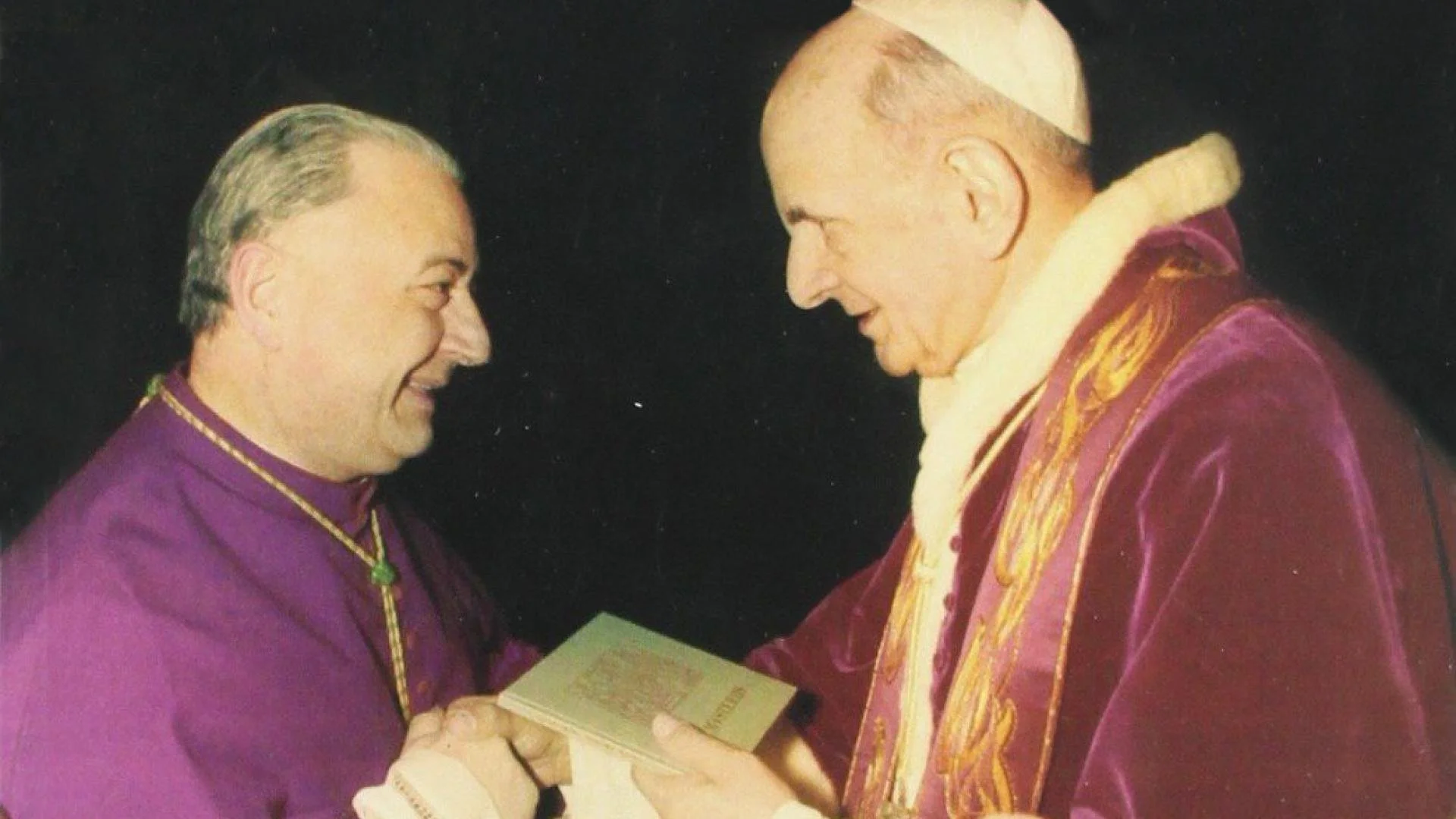
Annibale Bugnini, C.M. (1912–1982) was involved in the commissions responsible for preconciliar liturgical reform and later became a leading organiser of the post-Vatican II reform. His career illustrates an important institutional continuity between the reform work of the 1950s and the much more extensive reconstruction undertaken after Vatican II.
Simplification Before Vatican II
The process continued. The 1955 decree Cum Nostra Hac Aetate simplified the rubrics of the Roman Breviary and Missal. Its stated pastoral concern included the increasing burdens placed upon priests engaged in apostolic work.
Among the changes were alterations affecting the classification of feasts, vigils, octaves, commemorations and other rubrical structures. Then in 1960 John XXIII promulgated a new Code of Rubrics through Rubricarum Instructum.
John XXIII explicitly referred to Pius XII's earlier programme of simplification and noted that the accumulated rubrical system had become increasingly complex. The new arrangement simplified and shortened parts of the Divine Office and reorganised the rubrics of both Breviary and Missal.
These changes entered the liturgical books associated with the 1962 Roman Missal.
What Had Changed Before 1962?
It is important not to exaggerate. A Catholic attending Mass in 1962 was still recognisably attending the traditional Roman Mass.
The Mass remained:
overwhelmingly Latin;
priest-centred at the altar;
sacrificial in structure and language;
governed by the traditional Roman Canon;
oriented toward God rather than structured as a conversational exchange between priest and congregation;
deeply continuous with the inherited Roman rite.
The 1962 Missal was not the Novus Ordo. Nevertheless, by 1962 an important methodological change had occurred. The principle had become established that inherited liturgical structures could be:
studied → evaluated → simplified → restored → rearranged → pastorally adapted
by commissions of specialists acting under ecclesiastical authority. That mechanism would soon be employed on a vastly greater scale.
Vatican II: The Principles Become a Programme
The Second Vatican Council's Constitution on the Sacred Liturgy, Sacrosanctum Concilium, was promulgated on 4 December 1963. Many of its stated principles sound moderate when read individually. Indeed, some appear explicitly conservative.
The Council declared:
“The use of the Latin language is to be preserved in the Latin rites.”
It also stated that there should be no innovations unless the good of the Church genuinely required them and that new forms should grow organically from existing forms.
Those statements are important. The Council did not simply decree:
abolish Latin, turn the altars around and create an entirely new Mass.
But Sacrosanctum Concilium simultaneously established principles that opened considerably wider possibilities for reform.
Active Participation Becomes a Governing Principle
Article 14 declared that the Church earnestly desired:
“full, conscious, and active participation”
by the faithful.
More importantly, it described this participation as an objective to be considered “before all else” in liturgical restoration. The terminology had earlier Catholic roots. But its function had changed.
Under Pius XII, active participation was principally something Catholics were encouraged to achieve within the received liturgy.
Increasingly, however, the received liturgy itself would be redesigned to facilitate participation. That is a subtle but enormously important transition.
Simplification Becomes a Principle
Sacrosanctum Concilium 34 stated that rites should possess “noble simplicity” and be short, clear and free from what it called useless repetitions. Article 50 applied this directly to the Mass.
The rite was to be revised; certain elements considered duplications or additions of little advantage were to be discarded, while other elements lost through historical circumstances could be restored. Notice the methodological vocabulary:
simplify
discard
restore
revise
These concepts had already appeared within the Liturgical Movement and the reforms preceding the Council.
They now possessed conciliar authority as a programme of liturgical revision.
Vernacularisation
Sacrosanctum Concilium still declared that Latin should be preserved. But it simultaneously permitted wider vernacular use, initially particularly in readings, directions and certain prayers and chants. Again we see the pattern:
limited principle → broader application
The Council did not expressly order the almost complete disappearance of Latin from ordinary parish worship. Nevertheless, the principle permitting substantial vernacularisation had been established.
Liturgical Archaeology Reappears in a Different Form
There is another striking tension. Pius XII had warned against attempting to restore ancient practices merely because they were ancient.
Yet Sacrosanctum Concilium 50 instructed that certain elements lost through “accidents of history” could be restored according to the tradition of the Fathers where useful or necessary.
There is not necessarily a formal contradiction between these statements. Pius XII himself permitted genuine restoration. The distinction lies between:
careful restoration
and
antiquarianism that treats later organic development as corruption.
The difficulty is therefore practical and theological:
Who determines which later developments represent legitimate organic growth and which are dispensable historical accretions?
Once liturgical experts are authorised to make that judgment across an entire rite, enormous possibilities for reconstruction arise.
From Council to Consilium
After Vatican II, the work of implementing Sacrosanctum Concilium was entrusted to the Consilium for the Implementation of the Constitution on the Sacred Liturgy.
The scale of reform accelerated dramatically. The process eventually affected:
the Order of Mass;
prayers at the foot of the altar;
offertory prayers;
lectionary;
calendar;
rubrics;
Eucharistic Prayers;
Communion rites;
liturgical language;
concelebration;
other sacramental rites;
Divine Office.
This was no longer simply the restoration of the Easter Vigil to nighttime or simplification of complicated rubrics. The Roman liturgical system was being comprehensively reconstructed.
Bugnini's own later history of the reform, The Reform of the Liturgy 1948–1975, documents the enormous organisational scale of the project: commissions, working groups, experiments, translations, revisions, adaptation and preparation of new liturgical books.
1969: A New Roman Missal
Paul VI promulgated the new Roman Missal through the Apostolic Constitution Missale Romanum on 3 April 1969.
The document itself provides an important historical admission. Paul VI acknowledged that the Roman Missal promulgated by St Pius V in 1570 had served the Latin Church for four centuries and that its general arrangement reached substantially back to St Gregory the Great.
This makes the scale of what happened extraordinary. Within several years, a liturgical order whose central structure had developed across many centuries was extensively reconfigured.
Whether one believes those changes were beneficial or disastrous, the historical magnitude should not be obscured by terminology. This was not merely changing several rubrics. It was the creation of a substantially reconstructed Roman liturgical order.
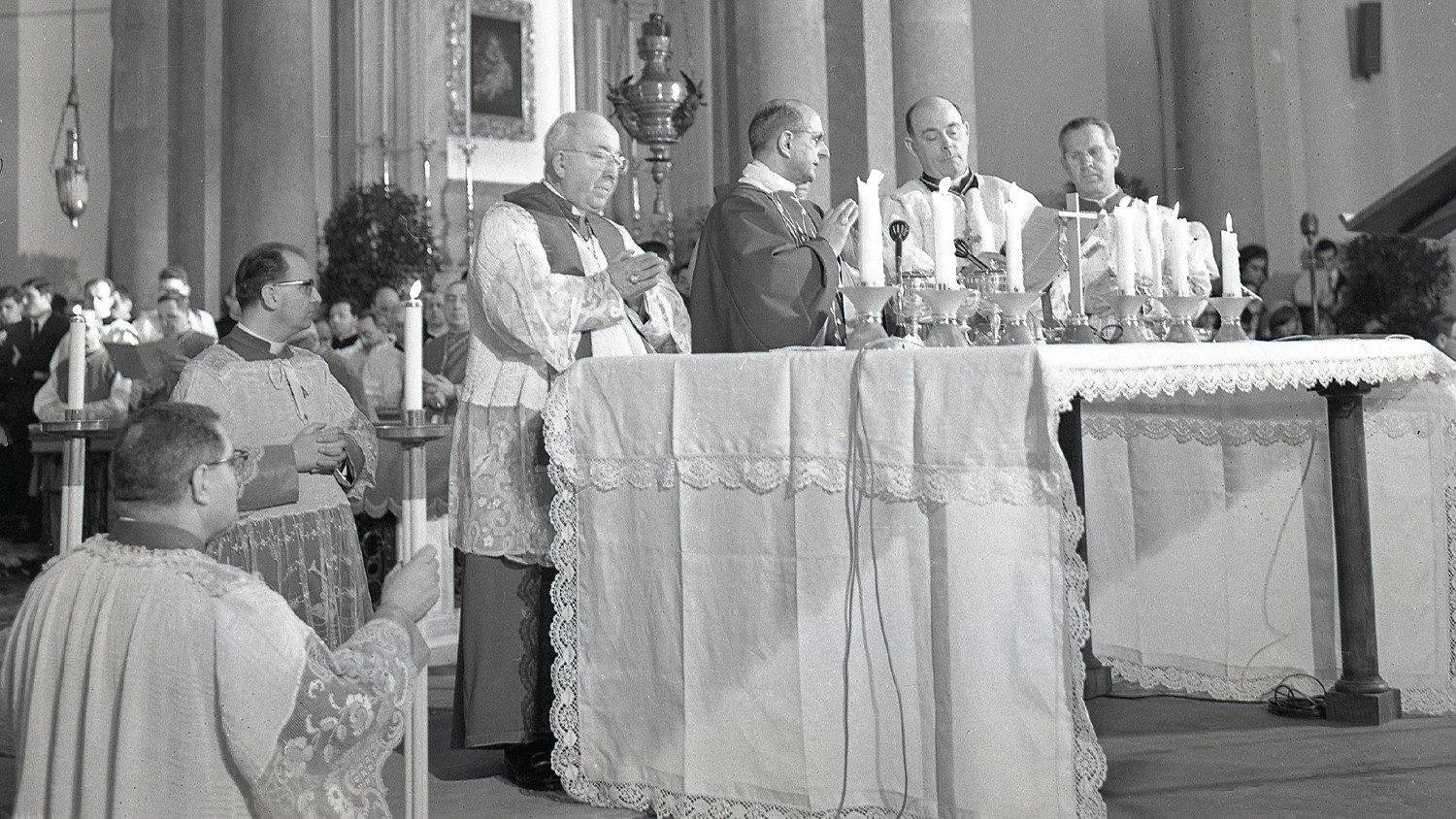
Paul VI (1897–1978) promulgated the new Roman Missal through the Apostolic Constitution Missale Romanum on 3 April 1969. The resulting liturgical order represented a far more extensive restructuring of the Roman Mass than the limited reforms familiar to Catholics before Vatican II.
Reform or Revolution?
We can now answer the terminology question.
Why “Reform” Is Historically Appropriate
The word reform should still be used when describing:
official documents;
the intentions stated by ecclesiastical authorities;
particular reforms under Pius XII;
Vatican II's stated programme;
the work as its proponents described it.
To refuse ever to use the word would distort the historical sources.
Why “Revolution” Can Also Be Appropriate
But when describing the scale of the eventual transformation, “liturgical revolution” can be a defensible analytical description.
Consider the progression:
| Earlier Stage | Development |
|---|---|
| Liturgical education | Teach Catholics to understand the existing rites |
| Active participation | Encourage deeper interior and appropriate exterior participation |
| Historical study | Recover knowledge of ancient liturgical practice |
| Pastoral adaptation | Adjust certain practices for pastoral reasons |
| Simplification | Remove perceived complexity |
| Restoration | Reintroduce selected ancient elements |
| Revision | Alter inherited rites according to stated principles |
| Reconstruction | Restructure substantial portions of the liturgical system |
| Novus Ordo | Promulgation of a substantially reconfigured Roman Missal |
The first step does not logically require the last. But historically the stages are connected.
The Ottaviani Intervention
The claim that the 1969 transformation represented something more than ordinary organic development was not invented decades later.
In September 1969, Cardinals Alfredo Ottaviani (1890–1979) and Antonio Bacci (1885–1971) transmitted to Paul VI a Short Critical Study of the New Order of Mass prepared by a group of theologians.
Their covering letter described the Novus Ordo as representing, in their judgment, a:
“striking departure”
from the Catholic theology of the Mass formulated by the Council of Trent. That criticism does not by itself settle every theological question concerning the new rite. But it demonstrates something historically important.
Serious Catholic churchmen recognised at the time, not merely decades afterwards, that the scale and theological character of the change raised profound questions concerning continuity with the received Roman liturgical tradition.
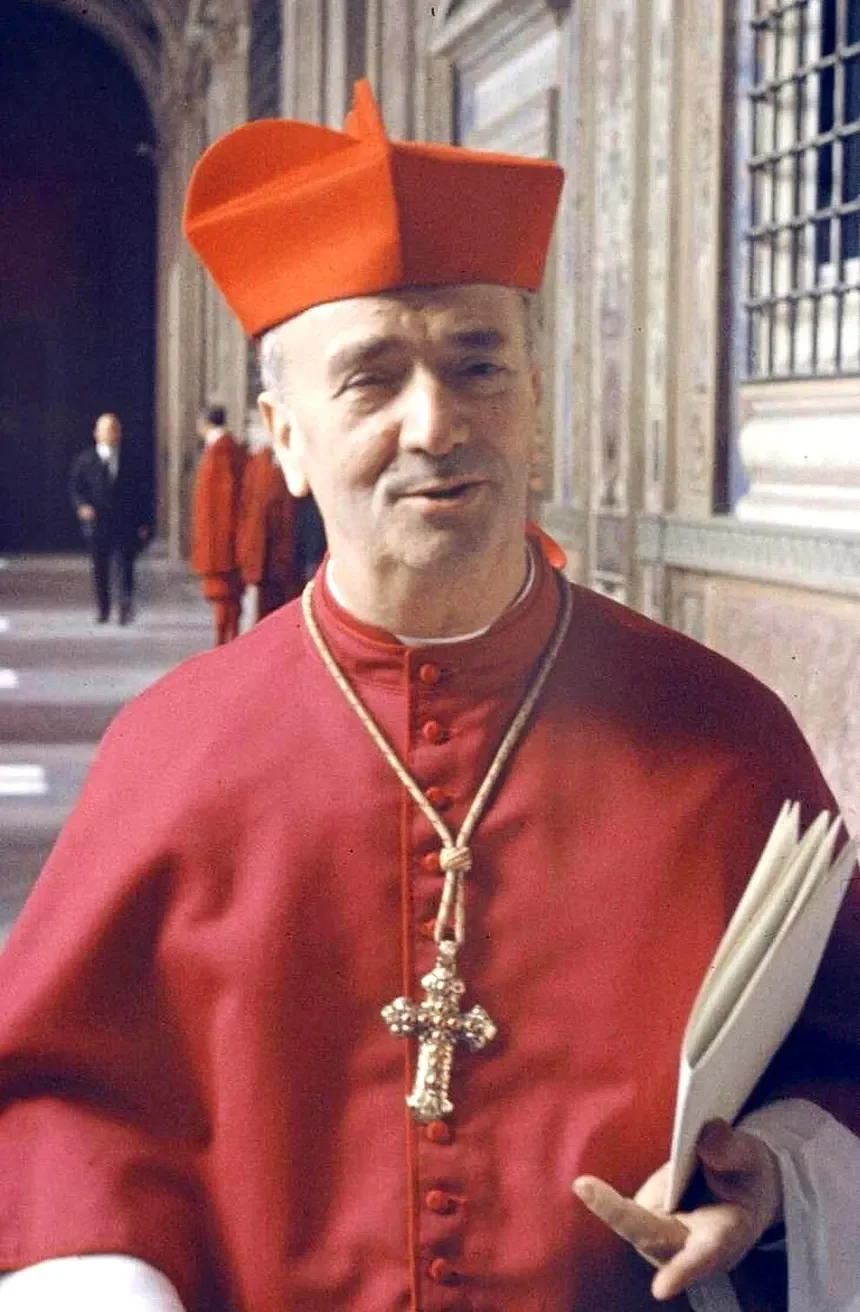
Cardinal Alfredo Ottaviani (1890–1979), longtime Secretary of the Holy Office and later Pro-Prefect of the Congregation for the Doctrine of the Faith. A prominent defender of traditional Catholic doctrine during Vatican II, he later joined Cardinal Antonio Bacci in presenting Paul VI with the 1969 Short Critical Study of the New Order of Mass, commonly known as the Ottaviani Intervention, which raised serious theological objections to the new rite.
The Main Objection
A defender of the postconciliar reform can make a serious objection. The Catholic Church has always possessed authority over liturgical discipline. The Roman rite was never absolutely frozen.
Popes changed calendars, breviaries, rubrics and ceremonies long before Vatican II.
St Pius X himself substantially reorganised the Psalter.
Pius XII reformed Holy Week.
John XXIII modified the rubrics.
Furthermore, Sacrosanctum Concilium explicitly demanded preservation of sound tradition, required organic growth and prohibited unnecessary innovation.
Therefore, the argument continues, Vatican II should be understood not as a revolution but as another legitimate stage in the historical development of Catholic worship.
This objection deserves a serious answer.
Response
The fact that liturgy can legitimately develop does not establish that every conceivable degree or method of liturgical reconstruction constitutes organic development.
That is precisely the issue. There is a categorical difference between:
changing a feast and reconstructing the Order of Mass.
adjusting rubrics and creating multiple new Eucharistic Prayers.
permitting some vernacular and allowing Latin effectively to disappear from ordinary parish worship.
restoring the Easter Vigil to nighttime and restructuring the inherited Roman liturgical system across virtually every sacramental book.
The question therefore cannot be resolved merely by saying:
“The Church changed the liturgy before.”
Of course she did. The question is:
What kind of change is compatible with organic liturgical tradition, and at what point does reform become reconstruction?
That question becomes particularly serious because Sacrosanctum Concilium itself required that new forms grow organically from existing ones.
Was Pius XII Responsible for the Novus Ordo?
It would be historically unjustified to say:
Pius XII created the Novus Ordo.
He did not. Nor does the fact that some people involved in later reform had already participated in preconciliar reform establish that Pius XII intended what happened after Vatican II.
Indeed, Mediator Dei contains principles that can be used to criticise later tendencies:
defence of Latin;
insistence upon interior participation;
rejection of exaggerated antiquarianism;
respect for later organic liturgical development;
condemnation of unauthorised experimentation;
strong sacrificial theology.
Nevertheless, something important happened during his pontificate.
The mechanism of centrally planned liturgical reconstruction by commissions of experts became established and was applied to ancient Roman rites.
That is historically significant even if Pius XII himself would have rejected later applications of that method. We therefore need neither canonise every pre-1958 liturgical practice nor blame Pius XII for everything that followed.
The historical continuity lies principally in the method and reform principles, not in an assertion that Pius XII intended the final result.
Was the Liturgical Movement Itself Corrupt?
No such blanket conclusion is justified. There were different people, tendencies and periods within the movement.
Some wanted Catholics to rediscover the spiritual riches already present in the Roman liturgy.
Others increasingly favoured substantial reform.
Some emphasised historical scholarship.
Others emphasised pastoral participation.
Some tendencies proved compatible with traditional Catholic worship.
Others eventually contributed to its radical reconstruction.
We therefore should not reason:
Liturgical Movement → bad → everything it produced was bad.
The more accurate historical progression is:
legitimate renewal → competing reform tendencies → increasing intervention in inherited rites → conciliar reform programme → postconciliar reconstruction
The boundaries between these stages were gradual rather than instantaneous.
What We Can and Cannot Conclude
What We Can Establish Historically
The Liturgical Movement began substantially before Vatican II.
Its early Catholic forms included legitimate attempts to deepen knowledge and participation in the Church's traditional worship.
St Pius X and Pius XII supported genuine liturgical renewal.
Pius XII simultaneously warned against exaggerated antiquarianism and defended the inherited development of Catholic worship.
Substantial changes to the liturgy occurred before Vatican II, particularly between 1951 and 1962.
The 1955 Holy Week reform represented an important development in centrally planned revision of inherited rites.
Vatican II adopted principles long associated with the Liturgical Movement, including active participation, simplification, restoration, pastoral intelligibility and expanded vernacular use.
The postconciliar reform then proceeded on a far greater scale.
The process culminated in the promulgation of a substantially reconstructed Roman Missal in 1969.
What Requires Theological Judgment
Whether particular reforms were prudent.
Whether individual preconciliar reforms went too far.
Whether particular postconciliar changes violated the principle of organic development.
Whether the resulting liturgical order adequately safeguards traditional Catholic theology.
Those questions require theological analysis rather than historical chronology alone.
What We Should Not Claim Without Evidence
We need not claim that the early Liturgical Movement was secretly designed to destroy the Mass.
We need not claim that Pius XII intended the Novus Ordo.
We need not prove that every liturgical reformer possessed a hidden Modernist agenda.
We need not depend upon allegations concerning Bugnini's private affiliations or motives.
The public historical record is sufficient to establish the transformation.
Conclusion
The Liturgical Movement began with an important and legitimate objective:
bring Catholics more deeply into the sacred liturgy of the Church.
That objective was capable of producing genuine spiritual fruit. But a subtle transformation occurred. The original question was essentially:
How can Catholics understand and participate more deeply in the liturgy the Church has handed down?
Increasingly the question became:
How can the liturgy itself be changed so that Catholics can participate more effectively?
Then:
Which historical elements should be restored?
Which inherited elements should be simplified?
Which repetitions should be removed?
Which prayers should be revised?
How much vernacular should be introduced?
How should the rite be reconstructed pastorally?
The object being reformed had shifted. At first:
the Catholic was to be formed by the liturgy.
Increasingly:
the liturgy was to be re-formed for contemporary Catholics.
That transition did not occur overnight, nor can every person associated with the Liturgical Movement be assigned the same intentions. But the historical progression is unmistakable:
liturgical education → active participation → historical restoration → simplification → pastoral adaptation → revision → reconstruction
And eventually:
the Novus Ordo Missae.
For that reason, “reform” remains the correct historical term for particular official programmes, especially when describing them in their own terminology.
But when we consider the cumulative transformation of the Roman liturgical order between the traditional Missal and the new rite promulgated in 1969, “liturgical revolution” better communicates the magnitude of what occurred.
The deepest issue, however, is not terminology. It is the principle by which Catholic tradition is received. Authentic tradition does not mean preserving everything merely because it is old. Nor does it mean reconstructing Christianity according to what scholars believe the early Church looked like. The Catholic principle is one of living continuity:
receive → preserve → deepen → hand on.
That principle is particularly appropriate to the sacred liturgy, because the Mass is not primarily something mankind constructs for itself. It is the Church's sacramental participation in the Sacrifice of Jesus Christ:
Melchizedek → Passover → manna → altar and victim → Last Supper → Calvary → Holy Mass → the heavenly worship of the Lamb.
The earthly liturgy exists to draw man upward into that supernatural reality. The next question is therefore unavoidable:
Did the Novus Ordo represent an organic development of the traditional Roman Mass—or a fundamental rupture with it?
Primary Sources
Pope Pius XII, Mediator Dei (20 November 1947). The indispensable preconciliar papal treatment of the Liturgical Movement, active participation, Latin, the Eucharistic Sacrifice and liturgical antiquarianism. Mediator Dei — Vatican text
Sacred Congregation of Rites, Dominicae Resurrectionis (9 February 1951). Decree concerning the experimental restoration of the solemn Easter Vigil. Dominicae Resurrectionis — Vatican text
Sacred Congregation of Rites, Cum Nostra Hac Aetate (23 March 1955). Decree simplifying the rubrics of the Roman Breviary and Missal.
Sacred Congregation of Rites, Maxima Redemptionis Nostrae Mysteria (16 November 1955). General decree restoring/revising the order of Holy Week. Maxima Redemptionis Nostrae Mysteria — Vatican text
Pope John XXIII, Rubricarum Instructum (25 July 1960). Promulgation of the new Code of Rubrics for the Roman Breviary and Missal. Rubricarum Instructum — Vatican text
Second Vatican Council, Sacrosanctum Concilium (4 December 1963). Especially arts. 14, 23, 34, 36 and 50 concerning participation, organic development, simplification, vernacular language and revision of the Mass. Sacrosanctum Concilium — Vatican text
Paul VI, Missale Romanum (3 April 1969). Apostolic Constitution promulgating the new Roman Missal. Missale Romanum — Vatican text
Cardinals Alfredo Ottaviani and Antonio Bacci, letter accompanying the Short Critical Study of the New Order of Mass (25 September 1969). Contemporary traditional criticism of the theological character of the new Order of Mass.
Further Reading
Annibale Bugnini, C.M., The Reform of the Liturgy 1948–1975. Particularly valuable as an extensive account by one of the principal organisers of the reform itself. It should be read as the testimony and interpretation of a major participant rather than as a neutral history.
Dom Lambert Beauduin, “The True Prayer of the Church” (Malines, 1909). Important for understanding the pastoral aspirations of the early Liturgical Movement rather than reading its later history backwards into its beginnings.
Related Questions
What Was Modernism, and Why Did the Church Condemn It?
What Was the Nouvelle Théologie?
What Was Catholicism Like Before Vatican II?
What Did Vatican II Actually Change?
How Did the Traditional Mass Express Catholic Doctrine?
How Does the Novus Ordo Differ From the Traditional Roman Mass?
Did the Novus Ordo Represent Organic Development or a Rupture With the Roman Rite?
What Was the Ottaviani Intervention?