What Are the Main Differences Between the Traditional Roman Mass and the Novus Ordo?
Short Answer
The Traditional Roman Mass and the Novus Ordo are not simply the same Mass translated from Latin into English.
The Novus Ordo promulgated under Paul VI was a substantially reconstructed order of worship.
The reform altered
the prayers at the foot of the altar,
penitential rite,
Offertory,
Eucharistic Prayer,
the words and structure surrounding the consecration, and
in major vernacular translations—even rendered pro multis (‘for many’) as ‘for all’ for decades.
Paul VI's own 1969 constitution Missale Romanum acknowledged
that the Eucharistic Prayer underwent the reform's “major innovation,”
that three new Eucharistic Prayers were added to the previously unique Roman Canon,
that the words of the Lord were altered and standardised, and
that elements of the rites of offering, fraction and Communion were removed or simplified.
The fundamental question, therefore, is not:
Latin or English?
It is:
Does the reconstructed rite express with the same clarity, density and ritual insistence what the traditional Roman rite expresses concerning the Mass as a true propitiatory sacrifice, Christ as the divine Victim, the sacrificing Catholic priesthood and the substantial Real Presence of Christ upon the altar?
When the two rites are examined prayer by prayer and gesture by gesture, the magnitude of the transformation becomes difficult to dismiss as mere translation or ceremonial simplification.
The traditional Mass surrounds the Eucharistic Sacrifice with a remarkably dense network of sacrificial prayers, genuflections, altar kisses, signs of the Cross, silence, careful handling of the Sacred Host, purification of the priest's fingers and sacred vessels, repeated expressions of unworthiness and explicit references to victim, sacrifice, propitiation, sin, judgment and salvation.
The Novus Ordo retains Catholic expressions capable of orthodox interpretation and explicitly describes itself in its official texts as Eucharistic sacrifice. It therefore cannot accurately be described as containing no Catholic sacrificial theology at all. But much of the older rite's cumulative sacrificial and propitiatory expression was removed, shortened, made optional or replaced.
That distinction is crucial. The argument is not that every sentence of the Novus Ordo is Protestant. The argument is that
the complete ritual language of the traditional Roman Mass unmistakably and repeatedly embodies Catholic sacrificial and Eucharistic theology, whereas the reconstructed rite systematically reduces many of the ritual signs and prayers by which that theology had previously been expressed.
That is a much more serious change than translating Latin into English.
Why This Question Matters
Catholic worship is not theological wallpaper. The way the Church worships expresses what she believes.
Pius XII explained in Mediator Dei that the external rites of the Mass are intended to manifest its interior worship and that vestments, ceremonies and outward signs direct the faithful toward the majesty and supernatural reality of the Eucharistic Sacrifice.
He taught unequivocally that the Mass is not merely a memorial meal but the true unbloody sacrifice in which the same divine Victim offered on Calvary is offered through the ministry of the priest.
The Council of Trent was equally explicit.
The Mass is
a true and proper sacrifice;
it is propitiatory;
Christ is offered through the ministry of priests; and
the traditional ceremonies and outward signs are themselves instruments of piety.
Trent specifically defended the ancient Roman Canon and the quiet manner in which portions of it were recited. Therefore ceremonial changes cannot simply be dismissed:
“Those are only externals.”
Of course externals are not dogmas. A genuflection is not itself an article of Faith. The number of signs of the Cross is not divinely revealed. Latin is not necessary for sacramental validity. But Catholic liturgy uses external signs to express invisible supernatural realities.
Consequently, if dozens of signs all pointing toward sacrifice, priesthood, propitiation and Real Presence are removed simultaneously, the cumulative theological effect matters even if no individual removed gesture constituted a dogma.
This is precisely why the comparison must examine the whole rite.
What Is the Traditional Catholic Doctrine of the Mass?
Before comparing missals, the doctrinal standard must be established.
The Council of Trent teaches that at Mass:
a true and proper sacrifice is offered to God;
Christ is truly contained and immolated sacramentally;
the Mass makes present sacramentally the same Victim offered upon Calvary;
the Mass is propitiatory, not merely commemorative;
it is offered for the living and the dead;
Christ instituted the Apostles as priests who were to offer His Body and Blood;
the priest therefore performs an action fundamentally different from the congregation;
Holy Communion is a fruit of the sacrifice, but the Mass is not reducible to a communal meal.
Trent specifically condemned the proposition that the Mass is merely a sacrifice of praise and thanksgiving or merely a commemoration of Calvary rather than a propitiatory sacrifice.
Pius XII reaffirmed exactly this theology in 1947:
the Mass is not simply remembrance of Calvary but the sacramental, unbloody offering of the same divine Victim.
He also carefully distinguished the ministerial priest from the congregation. The faithful truly participate in the sacrifice, but the sacramental immolation is accomplished by the priest acting in the person of Christ. These are therefore the principal doctrinal tests:
SACRIFICE
PROPITIATION
DIVINE VICTIM
SACRIFICING PRIESTHOOD
REAL PRESENCE
ADORATION
DISTINCTION BETWEEN PRIEST AND PEOPLE
Everything that follows should be read against that baseline.
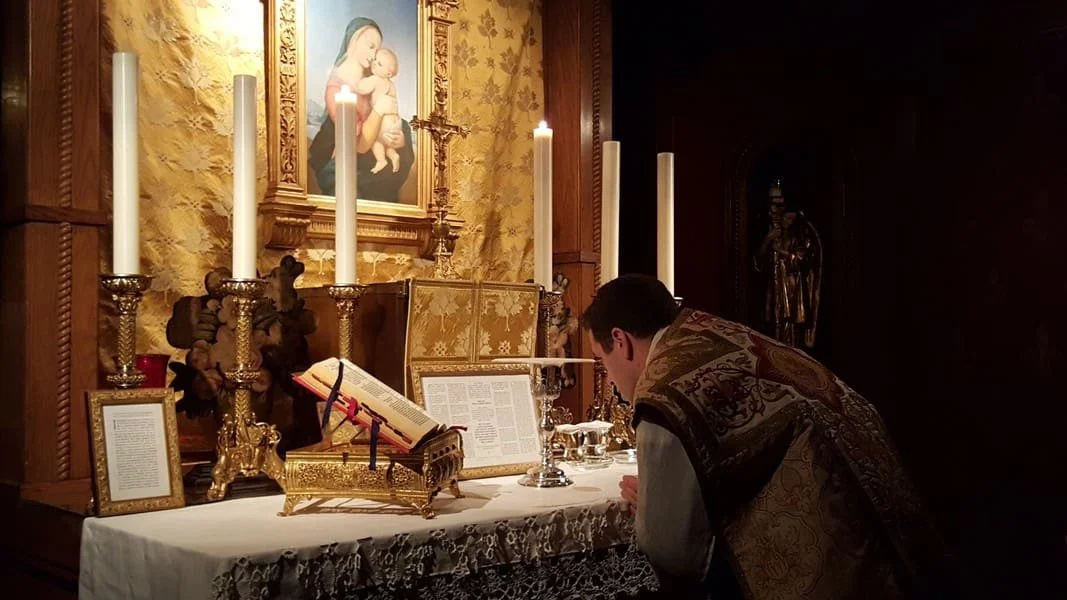
The Two Rites Side by Side
| Element | Traditional Roman Mass | Novus Ordo | Theological / Ritual Significance |
|---|---|---|---|
| Opening | Prayers at the Foot of the Altar, Psalm 42, double Confiteor structure | Introductory rites with several penitential options | Traditional rite begins with pronounced preparation for ascending the altar of sacrifice |
| Confiteor | Priest confesses, then ministers; saints explicitly invoked | Usually communal penitential act; several options | Stronger distinction of priestly preparation is reduced |
| Ascent to altar | Aufer a nobis asks purification before entering the Holy of Holies | Removed | Old rite explicitly evokes sacred sanctuary |
| Altar kiss | Repeated ritual veneration | Greatly reduced | Traditional altar is repeatedly treated as sacred locus of sacrifice |
| Offertory | Explicit oblation prayers anticipating sacrifice | Preparation of the Gifts using blessing formulas over bread and wine | Major change in anticipatory sacrificial vocabulary |
| Bread offering | “Receive, O holy Father… this spotless host…” | “Blessed are you, Lord God of all creation…” | Hostia / victim language disappears from this point |
| Wine offering | Chalice offered for salvation | Wine presented as fruit of vine/work of human hands | Sacrificial anticipation substantially reduced |
| Holy Trinity offering | Suscipe, Sancta Trinitas explicitly offers the oblation | Removed | Explicit Trinitarian sacrificial prayer disappears |
| Eucharistic Prayer | Roman Canon only | Roman Canon plus multiple alternatives | Unique ancient Roman Canon ceases to be obligatory |
| Canon | Said principally in profound silence | Normally audible | Atmosphere changes from hidden sacred action to public presidential prayer |
| Words over the Host | “This is My Body” | “This is My Body, which will be given up for you” | Additional words were incorporated into the Novus Ordo institution narrative over the Host |
| Mysterium fidei | “Mystery of faith” occurs within the traditional words over the chalice | Mysterium fidei removed from the chalice wording and placed after the consecration as the priest’s introduction to a congregational acclamation | A long-standing element of the Roman chalice formula was relocated and given a different liturgical function |
| Pro multis | “For you and for many” | Latin retained pro multis; the English-language Novus Ordo rendered it “for you and for all” for decades before the translation was changed to “for many” | The inherited pro multis was rendered in English by an interpretive rather than literal translation; the Holy See later required the more precise “for many” |
| Priest after Host consecration | Immediate genuflection → elevation → genuflection | Elevation → genuflection | One act of immediate adoration removed |
| Priest after chalice consecration | Same double pattern | Same reduced pattern | Repeated ritual adoration reduced |
| Fingers | Thumb and forefinger kept joined after consecration | Not required | Traditional rubric visibly safeguards Eucharistic particles |
| Signs of Cross | Numerous throughout Canon | Greatly reduced | Repeated sacrificial blessing symbolism diminished |
| Silence | Canon principally silent | Eucharistic Prayer normally proclaimed aloud | Different conception of ritual participation |
| Orientation | Priest and people normally face liturgical east together | Celebration facing people became widespread | Visual focus shifts toward priest/congregational interaction |
| Communion | Kneeling, ordinarily on tongue in traditional usage | Standing and Communion in hand widely authorised | Exterior signs of adoration substantially changed |
| Communion formula | Fuller formula invoking preservation unto eternal life | “The Body of Christ” | Formula shortened |
| Sacred vessels | Elaborate purification and handling | Simplified procedures | Eucharistic caution less ritually elaborate |
| Altar | Consecrated stone altar with relics in traditional discipline | Fixed or movable altar; broader materials permitted | Sacrificial altar can visually resemble a table |
| Lectionary | One-year cycle | Multi-year expanded lectionary | Major reconstruction rather than translation |
| Calendar | Traditional Roman sanctoral/temporal cycle | Extensively revised | Liturgical memory of the year substantially altered |
| Propers | Traditional Introit, Gradual, Offertory, Communion texts | Alternatives and substitutions widely permitted | Stable inherited textual identity weakened |
| Music | Gregorian chant / sacred polyphony normative tradition | Wide range in practice | Postconciliar parish practice often dramatically different |
| Liturgical roles | Sanctuary action concentrated upon ordained ministers and servers | Numerous lay ministries | Visual distinction between sanctuary and congregation reduced |
| Overall impression | Priest offering sacrifice at a sacred altar | Frequently presents visually as communal celebration around a table | The cumulative semiotics differ markedly |
No single row proves doctrinal contradiction.
The question is what the entire accumulation communicates.
1. The Mass Begins Differently
The traditional Mass begins at the foot of the altar.
The priest has not simply walked to a presidential chair to greet an assembly. He stands below the altar and prepares to ascend.
Psalm 42 gives the movement: “I will go unto the altar of God.”
The priest confesses his sins.
The server answers.
The priest asks for mercy.
Only then does he ascend.
At the altar he prays:
Take away from us our iniquities, we beseech Thee, O Lord, that with pure minds we may worthily enter into the Holy of Holies.
He then kisses the altar while invoking the merits of the saints whose relics are associated with it.
The symbolism is unmistakable:
SIN → PURIFICATION → ASCENT → HOLY PLACE → ALTAR → SACRIFICE
The Novus Ordo replaces this architecture with introductory rites centred more visibly upon the assembled congregation.
That is not merely a shortening. The ritual narrative has changed.
2. The Confiteor: Priest and People Are Not Liturgically Interchangeable
In the traditional structure the priest's confession and the ministers' confession reinforce an important theological distinction. The priest belongs to the Church like every other Christian and is himself a sinner. But at the altar he performs an action the congregation cannot perform.
Pius XII explicitly rejected the idea that the priest acts merely as a delegate of the assembled community. The Eucharistic immolation is accomplished by the priest acting sacramentally in the person of Christ.
The Novus Ordo's communal penitential structure does not formally deny the ministerial priesthood. But once again the question is one of cumulative expression.
The old rite repeatedly distinguishes:
PRIEST AT THE ALTAR from FAITHFUL ASSISTING AT THE SACRIFICE
The new rite repeatedly emphasises:
PRESIDER + ASSEMBLED COMMUNITY
The theological difference is not necessarily contained in one sentence. It emerges from the ritual grammar.
3. The Offertory: One of the Most Striking Changes
Here the contrast becomes particularly important. The traditional Offertory already speaks unmistakably in sacrificial language. Over the bread the priest offers the “spotless host” to God for his sins, offences and negligences and for those present and all faithful Christians, living and dead.
Hostia means a sacrificial victim. The bread has not yet been consecrated. The prayer therefore anticipates what it is destined to become: the divine Victim sacramentally present upon the altar. Over the chalice the priest offers it to God for salvation.
He then prays:
Receive, O Holy Trinity, this oblation which we offer unto Thee in memory of the Passion, Resurrection and Ascension of Our Lord Jesus Christ…
The direction of the action is unmistakable:
PRIEST → VICTIM → ALTAR → GOD
The traditional Offertory therefore prepares the theological imagination for what is about to occur.
4. What Replaced It?
The Novus Ordo replaced these prayers with formulas beginning:
“Blessed are you, Lord God of all creation…”
over bread and wine. The bread is described as fruit of the earth and work of human hands; the wine as fruit of the vine and work of human hands.
These prayers are frequently described as deriving from Jewish berakah forms of blessing. That observation should be stated accurately. They should not simply be called “Jewish Seder prayers,” as though the reformers copied the modern Passover Seder verbatim. That claim is too crude and historically vulnerable.
But the contrast with the traditional Roman Offertory remains extraordinary.
Compare the conceptual vocabulary.
Traditional Offertory
host / victim
sacrifice
sin
offence
negligence
salvation
oblation
Holy Trinity
Passion
saints
living and dead
New Preparation of the Gifts
blessing
creation
bread
fruit of the earth
work of human hands
wine
fruit of the vine
spiritual drink
The issue is not that blessing God for bread and wine is un-Catholic. Obviously it is not. The issue is:
Why were prayers saturated with explicitly Catholic sacrificial meaning removed from the Roman Mass and replaced with considerably less explicit formulas?
The difference is theological in effect even where the replacement words are not themselves heretical.
5. Does This Make the Mass Look More Like a Meal?
This is where careful terminology matters.
The Last Supper truly was a meal.
The Eucharist truly is a sacred banquet.
Catholic theology has never denied either proposition. The error condemned by Trent is reducing the Mass to a meal or bare memorial in such a way that its character as a true propitiatory sacrifice offered by a sacrificing priest is obscured or denied. Trent explicitly anathematised the proposition that the Mass is merely praise, thanksgiving or commemoration rather than propitiatory sacrifice.
Therefore the relevant question is not:
Does the Novus Ordo contain meal imagery?
The traditional liturgy does too. The question is:
What happens when sacrificial language is systematically reduced while table, assembly, proclamation and communal-meal symbolism become more visually prominent?
That is a much more substantial question.
6. The Roman Canon: From the Roman Prayer to One Option Among Several
For centuries the Roman rite possessed one Canon. Paul VI himself acknowledged that its basic form had remained stable from approximately the fourth or fifth century. Then came the reform.
Paul VI described the Eucharistic Prayer as the “major innovation” and added three new Eucharistic Prayers alongside the Roman Canon. That admission is historically important. The reform did not merely translate the Canon. It changed the Roman rite from:
ONE INHERITED ROMAN CANON to A MENU OF EUCHARISTIC PRAYERS
The ancient Canon survived. But it ceased to be the unavoidable heart of every Roman Mass.
That is a structural revolution.
7. Eucharistic Prayer II Is Not Simply the Ancient Roman Mass Restored
A common defence says that Eucharistic Prayer II is ancient because it derives from the Apostolic Tradition, historically attributed to Hippolytus. That needs qualification.
The prayer was a twentieth-century composition inspired by the ancient text rather than simply the ancient prayer restored unchanged. Even accounts sympathetic to the reform acknowledge substantial adaptation; modern scholarship has also questioned the traditional attribution of the source to Hippolytus and even its precise provenance.
The important point is therefore not that everything in Eucharistic Prayer II was invented from nothing. It was not. The point is that:
the ancient Roman Canon, whose doctrinal and devotional language had formed Roman Catholic worship for many centuries, could now routinely be replaced by newly constructed Eucharistic Prayers.
That alone establishes that the Novus Ordo was much more than an English translation of the traditional Mass.
8. The Consecration Was Changed
This deserves exceptional precision. The traditional Roman formula over the chalice contained:
Mysterium fidei — “the mystery of faith”
within the consecratory formula.
Paul VI explicitly removed those words from that location and transformed them into an introduction to a congregational acclamation after the consecration. He also prescribed a revised and standardised narrative formula for the new Eucharistic Prayers.
Likewise, over the Host the traditional decisive formula:
Hoc est enim Corpus meum
was placed within a revised institution narrative containing additional words.
Thus the traditional Roman formula was objectively altered. That should not be obscured. But neither should the theological argument claim more than can be demonstrated.
Nor did the controversy end with the restructuring of the Latin formula: in English, the inherited words pro multis—‘for many’—were rendered ‘for all’ for several decades, introducing an interpretive theological paraphrase at the very heart of the consecratory narrative.
“For Many” Became “For All” in the Postconciliar English Mass
There was another highly significant change that millions of English-speaking Catholics heard at the very heart of the Mass. The traditional Roman formula over the chalice contains:
pro vobis et pro multis
which means:
“for you and for many.”
The Latin Novus Ordo promulgated by Paul VI retained exactly those words:
QUI PRO VOBIS ET PRO MULTIS EFFUNDETUR IN REMISSIONEM PECCATORUM
— “which will be poured out for you and for many for the forgiveness of sins.”
Yet for decades the official English-language Novus Ordo rendered pro multis not as “for many”, but:
“for you and for all.”
That was not what the Latin text said. Nor was it the wording recorded in the Gospel accounts of St Matthew and St Mark:
“This is my blood of the new testament, which shall be shed for many unto remission of sins.” — Matthew 26:28
and:
“This is my blood of the new testament, which shall be shed for many.” — Mark 14:24
The difference eventually became impossible to ignore.
In 2012 Benedict XVI explicitly explained that rendering pro multis as “for all” was not simply a translation. It was an interpretation inserted into the liturgical text.
He wrote that the postconciliar reasoning had been that “many” was a Semitic expression effectively referring to the totality, and therefore translators thought it legitimate to render the phrase as “all.” But he acknowledged that the exegetical consensus behind that decision had collapsed and insisted that the words actually be translated as they stand:
“for many.”
The Holy See had already ordered episcopal conferences in 2006 to correct vernacular translations for precisely this reason. This is highly significant.
The Church had inherited Christ's scriptural words: FOR MANY
The Latin Novus Ordo itself still said: FOR MANY
Yet English-speaking Catholics were instructed for approximately forty years to hear the priest say: FOR ALL
at the consecration.
That is not a stylistic change. It changes the proposition heard by the congregation.
Does “For Many” Mean Christ Did Not Die for Everyone?
No. Traditional Catholic theology distinguishes carefully between the objective sufficiency of Christ's Redemption and its saving application.
Christ truly died for all mankind.
His sacrifice is sufficient for all.
The Church has never taught that Christ redeemed only some predetermined ethnic or numerical subset of humanity. But not every human being actually receives the fruits of that Redemption unto salvation. Catholic theology traditionally expresses the distinction approximately as:
Christ's Blood is sufficient for all
but
its saving fruits are efficacious in those who receive them.
This distinction matters. The phrase “for many” therefore does not mean:
Christ did not offer Himself for the human race.
Rather, it reflects the biblical and theological reality that salvation is not automatically possessed by every human being merely because Christ died.
The Holy See's own explanation when restoring “for many” made precisely this point: Christ died for all, but salvation is not mechanically applied to everyone irrespective of faith, grace and acceptance of God's gift. That is why the difference between the two phrases is not trivial.
“For All” and the Danger of Universalist Suggestion
The English words:
“shed for you and for all”
can readily suggest something different from:
“shed for you and for many.”
The first naturally emphasises the universality of Christ's redemptive death. That truth is Catholic. But standing alone at the moment of consecration it can also blur another equally Catholic truth:
Not all men are finally saved.
Christ's Redemption is universal in sufficiency and intention, but its fruits are not automatically possessed unto eternal life by every individual.
The traditional formula preserves that distinction with remarkable economy:
FOR YOU AND FOR MANY
The postconciliar English formula instead supplied an exegetical explanation:
FOR YOU AND FOR ALL
Thus an interpretation entered the very words pronounced over the chalice. Benedict XVI later acknowledged this explicitly. He stated that “for all” was something more than a translation. That admission matters enormously in assessing the liturgical reform.
The question is no longer merely:
Did traditionalists object to an unfamiliar translation?
The historical fact is:
the inherited Latin and scriptural wording said “many,” while vernacular authorities deliberately substituted “all” because they believed “all” better conveyed their interpretation of what “many” meant.
That is an extraordinary liberty to take with words situated at the centre of the Eucharistic consecration.
Did “For All” Make the Consecration Invalid?
Some traditional Catholics argued that substituting “for all” for “for many” invalidated the consecration of the Precious Blood. That argument has a serious historical pedigree within the postconciliar controversy, because sacramental form cannot simply be altered at will.
Nevertheless, it should not be stated as though universal invalidity were certain. The essential sacramental form and the precise role played by the words following “This is the chalice of My Blood” have been discussed by Catholic theologians for centuries.
The safer and stronger conclusion for this article is:
Changing “for many” to “for all” was a grave and unjustified alteration of the inherited biblical and liturgical formula, carrying genuine theological implications; but the mere existence of that mistranslation does not by itself establish with certainty that every Mass celebrated using it was invalid.
The Holy See itself treated the approved vernacular sacramental formulas as valid while directing that their meaning be understood according to the Latin typical text. In 1974 the Congregation for the Doctrine of the Faith stated that approved vernacular sacramental formulas were to be understood according to the intention expressed by the original Latin.
This does not make the alteration insignificant. Quite the contrary. It proves how extraordinary the postconciliar situation had become:
LATIN TYPICAL TEXT: “for many”
↓
SCRIPTURE: “for many”
↓
ENGLISH MASS HEARD BY THE FAITHFUL: “for all”
↓
HOLY SEE DECADES LATER: “for all” was an interpretation, not an accurate translation
↓
NEW TRANSLATION RESTORED: “for many”
The fact that the wording eventually had to be corrected confirms that the traditional objection was not imaginary.
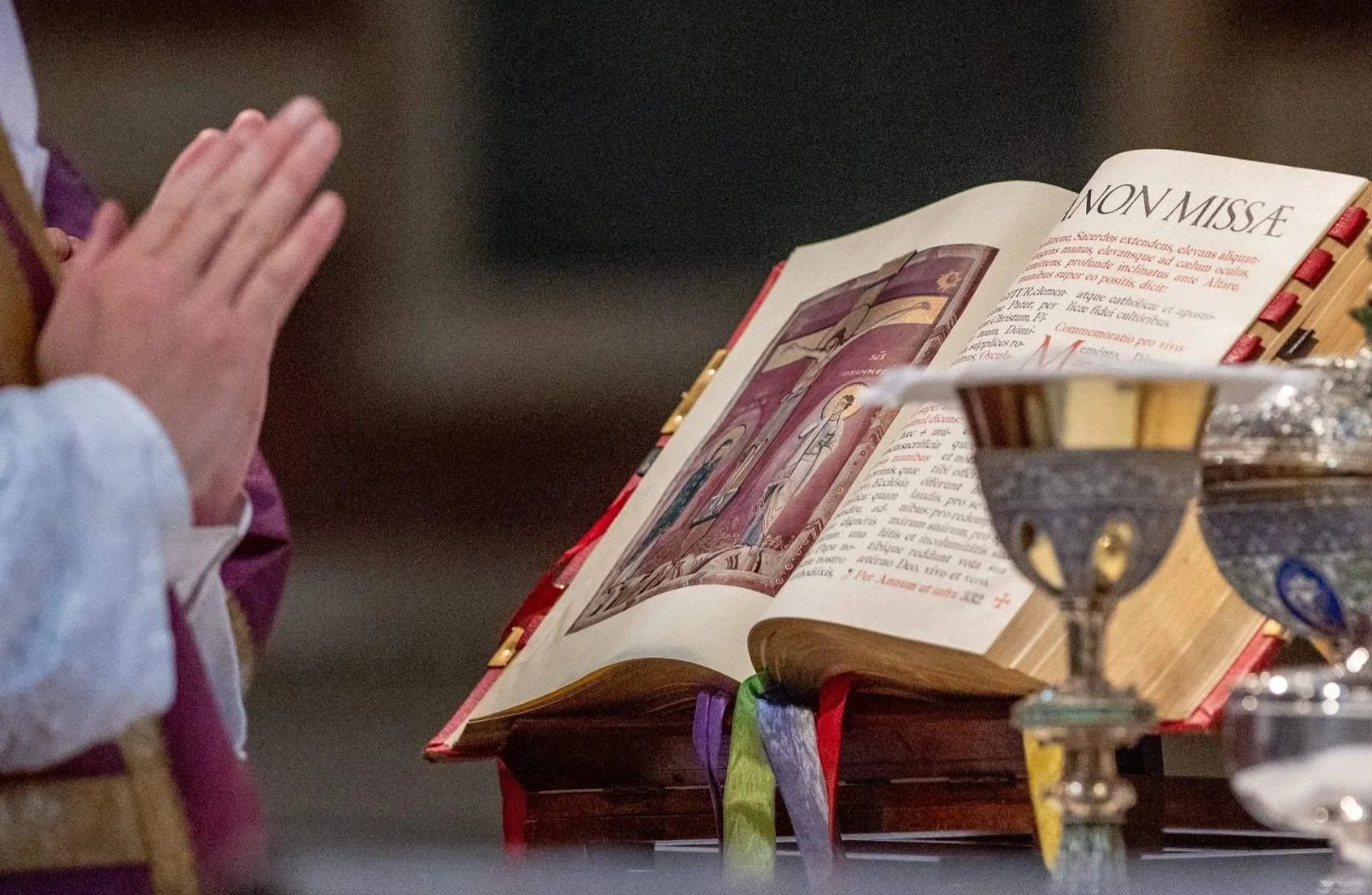
Why the Change Matters Theologically
The difference can be shown simply:
| Traditional / Current Latin | Old Postconciliar English | Theological Issue |
|---|---|---|
| For you and for many | For you and for all | Biblical wording replaced by interpretive paraphrase |
| Distinguishes universal Redemption from actual saving application | Stresses universality without expressing the traditional distinction | Can encourage an automatic/universalist reading if poorly catechised |
| Matches Matthew and Mark | Does not reproduce their wording | Scripture altered in liturgical translation |
| Matches pro multis | Does not literally translate pro multis | Translation became theological interpretation |
| Retained by Paul VI's Latin Missal | Used for decades in English | The vernacular departed from its own Latin typical edition |
This is therefore another example of why the Novus Ordo controversy cannot be reduced to:
“They just translated the Mass into English.”
Even the English translation did not always translate the Latin faithfully. At one of the most sacred moments of the Mass, the words “for many” became “for all.”
And decades later the postconciliar authorities themselves ordered the wording restored.
The Consecratory Changes at a Glance
The changes surrounding the consecration can be seen clearly when the inherited Roman formula, the reformed Latin text and the early English translation are placed side by side.
Traditional Roman Mass
THIS IS MY BODY
↓
Traditional Roman wording
↓
THIS IS THE CHALICE OF MY BLOOD
↓
OF THE NEW AND ETERNAL TESTAMENT
↓
MYSTERY OF FAITH
↓
WHICH SHALL BE SHED FOR YOU AND FOR MANY
↓
UNTO THE FORGIVENESS OF SINS
Reformed Latin Novus Ordo
Additional words added over the Host:
“which will be given up for you”
↓
Chalice formula reorganised
↓
Mysterium fidei removed from the words over the chalice
↓
Placed after the consecration as the introduction to a congregational acclamation
↓
Pro multis retained in Latin
English Novus Ordo for Decades
Pro multis was then rendered:
“FOR ALL”
rather than:
“FOR MANY”
until the English translation was corrected to “for many” in the revised Roman Missal introduced in 2011. This comparison is particularly important because it does not depend upon subjective impressions of reverence or ceremonial style. We are comparing actual words.
The words changed.
Their location changed.
Their translation changed.
And one of those translations was later acknowledged by postconciliar authorities to have been an interpretive rendering rather than a literal translation.
What These Changes Establish
The reform therefore affected the consecratory section at several levels simultaneously:
The inherited Roman institution narrative was revised.
Additional words were incorporated into the formula over the Host.
The chalice formula was reorganised.
Mysterium fidei was removed from its ancient location within the chalice formula.
The words of institution were standardised across multiple Eucharistic Prayers.
In English and several other vernacular translations, pro multis — “for many” — was rendered “for all.”
That translation remained in liturgical use for decades before the Holy See required a return to “for many.”
Thus it is impossible to maintain seriously that nothing changed except the language in which Catholics heard the traditional Mass. Even at the very words surrounding the consecration, the inherited Roman text was modified, rearranged and—at least in major vernacular translations—interpretatively altered.
That does not by itself settle the separate question of sacramental validity. It does, however, establish that the Novus Ordo was not merely the traditional Roman Mass translated into the vernacular.
9. Does the Changed Consecration Make the Novus Ordo Invalid?
This question requires distinguishing validity from liturgical orthodoxy, fittingness and theological expression. They are not identical questions.
A rite can be theologically impoverished without thereby being sacramentally invalid.
A valid sacrament requires the necessary matter, form, validly ordained minister and sacramental intention.
Consequently, it is too sweeping to argue:
The traditional formula was changed → therefore every Novus Ordo consecration is invalid.
That conclusion does not automatically follow. The central words:
“This is my Body”
and the corresponding identification of the chalice with Christ's Blood remain. Therefore a stronger traditional critique should say:
The alteration of the inherited Roman consecratory formula is itself extraordinarily serious, but alteration is not identical with invalidation.
Cases of genuine doubt may arise where there is defective matter, an invalid minister, substantial corruption of sacramental form, or defective sacramental intention.
Two separate questions must therefore be distinguished:
first, whether the reform and vernacular translations altered inherited consecratory wording in a theologically significant way;
second, whether those alterations were sufficient to destroy sacramental validity. The first can be demonstrated historically. The second requires a much more exact sacramental argument.
And the separate question of the validity of post-1968 Holy Orders must be examined in the dedicated article on the revised ordination and episcopal consecration rites.
10. What Happened Immediately After the Consecration?
Here the ceremonies themselves become theology in motion. In the traditional Mass, immediately after consecrating the Host, the priest:
GENUFLECTS
↓
ADORING CHRIST NOW PRESENT
↓
RISES
↓
ELEVATES THE SACRED HOST FOR THE PEOPLE
↓
REPLACES IT UPON THE CORPORAL
↓
GENUFLECTS AGAIN
The same basic pattern accompanies the Precious Blood. The old rubrics therefore surround the moment of consecration with repeated physical acts of adoration. The priest does not simply display the Host. He first adores.
The 1962 rubrics specifically direct him to genuflect immediately following the words of consecration, elevate the Host, replace it, and genuflect again.
The body is catechising. The priest's knees proclaim:
THIS IS GOD.
11. The Priest's Fingers Proclaim the Real Presence
One of the most remarkable traditional rubrics occurs after the consecration.
The priest keeps his thumb and forefinger joined. Why? Because those fingers have touched the Sacred Host. A particle of the consecrated Host may adhere to them.
If Christ is substantially present under every remaining Eucharistic species, then even the smallest Eucharistic particle must be treated with extraordinary reverence.
The traditional rubric therefore requires the priest to keep thumb and forefinger joined except when handling the Host until the ritual purification following Communion. The 1962 rubrics explicitly prescribe this discipline.
Think about what this teaches without a single catechism lesson. The child watching Mass sees the priest refusing casually to separate his fingers. Why?
Because he has touched God.
The rubric embodies Eucharistic doctrine. It says through action:
TRANSUBSTANTIATION IS REAL.
THE HOST IS NOT ORDINARY BREAD.
CHRIST REMAINS PRESENT.
PARTICLES MATTER.
HANDLE THE BLESSED SACRAMENT WITH FEAR AND LOVE.
The Novus Ordo abolished this requirement. Again, abolishing the rubric does not logically amount to denying transubstantiation.
But something was lost. The older ritual made the doctrine physically visible.
12. Genuflections: The Knee Teaches Theology
The traditional Mass contains many more genuflections and ritual acts of reverence toward the Blessed Sacrament. Once the consecration has occurred, the priest's movements are governed by the reality that Christ is physically and substantially present upon the altar.
When approaching or departing from the Blessed Sacrament, the ritual repeatedly demands adoration.
Servers likewise respond to the presence of the Blessed Sacrament according to the rubrics.
The cumulative effect is powerful.
The sanctuary ceases to look like an ordinary platform.
The altar is not an ordinary table.
The priest is not behaving like a chairman.
Something tremendous has happened.
God is present.
And everyone behaves accordingly.
13. Signs of the Cross
The traditional Roman Canon contains repeated signs of the Cross over the offerings. For example, immediately before the consecration in the Quam oblationem, the priest repeatedly signs the offerings while asking God to make the oblation blessed, approved, ratified, reasonable and acceptable, that it may become for us the Body and Blood of Christ.
After the consecration the Cross continues to dominate the ritual. The symbolism is impossible to miss:
ALTAR
VICTIM
CROSS
PRIEST
OBLATION
The reformed rite drastically reduced this ceremonial density. A sign of the Cross is not necessary for validity. But again:
lex orandi teaches.
Remove one sign and perhaps little changes.
Remove one prayer and perhaps little changes.
Remove one genuflection and perhaps little changes.
But remove dozens of reinforcing signs simultaneously and the cumulative ritual language changes considerably.
14. Altar Kisses
The traditional priest repeatedly kisses the altar. This is not romantic decoration.
The altar represents Christ and is the sacred place of sacrifice. Traditional altar consecration and the presence of saints' relics intensify that symbolism. The priest repeatedly venerates what he approaches.
The Novus Ordo sharply reduces these altar kisses. Once again:
not doctrine abolished, but doctrine less insistently embodied.
That distinction recurs throughout the reform.
15. The Altar Itself: Altar or Table?
The traditional Roman sanctuary visually centres upon the sacrificial altar. Traditional fixed altars were normally stone and intimately associated with relics.
In postconciliar practice, freestanding altars became widespread, often constructed in forms visually resembling ordinary tables.
Current Novus Ordo legislation permits broader construction materials and retains deposition of saints' relics as fitting, rather than making the old arrangement visually universal.
It would be inaccurate to say the Novus Ordo officially abolishes the concept of an altar. It does not. But architecture communicates.
Place a priest on the same side as the people, facing across a freestanding wooden structure toward the congregation, and the visual grammar becomes readily intelligible as:
presider + table + congregation
Place the priest and people together facing a consecrated high altar containing relics, with tabernacle, crucifix, candles, silence and repeated genuflections, and the visual grammar is:
priest + altar + victim + God
That is a profound perceptual difference.
16. Priest Facing God—or Facing the Congregation?
The Traditional Roman Mass normally places priest and people in the same liturgical direction. The priest is not “turning his back on the people.” Priest and people are turned together toward the altar and symbolically toward God. He stands at their head. The visual movement is vertical:
PEOPLE
↓
PRIEST
↓
ALTAR
↓
CROSS
↓
GOD
In the widespread postconciliar arrangement versus populum, the geometry becomes horizontal:
PEOPLE ↔ PRIEST
with the altar between them.
The Novus Ordo itself does not absolutely require celebration facing the people. That fact should be acknowledged. But historically the reformed liturgical culture made this arrangement overwhelmingly characteristic of postconciliar parish worship.
And it changed how the action appeared. The priest became far more visually central as a personality. Facial expressions became visible. Eye contact became possible. Gestures became interpersonal. The danger of the liturgy becoming a performance increased.
The traditional priest largely disappears into his sacerdotal function. His individuality is less important. He faces where everyone else faces. Toward God.
17. Silence: The Roman Canon as Sacred Action
In the traditional Mass the Canon is prayed principally in a low voice. This was specifically defended by the Council of Trent, which rejected condemnation of the Roman practice whereby portions of the Canon and the words of consecration were pronounced quietly.
Silence creates an unmistakable atmosphere. Something holy is occurring which is not reducible to public verbal communication. The faithful do not need to hear every syllable to “participate.” They unite themselves spiritually with the sacrifice.
The Novus Ordo normally turns the Eucharistic Prayer into an audible presidential prayer. Again, audibility is not heresy. But the experiential theology changes.
Traditional participation says:
Enter inwardly into the mystery being enacted at the altar.
Modern liturgical participation can easily become:
Listen, answer, sing, speak and perform an assigned action.
Those are not identical concepts of participation.
18. Communion: Receiving God
Traditional Communion is surrounded by signs emphasising the terrifying privilege of receiving the Body of Christ.
The communicant normally kneels.
The priest places the Sacred Host directly upon the tongue.
The traditional formula is fuller than the modern:
May the Body of Our Lord Jesus Christ preserve thy soul unto life everlasting. Amen.
The communicant does not take the Host. He receives.
The priest handles the Blessed Sacrament with consecrated hands.
The communicant kneels before Christ.
The altar rail itself visually marks the sanctuary.
The cumulative message is:
THIS IS NOT ORDINARY FOOD.
YOU ARE RECEIVING JESUS CHRIST.
ADORATION PRECEDES CONSUMPTION.
19. Communion in the Hand and Standing Communion
Postconciliar practice introduced a dramatically different ritual experience in many countries:
communicants standing;
Communion received in the hand;
lay extraordinary ministers distributing Communion;
large numbers moving rapidly through Communion lines;
reduced ritual attention to particles;
communicants sometimes carrying the Host briefly before consuming It.
None of those facts, individually considered, proves disbelief in the Real Presence. But compare the two ritual systems visually.
Traditional
KNEEL
↓
TONGUE
↓
PRIEST DISTRIBUTES
↓
SERVER HOLDS PATEN
↓
CONSECRATED FINGERS
↓
PARTICLES CAREFULLY GUARDED
Common Postconciliar Practice
STAND
↓
HAND
↓
PRIEST / DEACON / LAY MINISTER
↓
HOST PLACED IN COMMUNICANT'S HAND
↓
COMMUNICANT HANDLES HOST
The question becomes unavoidable:
Which system expresses the doctrine of the Real Presence more unmistakably through bodily action?
20. Sacred Vessels and Purification
The traditional rite treats chalice, paten, corporal, purificator and the priest's fingers with elaborate care. This can appear excessive only if one forgets the premise.
If the Host really becomes the Body of Christ, then Eucharistic particles really matter.
If the wine really becomes the Blood of Christ, the sacred vessels really matter.
The elaborate precautions therefore follow logically from the doctrine.
REAL PRESENCE
↓
CHRIST PRESENT UNDER THE SPECIES
↓
CHRIST PRESENT IN SACRED PARTICLES
↓
PARTICLES MUST BE PROTECTED
↓
FINGERS AND VESSELS MUST BE PURIFIED
The ceremony is theology made physical.
21. The Traditional Mass Repeatedly Tells You What It Is
This is perhaps the decisive point. Suppose a visitor entered a traditional Catholic church knowing almost nothing about Catholic theology. He sees:
a high altar;
a crucifix;
priest and people facing the same direction;
the priest bowing profoundly;
repeated genuflections;
repeated signs of the Cross;
altar kisses;
incense;
profound silence;
bells at the consecration;
elevation of Host and chalice;
priest's thumb and forefinger joined;
careful purification;
faithful kneeling;
Communion on the tongue;
sacred vessels handled with extraordinary care.
Then he reads the prayers. He encounters:
victim
sacrifice
oblation
sin
propitiation
salvation
Holy Trinity
Passion
Body
Blood
altar
unworthy servant
eternal life
The words and gestures interpret each other. The Mass explains itself.
Even the words heard at the consecration reinforce this theology: the inherited Roman formula speaks of the Blood shed ‘for you and for many,’ whereas English-speaking Catholics for decades heard ‘for you and for all.’
22. What Does the Typical Postconciliar Parish Experience Communicate?
Now imagine the same visitor entering many ordinary postconciliar churches after the reforms had become fully established. He may encounter:
a freestanding table-like altar;
priest facing congregation;
conversational greetings;
multiple lay readers;
lay Communion ministers;
microphones;
near-continuous audible speech;
congregational responses;
standing Communion;
Communion in the hand;
modern songs;
piano, guitar or drums;
informal interaction;
talking before or immediately after Mass;
substantially fewer genuflections;
fewer signs of the Cross;
fewer altar kisses;
no joined thumb and forefinger;
less visible concern with Eucharistic particles.
Not all Novus Ordo celebrations contain all these things. Some Novus Ordo celebrations are solemn, reverent, Latin, ad orientem, Gregorian and carefully celebrated. That fact must be acknowledged.
Likewise, some traditional Masses can be celebrated poorly. But this article concerns more than individual celebrants. It concerns the ritual systems themselves and the liturgical cultures they generated or facilitated.
And the contrast can be enormous.
23. Guitars, Drums and Popular Music: Vatican II Did Not Command This
Accuracy requires another important distinction. Vatican II itself did not order parishes to replace Gregorian chant with guitars, drums and popular-style songs. Quite the contrary, Sacrosanctum Concilium states that Gregorian chant is specially suited to the Roman liturgy and should have the principal place. Therefore it would be historically false to write:
Vatican II ordered guitars and modern pop music at Mass.
It did not. But the subsequent liturgical system permitted enormous practical diversification, and the postconciliar decades saw forms of music enter Catholic worship that would have been almost unimaginable within the older Roman liturgical culture. That distinction actually strengthens the article. It separates:
WHAT VATICAN II SAID
from
WHAT THE NEW LITURGICAL ORDER PERMITTED
from
WHAT POSTCONCILIAR AUTHORITIES AUTHORISED
from
WHAT PARISH CULTURE NORMALISED
from
WHAT WAS GENUINELY AN ABUSE
That is the proper Council → implementation → consequence method.
24. The Calendar Was Reconstructed
The transformation did not stop with the Ordinary of the Mass.
The calendar was extensively revised.
Saints disappeared from particular dates or classifications changed.
Octaves were altered or removed.
Vigils changed.
The structure of the liturgical year changed.
The lectionary changed dramatically.
The traditional one-year Sunday cycle became a multi-year cycle.
The temporal and sanctoral systems were reorganised.
Thus a Catholic transported from 1955 to an ordinary parish decades after Vatican II would not simply hear:
“his old Mass translated into English.”
He would encounter a substantially reconstructed liturgical ecosystem.
25. The Propers Matter
Traditional Roman worship is not merely the Ordinary:
Kyrie
Gloria
Credo
Sanctus
Agnus Dei
The Mass also possesses proper texts:
Introit;
Collect;
Epistle;
Gradual;
Alleluia or Tract;
Gospel;
Offertory;
Secret;
Communion;
Postcommunion.
These form the theological identity of individual Masses. The reform substantially revised this inherited textual world and expanded the possibilities for alternatives. The cumulative result was less liturgical fixity.
Again, flexibility is not itself heresy. But stability and repetition had allowed generations of Catholics to inhabit essentially the same Roman ritual world.
That continuity was broken to a significant degree.
26. How Much Was Removed, Rewritten or Rearranged?
Paul VI's own Missale Romanum confirms that:
the Eucharistic Prayer underwent major innovation;
three new Eucharistic Prayers were added;
the words surrounding the consecration were revised;
Mysterium fidei was relocated;
the Order of Mass was simplified;
elements of the Offertory were removed;
the fraction and Communion rites were altered;
the Proper of Seasons was revised;
the Proper of Saints was revised;
Commons, ritual Masses and votive Masses were revised.
The reform cannot be measured merely by counting deleted words. Some texts were removed, others replaced, others relocated, and still others were translated interpretively in the vernacular. The ‘for many’ → ‘for all’ episode is a particularly clear example.
How Much of the Traditional Mass Survived the Reform? This video visually demonstrates the extraordinary extent to which the inherited Roman liturgy was dismantled, rearranged and rewritten in the post-Vatican II reform. Even when the Novus Ordo is celebrated reverently, the comparison reveals how many prayers, gestures and sacrificial expressions of the traditional rite disappeared. The question is not simply whether the Mass changed, but whether the scale and theological direction of those changes went far beyond the limited, organic reform apparently envisaged by the Council Fathers.
Original video:: How much did the Catholic Mass change after Vatican II?
27. “But the Novus Ordo Still Calls the Mass a Sacrifice”
Yes. This is the strongest necessary qualification. The official Novus Ordo texts retain sacrificial terminology. The Roman Canon remains available. Other Eucharistic Prayers contain language of offering and sacrifice. The General Instruction describes the Eucharist in sacrificial terms. Therefore it would be false to claim:
“The Novus Ordo explicitly teaches that the Mass is merely a Protestant memorial meal.”
It does not. That would overstate the evidence. The much stronger criticism is subtler:
The new rite retained sufficient Catholic language to permit an orthodox sacrificial interpretation while removing or reducing a remarkable amount of the older rite's cumulative, unmistakable, repetitive and embodied expression of propitiatory sacrifice, sacrificing priesthood and Eucharistic adoration.
That is the comparison the reader should make.
Likewise, the mistranslation of pro multis does not mean that the official Latin Novus Ordo taught universal salvation: the Latin retained ‘for many.’ The problem was that the vernacular altered what the faithful actually heard.
28. The Ottaviani Intervention
This concern was raised immediately. In 1969 Cardinals Alfredo Ottaviani and Antonio Bacci transmitted to Paul VI a theological critique of the new Order of Mass. Their famous assessment was that the Novus Ordo represented, “both as a whole and in its details,” a striking departure from the Catholic theology of the Mass formulated by Trent.
That statement should not be treated as though it were itself an infallible judgment. Nor should later developments concerning Ottaviani's reaction to explanations and revisions be concealed. But the historical importance is undeniable:
the sacrificial-theological problem was recognised before the new rite had even become normal parish life.
The criticism did not originate decades later among nostalgic Catholics who simply disliked English. It arose at the rite's birth.
29. Is the Novus Ordo Basically a Protestant Service?
The Novus Ordo is not literally identical to a Lutheran, Anglican, Methodist or evangelical service. It retains:
a priesthood;
Eucharistic consecration;
sacrificial terminology;
prayers for the dead;
saints;
the Blessed Virgin;
the Real Presence in its official doctrinal framework;
sacramental Communion;
an altar;
liturgical vestments;
the Roman Canon as an option.
Therefore “it is simply a Protestant service” is too imprecise. But another proposition is considerably more defensible:
The reconstructed rite removed numerous specifically Roman Catholic ritual expressions that had made the sacrificial, propitiatory and sacerdotal character of the Mass unmistakable, while adopting a simpler ritual structure capable of appearing considerably closer to forms familiar within Protestant communal worship.
That is why a modern Protestant can often enter a Novus Ordo celebration and find the general external structure relatively familiar:
opening
readings
sermon
intercessions
presentation of bread and wine
audible presidential Eucharistic prayer
communal responses
Communion
closing
The traditional Roman Mass confronts him with a much more foreign religious world:
altar
sacrifice
priest
silence
sacred language
ritual separation
genuflection
victim
propitiation
adoration
The difference is not imaginary.
30. The Most Important Comparison: What Does Each Rite Teach Without Explaining It?
This is the heart of the question.
Imagine removing every catechism.
Remove every theology textbook.
Remove every explanatory pamphlet.
Allow a person to watch and hear the rites repeatedly.
What would he learn from the ceremonies themselves?
What he hears matters as much as what he sees: ‘victim,’ ‘sacrifice,’ ‘for many,’ repeated genuflections, careful handling and sacred silence combine into a single theological language.”
Traditional Roman Mass
The priest approaches something holy.
He prepares himself before ascending.
He repeatedly confesses his unworthiness.
He kisses the altar.
He offers a victim.
He speaks of sacrifice.
He invokes the Holy Trinity.
He enters profound silence.
He consecrates.
He immediately falls upon his knee.
He raises the Host.
He kneels again.
He treats his fingers as though the smallest particle matters.
He repeatedly genuflects before the Blessed Sacrament.
He carefully purifies the sacred vessels.
The people kneel to receive.
The Host is placed directly upon their tongues.
Everything says:
CALVARY IS SACRAMENTALLY PRESENT.
THE PRIEST OFFERS THE DIVINE VICTIM.
JESUS CHRIST IS REALLY HERE.
ADORATION IS REQUIRED.
Typical Novus Ordo
Much of this can still be believed. Some of it is still stated. But substantially less of it is ritually unavoidable.
That is the distinction.
31. Doctrine, Liturgical Text and Ceremonial Expression
We must therefore distinguish two propositions.
Proposition One
The Novus Ordo explicitly denies transubstantiation and propitiatory sacrifice. That proposition is not established simply by comparing the missals.
Proposition Two
The Novus Ordo substantially weakened the inherited Roman rite's ritual expression of transubstantiation, propitiatory sacrifice, sacrificing priesthood and Eucharistic adoration. The documentary and ritual comparison provides considerable evidence for that proposition.
The second argument is stronger precisely because it does not claim what cannot be proved.
32. Was This Merely Organic Liturgical Development?
This raises the deeper historical question. The traditional Roman Mass certainly developed. St Pius V did not invent it in 1570. Indeed Paul VI himself acknowledged that the basic arrangement of the Roman Canon reached far back into Christian antiquity.
Earlier liturgical development generally occurred gradually.
Prayers and ceremonies accumulated.
Feasts developed.
Certain rubrics changed.
But the inherited rite remained recognisably continuous.
What occurred in the 1960s was different in scale and method.
A commission systematically revised the existing rite.
Old prayers were removed.
New prayers were composed.
Ancient material was reconstructed and adapted.
Options multiplied.
The lectionary was rebuilt.
The calendar was reconstructed.
The Offertory was replaced.
The Canon ceased to be unique.
The consecratory formula was altered.
Ceremonial gestures were reduced.
That is why “organic development” is not an adequate description of everything that happened.
The Novus Ordo was deliberately constructed through liturgical reform.
33. One Ancient Roman Canon Became Optional
For centuries a Roman Catholic priest celebrating the Roman Mass prayed essentially the same Canon. Think what that means historically.
Generations of priests.
Saints.
Missionaries.
Martyrs.
Monks.
Parish clergy.
Popes.
They stood at Catholic altars and prayed the Roman Canon. Then, within a few years, a twentieth-century priest could celebrate a Roman Mass without praying that Canon at all. And he could do so every day. That is not merely translation.
It is a change in the identity of Roman liturgical prayer.
34. Reverence Is Not Merely an Emotion
Modern discussions frequently reduce reverence to sincerity.
A priest may be personally sincere.
A congregation may sincerely love God.
But liturgical reverence is also objective and ritual.
Catholicism historically taught the body what the soul should believe:
kneel because God is present.
bow because God is majestic.
keep sacred fingers together because Christ may remain upon them.
purify the chalice because it contained His Blood.
silence because mystery exceeds ordinary conversation.
kiss the altar because it is holy.
genuflect because the Eucharist is God.
Those actions form belief. Remove them repeatedly and another formation occurs.
35. The Difference Seen in Thirty Seconds
The contrast can almost be summarised visually.
Traditional Roman Mass
ALTAR
CRUCIFIX
PRIEST FACING GOD
SILENCE
SACRIFICE
GENUFLECTION
ELEVATION
ADORATION
KNEELING COMMUNION
SACRED VESSELS
CAREFUL PARTICLES
Typical Postconciliar Celebration
FREESTANDING TABLE
PRIEST FACING PEOPLE
AMPLIFIED SPEECH
COMMUNAL RESPONSES
MULTIPLE MINISTERS
MEAL IMAGERY
FEWER GENUFLECTIONS
STANDING COMMUNION
COMMUNION IN THE HAND
INFORMALITY POSSIBLE
The first is immediately recognisable as a sacrificial cult. The second can certainly be celebrated with Catholic sacrificial intention, but its external symbolism can much more readily resemble a Christian communal meal or Protestant-style worship service.
That is the problem.
Main Objection
“You Are Comparing a Reverent Traditional Mass With an Abusive Novus Ordo”
This is an important objection. A fair comparison cannot place a solemn High Mass at one extreme and a badly celebrated guitar Mass at the other and pretend every difference comes directly from the missal. The comparison must distinguish:
In the Novus Ordo itself
reconstructed Offertory;
multiple Eucharistic Prayers;
revised institution narrative;
relocation of Mysterium fidei;
reduced genuflections;
reduced signs of the Cross;
simplified rubrics;
revised Communion rites;
reconstructed calendar;
reconstructed lectionary;
wider liturgical options.
Authorised postconciliar developments
Communion in the hand in many territories;
standing Communion as common practice;
widespread extraordinary ministers;
broad use of vernacular;
freestanding altars;
expanded lay liturgical functions.
Common practices not commanded by Vatican II
versus-populum celebration;
contemporary musical idioms;
guitars and other instruments;
highly conversational styles;
widespread abandonment of Gregorian chant.
Genuine abuses
irreverent improvisation;
unauthorised changes to liturgical texts;
secular entertainment;
casual treatment of the Eucharist;
liturgical behaviour contrary even to Novus Ordo rubrics.
This distinction prevents exaggeration. But after making it, the fundamental comparison remains. The official reformed rite itself differs enormously from the traditional Roman Mass.
Response
The decisive argument does not depend upon liturgical abuse. Imagine the most reverent possible Novus Ordo:
Latin.
Gregorian chant.
Incense.
Beautiful vestments.
No guitars.
No extraordinary ministers.
Communion kneeling and on the tongue.
Priest ad orientem.
Roman Canon.
Even then it remains the reformed rite.
Its Offertory is different.
Its rubrics are different.
Its opening rites are different.
Its lectionary is different.
Its calendar is different.
Its Communion rites are different.
Its institution narrative is different.
Its ceremonial density is different.
Its options are different.
And the Roman Canon is now one Eucharistic Prayer among alternatives.
Therefore the issue cannot be reduced to bad implementation.
What We Can and Cannot Conclude
What We Can Conclude
The documentary and ritual evidence establishes that:
The Novus Ordo is not simply the Traditional Mass translated into the vernacular.
The Roman rite underwent an extensive deliberate reconstruction.
The traditional Offertory's explicit anticipatory sacrificial language was largely removed and replaced.
The previously unique Roman Canon became one Eucharistic Prayer among several.
The inherited Roman words surrounding the consecration were deliberately altered, including removal of Mysterium fidei from the chalice formula.
Numerous gestures expressing Eucharistic adoration and sacrificial theology were reduced.
The traditional discipline of keeping thumb and forefinger joined after consecration disappeared.
The number and ritual prominence of genuflections, altar kisses and signs of the Cross were substantially reduced.
The Communion rite was simplified and postconciliar practice substantially changed how the faithful ordinarily receive the Eucharist.
The calendar, lectionary, propers and distribution of liturgical roles underwent extensive changes.
The cumulative ritual expression of sacrifice, propitiation, sacerdotal distinction and Eucharistic adoration became less dense and less unavoidable.
The reform therefore constituted much more than linguistic translation or minor ceremonial updating.
The Latin Novus Ordo retained pro multis—“for many”—but major vernacular translations rendered it “for all” for decades.
This demonstrates that postconciliar liturgical change sometimes went beyond literal translation and introduced theological interpretation into the words heard by the faithful.
What We Cannot Conclude Merely From These Facts
We cannot conclude solely from the changes described above that:
every Novus Ordo Mass is sacramentally invalid;
every Novus Ordo priest lacks sacramental intention;
every person attending it denies the Real Presence;
Vatican II explicitly ordered every later liturgical abuse;
guitars or Communion in the hand were commanded by Sacrosanctum Concilium;
every feature of the Novus Ordo is Protestant;
every postconciliar Catholic consciously understands the Mass as merely a meal.
The “for all” translation does not by itself prove that every Mass celebrated with that approved translation was invalid or that the Latin Novus Ordo taught universal salvation.
Those are separate propositions requiring separate evidence. Precision does not weaken the traditional case. It protects it.
Conclusion
The Traditional Roman Mass and the Novus Ordo cannot accurately be described as the same rite with one in Latin and the other in English. The documentary evidence alone rules that explanation out.
Paul VI himself promulgated a substantially revised Order of Mass.
The Offertory was reconstructed.
The ancient Roman Canon ceased to be the sole Canon.
New Eucharistic Prayers were introduced.
The institution narrative was revised.
Mysterium fidei was moved from the chalice formula.
And although the Latin retained pro multis—‘for many’—English-speaking Catholics for decades heard the interpretive rendering ‘for all’ before the translation was eventually corrected.
But the deeper difference becomes visible only when words and actions are examined together.
The Traditional Roman Mass does not merely teach the Real Presence in a theology book. It genuflects before It.
It does not merely define transubstantiation. The priest keeps his consecrating fingers together because of It.
It does not merely call the Mass a sacrifice. Its Offertory, Canon, altar, gestures and orientation enact sacrifice.
It does not merely say Christ is the Victim. Its prayers repeatedly speak the language of victim, oblation, altar and propitiation.
It does not merely distinguish priest from congregation. Its entire sanctuary ritual manifests that distinction.
This is the crucial point.
The Traditional Roman Mass embodies Catholic Eucharistic theology with extraordinary ritual density. Its prayers and gestures converge upon one unmistakable reality: a sacrificing priest stands at a consecrated altar and sacramentally offers the divine Victim to God in the same sacrifice as Calvary, made present in an unbloody manner, while the faithful unite themselves with that sacrifice and adore Jesus Christ substantially present under the Eucharistic species.
The Novus Ordo did not erase every Catholic statement of that doctrine. That would be an exaggeration. But it removed, replaced or reduced a remarkable number of the prayers and ritual signs by which the Roman rite had previously proclaimed that doctrine. That cumulative fact is more important than any isolated deletion.
One genuflection can be removed without denying the Real Presence.
One sign of the Cross can disappear without denying Calvary.
One altar kiss can disappear without denying sacrifice.
One sacrificial prayer can be replaced without formally embracing Protestantism.
But when
the Offertory is reconstructed,
the Canon made optional,
new Eucharistic Prayers introduced,
consecratory language altered,
silence reduced,
genuflections reduced,
signs of the Cross reduced,
altar kisses reduced,
sacred-finger discipline removed,
Communion practice transformed,
orientation changed in widespread practice,
the sanctuary opened to multiple ministries,
the calendar reconstructed and
the entire ritual atmosphere altered,
the cumulative question can no longer be avoided:
At what point does simplification become transformation?
And beyond that lies an even more serious question:
Does the resulting rite express the Catholic theology of sacrifice, propitiation, priesthood and Real Presence with the same unmistakable clarity as the Roman Mass it replaced?
The side-by-side evidence makes it extremely difficult to answer yes. That is why the traditional Catholic objection to the Novus Ordo
is not fundamentally nostalgia.
It is not a preference for Latin.
It is not lace.
It is not incense.
It is not whether guitars are tasteful.
It concerns the theological function of worship itself.
The Mass teaches the Faith by being the Mass.
And when its words, gestures, silence, orientation, Offertory, Canon, Communion discipline, sacred handling and ritual architecture are transformed together, the question is no longer whether the ceremonies look different.
The question is whether a different ritual theology is being communicated. That question becomes still more serious when this liturgical transformation is placed beside the doctrinal, ecclesiological, missionary and disciplinary transformations that followed Vatican II.
The buildings remained.
The altars often remained, at least initially.
The vestments remained.
The words “Mass,” “priest,” “Eucharist,” “Catholic” and “Church” remained.
But the inherited Roman worship was extensively reconstructed.
That fact belongs within the larger investigation running throughout this FAQ:
Did the postconciliar system merely express the same Catholic religion in modern forms—or did Catholic institutional continuity conceal a progressively different religious system operating within inherited Catholic structures?
The liturgical evidence cannot answer that entire ecclesiological question by itself. But it is one of the most important pieces of evidence.
At that altar, the transformation was not confined to architecture, music or ceremonial atmosphere. It reached the Offertory, the Eucharistic Prayer, the consecratory narrative, the translation of Christ's words, the gestures of adoration and the manner in which Holy Communion was received.
Because if one wants to know what a religion believes, one of the most revealing places to look is at its altar.
Primary Sources
Council of Trent, Session XXII, Doctrine on the Sacrifice of the Mass (1562) — definitive Catholic teaching concerning the Mass as true and propitiatory sacrifice, the ministerial priesthood, Roman Canon and sacred ceremonies.
Pius XII, Mediator Dei (1947) — authoritative explanation of the Mass as the unbloody offering of the same Victim as Calvary and of the distinction between ministerial priesthood and participation of the faithful.
St Pius V, Quo Primum (1570) — promulgation of the codified Roman Missal following Trent and evidence of the historical place of the traditional Roman rite.
Missale Romanum, 1962 — Ordo Missae and Ritus Servandus — primary source for the prayers, rubrics, genuflections, handling of the Sacred Host and traditional Roman ceremonial.
Second Vatican Council, Sacrosanctum Concilium (1963) — conciliar constitution authorising liturgical reform while retaining Latin and explicitly assigning Gregorian chant pride of place.
Paul VI, Missale Romanum (1969) — promulgating constitution of the reformed Roman Missal; particularly important for its description of the new Eucharistic Prayers, revised words of institution, relocation of Mysterium fidei and simplification of the Order of Mass.
General Instruction of the Roman Missal — official rubrical and theological framework of the reformed rite.
Cardinals Ottaviani and Bacci, Short Critical Study of the New Order of Mass (1969) — historically important contemporary traditional critique of the theological implications of the reform.
Further Reading
Pius XII, Mediator Dei — indispensable preconciliar magisterial treatment of Catholic liturgical theology.
Michael Davies, Pope Paul's New Mass — extensive traditionalist historical critique of the reform.
Annibale Bugnini, The Reform of the Liturgy 1948–1975 — important insider account from a principal architect of the reform.
Louis Bouyer, Memoirs — valuable testimony from a theologian directly involved in parts of the reform.
Cardinals Ottaviani and Bacci, Short Critical Study of the New Order of Mass — contemporary theological criticism.
Related Questions
Why Was the Traditional Roman Mass Replaced?
Was the Novus Ordo an Organic Development of the Roman Rite?
Why Was the Traditional Offertory Removed?
Did Protestant Ideas Influence the Liturgical Reform?
Did the New Mass Weaken Belief in the Real Presence and Sacrifice?
Are the Post-1968 Rites of Holy Orders Valid?
Can a Catholic Attend the Novus Ordo?
What Does the Liturgical Revolution Tell Us About Vatican II and the Postconciliar Religion?