What Did Vatican II Change About the Nature of the Church?
Short Answer
Vatican II did not explicitly deny that Jesus Christ founded one Church, nor did it formally declare that all Christian denominations or all religions are equally true. The change was more subtle—and more consequential.
Before Vatican II, the Catholic Magisterium identified the Church of Christ with the Roman Catholic Church in direct and exclusive terms.
Pope Pius XII stated in Humani Generis that:
“the Mystical Body of Christ and the Roman Catholic Church are one and the same thing.”
He had already taught in Mystici Corporis Christi that those divided from the Church in faith or government:
“cannot be living in the unity of such a Body.”
Vatican II's Lumen Gentium, however, adopted a different formulation. The Church of Christ:
“subsists in the Catholic Church”
while “elements of sanctification and of truth” exist outside her visible structure.
The Council then developed an ecclesiology in which:
baptized non-Catholics possess a real though incomplete relationship with the Catholic Church;
significant elements belonging to Christ's Church exist outside her visible boundaries;
separated Churches and ecclesial communities have significance in the “mystery of salvation”;
and, most strikingly, the Holy Ghost uses those separated communities as “means of salvation.”
Regarding non-Christian religions, Nostra Aetate taught that the Church “rejects nothing that is true and holy” in them and regards with “sincere reverence” certain ways of life, teachings and religious practices found within them.
Later postconciliar teaching developed this further. It spoke of
the Holy Ghost's activity within religious traditions,
of “saving elements” in the great religions, and
even stated that such religions “can contribute” to helping men toward eternal salvation—while simultaneously insisting that whatever saving efficacy exists comes entirely from Jesus Christ.
The real change, therefore, cannot be reduced to the single expression subsistit in.
It concerns a new ecclesiological framework for understanding the boundaries of the Church, Christian separation, religious error, ecumenism and the relationship of other religions to God's plan of salvation.
The postconciliar authorities maintain that this is legitimate doctrinal development.
The question this article examines is whether that framework can actually be reconciled with the ecclesiology taught by Leo XIII, Pius XI and Pius XII before Vatican II.
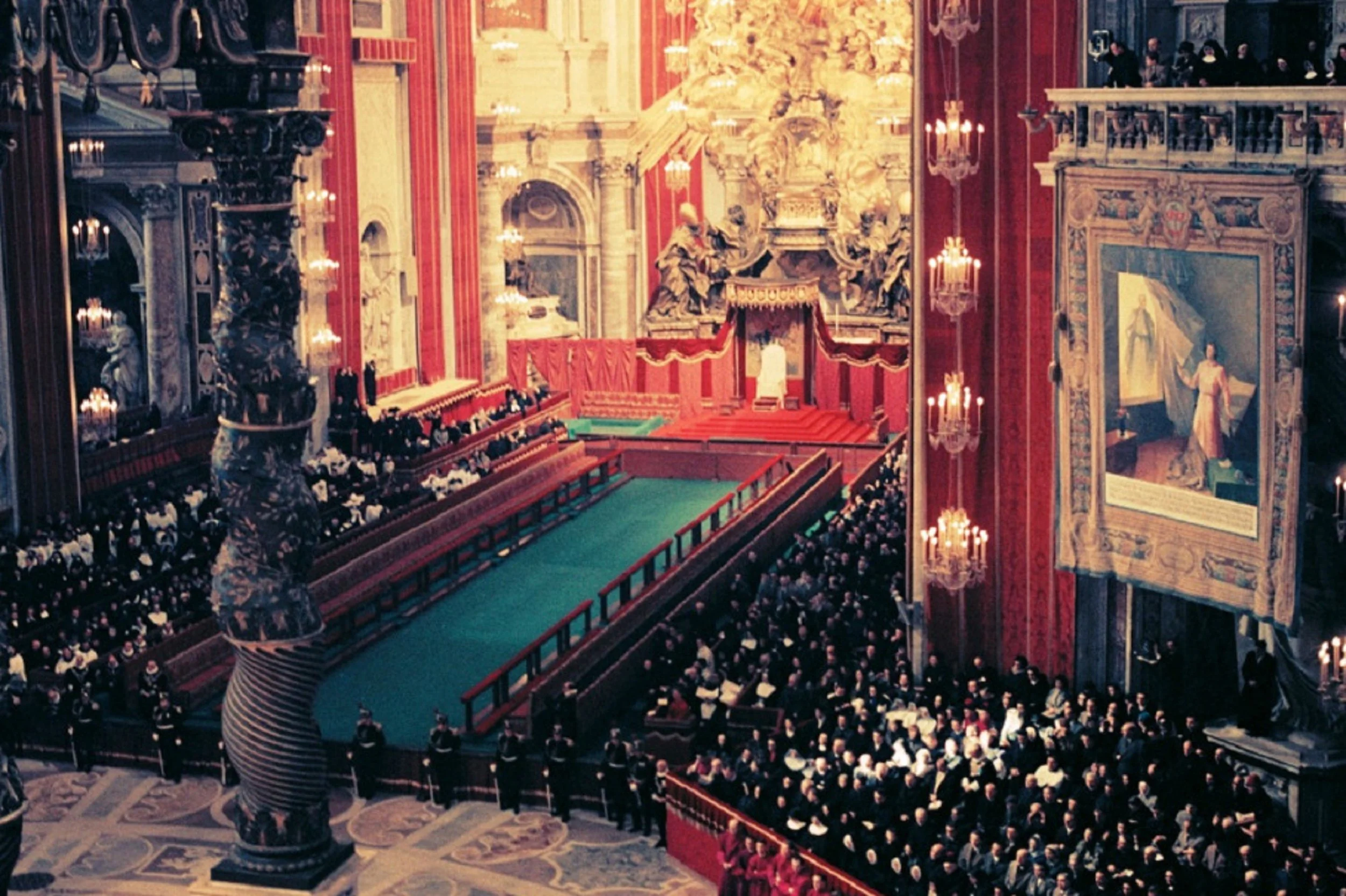
The Second Vatican Council (1962–1965) assembled thousands of bishops in St Peter's Basilica. Its Constitution Lumen Gentium introduced the formulation that the Church of Christ “subsists in” the Catholic Church, while its other documents developed a new ecclesiological language concerning separated Christians, ecumenism and non-Christian religions.
Why This Question Matters
This is not an abstract dispute over Latin terminology. It concerns the fundamental question:
What is the Church Jesus Christ founded?
Did Christ establish one visible supernatural society possessing:
one Faith;
one government;
one sacramental communion;
one divinely instituted mission;
and one path by which mankind is incorporated into His Mystical Body?
Or can Christ's Church also be genuinely “present and operative” in religious communities visibly separated from Catholic unity?
Can a Protestant denomination that rejects the Mass, papal authority, sacramental priesthood and other Catholic doctrines nevertheless function as a “means of salvation”?
Can religions that deny the Trinity, Incarnation and Redemption nevertheless contain “saving elements” and positively “contribute” to man's journey toward eternal salvation?
These questions affect the Catholic understanding of:
the identity of the Church;
Church membership;
heresy and schism;
Christian unity;
conversion;
missionary activity;
ecumenism;
non-Christian religions;
extra Ecclesiam nulla salus;
the supernatural necessity of the Catholic Faith;
and ultimately the indefectibility of the Church.
We must therefore establish first what the Catholic Church taught before Vatican II.
What the Catholic Church Traditionally Taught
Christ Founded One Church
Christ did not establish an indefinite collection of Christian communities. He said:
“Upon this rock I will build my church.” — Matthew 16:18
St Paul similarly teaches:
“One body and one Spirit… one Lord, one faith, one baptism.” — Ephesians 4:4–5
And the Church is identified as Christ's Body:
“the church, which is his body” — Ephesians 1:22–23
The New Testament therefore presents a profound unity:
One Christ → one Body → one Faith → one Baptism → one Church.
Noah's Ark → the Church
The Fathers repeatedly used Noah's Ark as a figure of the Church. The typology is powerful:
Flood and destruction
↓
one Ark provided by God
↓
salvation within the Ark
↓
the one Church established by Christ
St Peter himself connects the Flood with Baptism:
“In the days of Noe, when the ark was a building: in the which, few, that is, eight souls were saved by water. Whereunto Baptism being of the like form now saveth you also: not the laying away of the filth of the flesh, but the examination of a good conscience toward God by the resurrection of Jesus Christ.” — 1 Peter 3:20–21.
St Cyprian of Carthage (c. 210–258), in On the Unity of the Catholic Church, emphasised that Christ's Church is one and that separation from its unity is separation from the Body.
The Church was therefore never traditionally understood as a federation of mutually separated Christian bodies.
Leo XIII: Christ's Mystical Body Cannot Be Composed of Separated Bodies
Pope Leo XIII's Satis Cognitum (1896) is one of the most important preconciliar treatments of this subject. Leo teaches that the Church possesses visible unity in:
faith;
government;
communion.
Using the analogy of the human body, he insists that separated members cannot simultaneously constitute the one living Body. His conclusion is unequivocal:
“The Church of Christ, therefore, is one and the same for ever.”
Those who leave that unity do not become another legitimate manifestation of the same Church. They have separated from it.
Leo invokes St Augustine's image of a severed bodily member: while attached to the body it lives; when severed, it no longer participates in the body's life. The fundamental ecclesiology is therefore:
one visible Body
rather than:
several separated ecclesial bodies possessing different degrees of the same ecclesial reality.
Pius XI: Christian Unity Means Return to the Catholic Church
The contrast becomes even clearer in Pius XI's Mortalium Animos (1928). The Pope confronted precisely the developing ecumenical idea that the Church of Christ might somehow be composed of separated Christian communities. He rejected the theory that Christ's Church consists of:
“several churches or distinct communities”
remaining separated while sharing certain doctrines. Pius XI insisted that Christ had already established one visible Church possessing unity of doctrine and government. Christian unity was therefore not something that the Catholic Church herself had lost. Consequently, Pius XI stated:
“the union of Christians can only be promoted by promoting the return to the one true Church of Christ”
of those who had separated from it. That sentence is crucial.
The preconciliar model was:
Christ founded one Church
↓
that Church remains one
↓
some Christians separated from her
↓
the Church herself did not lose unity
↓
those separated must return to her.
This is markedly different from much of the ecumenical language that followed Vatican II.
Pius XII: The Mystical Body and Catholic Church Are “One and the Same Thing”
Pius XII made the identification still more explicit. In Mystici Corporis Christi (1943), he explained who belongs to the visible Church:
“only those are to be included as members of the Church who have been baptized and profess the true faith”
and who have not separated themselves from the unity of the Body. He then drew the obvious consequence:
“those who are divided in faith or government cannot be living in the unity of such a Body.”
Heresy, schism and apostasy therefore possess objective ecclesiological consequences.
A person may possess baptism.
He may retain Christian beliefs.
He may even retain other supernatural realities derived from Christianity.
But separation in faith or government is nevertheless separation from the visible unity of the Mystical Body.
Then, in Humani Generis (1950), Pius XII addressed theologians questioning the identification between the Mystical Body and Catholic Church. He reaffirmed the doctrine:
“the Mystical Body of Christ and the Roman Catholic Church are one and the same thing.”
The equation could scarcely be clearer:
Mystical Body of Christ = Roman Catholic Church.
This is the immediate doctrinal background against which Lumen Gentium must be examined.
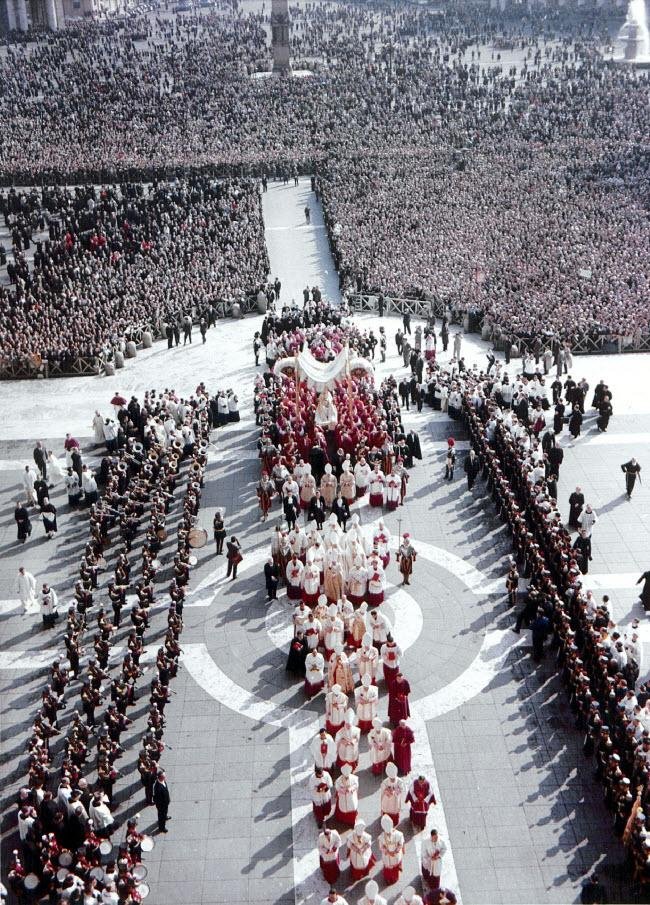
Pope John XXIII and the solemn opening of the Second Vatican Council, 11 October 1962. John XXIII maintained that the Council was not intended to introduce a new deposit of faith, but to present the Church's teaching in a manner adapted to the modern age. The decisive question is therefore whether the resulting formulations preserved the meaning of the earlier doctrine.
What Lumen Gentium Changed
The critical passage occurs in Lumen Gentium 8. Instead of simply repeating that the Church of Christ is the Catholic Church, Vatican II said that the Church established by Christ:
“subsists in the Catholic Church”
and immediately added that outside her visible structure there are:
“many elements of sanctification and of truth.”
The change from est—“is”—to subsistit in—“subsists in”—became one of the most controversial ecclesiological formulations of Vatican II. But the case should not be made to depend upon that expression alone. The decisive question is:
What ecclesiology surrounds it?
The Strongest Defence of Subsistit In
The strongest postconciliar explanation must be presented fairly. The Congregation for the Doctrine of the Faith stated in 2007 that subsistit in does not mean that the Church of Christ merely exists partially in the Catholic Church. It said that the expression indicates:
“the full identity of the Church of Christ with the Catholic Church”
and therefore:
“does not change the doctrine on the Church.”
That clarification is important. It means that one should not claim that Vatican II explicitly taught:
The Catholic Church is merely one branch of the Church of Christ.
It did not. But the same CDF document then makes the broader ecclesiological claim that creates the real difficulty. It states that the Church of Christ can be:
“present and operative”
in Churches and ecclesial communities that are not fully united with the Catholic Church. Thus the postconciliar position simultaneously maintains:
the Church of Christ uniquely subsists in the Catholic Church
and:
the Church of Christ is ecclesially present and operative outside full Catholic communion.
That second proposition is where the larger problem begins.
The Real Change Was Larger Than Subsistit In
The argument should therefore not be:
Pius XII said “is”; Vatican II said “subsists”; therefore Vatican II contradicted Pius XII.
That is too simplistic. The stronger argument examines the entire sequence.
Before Vatican II
Church of Christ = Roman Catholic Church
↓
membership requires profession of the true Faith and ecclesiastical communion
↓
heresy and schism separate from the Body
↓
separated Christian societies do not constitute parts of Christ's Mystical Body
↓
Christian unity requires return to the Catholic Church.
Vatican II and its postconciliar development
Church of Christ “subsists in” the Catholic Church
↓
elements of sanctification and truth exist outside her visible structure
↓
non-Catholic Christians possess a real though imperfect communion
↓
separated Churches and communities possess significance in the mystery of salvation
↓
those communities themselves can be used as “means of salvation”
↓
the Church of Christ can be described as “present and operative” within them
↓
ecumenism becomes a process of restoring fuller communion rather than principally the return of separated individuals to the Catholic Church.
That cumulative development is much more important than a dispute over one Latin verb.
The “People of God”
Another important feature of Lumen Gentium is the prominence it gives to the biblical concept of the People of God.
The expression itself is unquestionably Catholic. Scripture speaks repeatedly of God's people. There is an authentic biblical progression:
Israel
↓
the Old Covenant people
↓
Christ establishes the New Covenant
↓
the Church becomes the new People of God.
There is therefore nothing objectionable merely in calling the Church the People of God. Nor did Vatican II abandon the doctrine of the Mystical Body. The issue concerns the broader ecclesiological architecture.
Lumen Gentium placed its chapter on the People of God before its detailed treatment of the hierarchy and subsequently described different relationships to this People of God.
Catholics are fully incorporated.
Other baptized Christians are linked to the Church in various ways.
Those who have not received the Gospel are then described in relation to the People of God.
This provided an ecclesiological framework capable of describing religious relationships through differing degrees of proximity and communion.
From Membership to Degrees of Communion
Pius XII's language concerning membership was remarkably concrete. Membership required:
baptism;
profession of the true Faith;
and continued unity with ecclesiastical government.
Those divided in faith or government were not living within the unity of the Body. Lumen Gentium retained the traditional visible bonds when discussing full incorporation. But it then said:
“in many ways she is linked”
with baptized Christians who do not profess the Catholic Faith in its entirety or remain in communion with the successor of Peter.
The Council spoke of their baptism, Scripture, faith in Christ, prayer, spiritual gifts and, in certain communities, episcopacy and Eucharist. Thus the conceptual emphasis moved increasingly from the binary question:
member / non-member
toward:
full communion / imperfect communion.
There is an important truth underlying this.
Baptism outside visible Catholic communion can be valid.
Eastern schismatics can possess valid Orders and sacraments.
Protestants possess inspired Scripture.
Non-Catholics can profess genuine revealed truths.
Grace can operate in persons who are not visible members of the Catholic Church.
None of those facts was invented by Vatican II. The decisive question is whether these realities merely belong by right to the Catholic Church while existing outside her visible boundaries, or whether the separated religious communities possessing them acquire a positive ecclesial status as communities.
Unitatis Redintegratio answers that question in unmistakable language.
Unitatis Redintegratio: Separated Communities as “Means of Salvation”
This is one of the most important passages in the entire controversy. Vatican II first states that significant elements which build up the Church can exist outside the visible boundaries of Catholicism. It lists:
Scripture;
grace;
faith;
hope;
charity;
gifts of the Holy Ghost;
and visible Christian elements.
It then says that separated Christians use liturgical actions capable of engendering grace.
But the Council does not stop there. It moves from individual Catholic elements to the separated communities themselves.
Unitatis Redintegratio 3 states that:
“the separated Churches and Communities as such”
have not been deprived of significance in the mystery of salvation. Then comes the decisive sentence:
“the Spirit of Christ has not refrained from using them as means of salvation.”
The qualification must also be stated. Vatican II says that whatever efficacy they possess derives from the fullness of grace and truth entrusted to the Catholic Church. Nevertheless, the proposition remains remarkable.
The Council is saying more than:
A Protestant can receive grace despite being separated from Catholic unity.
It is saying:
a separated Christian community as such can be used by the Holy Ghost as a means of salvation.
That is a fundamentally more difficult proposition to reconcile with Pius XI's insistence that separated Christian communities must return to the one true Church and Pius XII's teaching that those divided in faith or government cannot live within the unity of Christ's Mystical Body.
The Critical Distinction: Grace Outside the Church Is Not the Same as Salvation Through a Separated Religion
Traditional Catholic theology never required Catholics to believe that God gives no grace whatsoever to anyone visibly outside the Church. That would be false.
Nor did traditional theology deny that valid Christian realities can exist outside visible Catholic communion. But there is a critical distinction between:
God acting upon a soul outside visible Catholic membership
and:
God employing the separated religious body itself as a means of salvation.
Likewise:
valid Baptism administered by a Protestant
does not necessarily mean:
Protestantism is a means of salvation.
The sacrament belongs to Christ. Its efficacy comes from Christ.
Its sacramental reality belongs objectively to the Catholic patrimony even when administered outside visible Catholic communion. The theological question is therefore whether the separated religious system itself can be assigned positive instrumental significance within God's economy of salvation.
Vatican II's language plainly moves in that direction.
Nostra Aetate and Non-Christian Religions
The development becomes broader when we turn from separated Christians to non-Christian religions.
Here precision is essential. Nostra Aetate does not explicitly call Hinduism, Buddhism or Islam “means of salvation.” Nor does it say that all religions are equally true. It explicitly retains the proclamation of Christ.
Nevertheless, its language concerning non-Christian religions represents an important change of emphasis. Speaking of Hinduism, Buddhism and other religions, Nostra Aetate says that they attempt to answer the deepest questions of human existence. It describes Buddhism as teaching:
“a way”
by which men seek liberation or illumination. It then says of non-Christian religions generally:
“The Catholic Church rejects nothing that is true and holy in these religions.”
It further states that the Church regards with:
“sincere reverence”
certain ways of life, teachings and religious practices found within them. The Council qualifies this by saying that these things often reflect:
“a ray of that Truth which enlightens all men.”
And it continues to proclaim Christ as “the way, the truth, and the life.” The problem therefore is not that Nostra Aetate explicitly declared all religions to be salvific. It did not. The more important question is:
What theological development did this new framework permit?
Paul VI and the New Orientation of Dialogue
The shift was not confined to conciliar texts. While Vatican II was still underway, Paul VI issued Ecclesiam Suam in 1964. He announced:
“The Church must enter into dialogue with the world in which it lives.”
He explained that this approach would characterise his apostolic ministry and explicitly connected it with the pastoral orientation of the Council.
Paul VI then described humanity in a series of “concentric circles.” Among these were adherents of Judaism, Islam and the great Afro-Asian religions.
To his credit, Paul VI explicitly rejected religious indifferentism and declared Christianity:
“the one and only true religion.”
That qualification is essential. But the method had clearly changed. The dominant orientation was increasingly described in terms of:
dialogue
respect
common values
collaboration
and recognition of what is “good and true” within other religions. This vocabulary would become characteristic of postconciliar Catholic relations with non-Christian religions.
Paul VI's Closing Speech: A “New Type of Humanism”
Paul VI's speech closing Vatican II on 7 December 1965 is particularly revealing of the Council's pastoral orientation. Speaking of modern secular humanism, he famously said:
“The religion of the God who became man has met the religion… of man who makes himself God.”
He then asked what occurred between them. Was there confrontation or condemnation? Paul VI answered that there had been no such clash. Instead, he described:
“A feeling of boundless sympathy”
permeating the Council. He concluded by speaking of:
“our own new type of humanism.”
These words do not themselves establish a doctrinal contradiction. They are not a definition of ecclesiology. But they are valuable historical evidence concerning the Council's deliberate pastoral orientation: confrontation and condemnation were being replaced to a remarkable degree by dialogue, sympathy, engagement and positive recognition.
That orientation helps explain the ecclesiological and interreligious language appearing in the Council's documents.
John XXIII: A New Manner of Presenting the Faith
John XXIII had similarly explained immediately before the Council that it was not intended to introduce a new doctrine. In September 1962 he said:
“it is not a question of new doctrine”
but spoke of the Council presenting Christ's message to modern man in a new manner. At the Council's opening, he distinguished the substance of the ancient deposit of faith from:
“the manner in which it is presented.”
The stated intention therefore was not doctrinal revolution. That historical fact should be acknowledged. But intention does not settle the theological question.
A Council may intend merely to express existing doctrine differently while nevertheless introducing formulations whose objective implications require examination.
The decisive test remains:
Did the resulting propositions preserve the meaning of the earlier doctrine?
From Vatican II to a Theology of Other Religions
The postconciliar development is especially important because it demonstrates how the new framework was understood and expanded by the authorities responsible for implementing Vatican II.
A major 1991 Vatican document, Dialogue and Proclamation, spoke explicitly of:
“the active presence of the Holy Spirit”
in the religious life of members of other religious traditions. It then made a particularly significant statement. Non-Christians may respond positively to God's invitation:
“in the sincere practice of what is good in their own religious traditions”
and thereby receive salvation in Jesus Christ even without recognising Him explicitly as their Saviour. The document later speaks of:
“elements of grace”
within other religious traditions.
Again, qualifications are present. The document does not say that religious error saves. It affirms Christ as the source of salvation. But the conceptual development is unmistakable. We have moved beyond:
God may save someone who is inculpably ignorant of Catholicism
to:
a person's sincere practice of what is good within his religious tradition can form part of his positive response to God's saving invitation.
John Paul II: Other Religions Can “Contribute” Toward Eternal Salvation
The development becomes even more explicit in a General Audience of John Paul II on 4 February 1998. John Paul II strongly affirmed that Christ is the unique Saviour. He expressly rejected:
“autonomous sources or ways of salvation”
apart from Jesus Christ.
That qualification must be retained. But he then taught that Christians recognise within the great religions:
“the presence of saving elements”
and continued:
“these religions can contribute”
through the mysterious action of the Holy Ghost to helping men toward eternal happiness.
This is extraordinarily significant. The proposition is not merely:
God can save a Hindu despite Hinduism.
Nor merely:
a Hindu may possess certain naturally true moral principles.
The religions themselves are said, in a qualified sense, to be capable of contributing to man's journey toward eternal salvation. John Paul II insists that whatever positive role they possess is dependent entirely upon Christ's redemptive activity.
Nevertheless, the instrumental language remains.
The Development in One Sequence
The cumulative movement can now be seen much more clearly.
Pre-Vatican II
The Mystical Body of Christ is the Roman Catholic Church
↓
those divided in faith or government cannot live in the unity of that Body
↓
separated Christian bodies do not collectively constitute Christ's Church
↓
Christian unity requires return to the Catholic Church
↓
God may give grace to persons outside visible membership
↓
but religious error itself is not thereby made a means of salvation.
Vatican II
The Church of Christ “subsists in” the Catholic Church
↓
elements of sanctification and truth exist outside her visible structure
↓
non-Catholic Christians are related to the Church through varying bonds
↓
separated Churches and communities possess significance in the mystery of salvation
↓
the Holy Ghost uses them as “means of salvation”
↓
non-Christian religions contain things that are “true and holy”
↓
their ways, precepts and teachings may reflect a ray of divine Truth.
Postconciliar Development
The Holy Ghost is active in the religious lives of non-Christians
↓
religious traditions may contain “elements of grace”
↓
sincere practice of what is good within those traditions can form part of man's response to God's saving invitation
↓
the great religions contain “saving elements”
↓
those religions can “contribute” toward man's journey to eternal salvation
↓
while Christ is simultaneously maintained as the unique source of every grace and salvation.
This is why the controversy is much larger than the translation of subsistit in. It concerns a substantially altered conceptual framework for understanding Church, separation, religious error and salvation.
Why This Creates a Serious Theological Difficulty
Consider the propositions side by side.
| Pre-Vatican II Framework | Vatican II / Postconciliar Framework |
|---|---|
| The Mystical Body and Roman Catholic Church are “one and the same thing.” | The Church of Christ “subsists in” the Catholic Church. |
| Those divided in faith or government cannot live in the unity of the Body. | Non-Catholic Christians possess real though imperfect relationships with the Church. |
| Separated Christian bodies are separated from Christ's one Church. | Christ's Church can be described as “present and operative” in separated communities. |
| Christian unity requires return to the one true Church. | Separated communities participate in an ecumenical movement toward fuller unity. |
| Grace may operate outside visible membership. | Separated communities themselves may be used as “means of salvation.” |
| Truth outside Catholicism is true because it derives ultimately from God and Catholic revelation; error remains error. | Non-Christian religious traditions are positively evaluated for what is “true and holy” within them. |
| An inculpably ignorant person may receive grace despite external separation from the Church. | The sincere practice of what is good within another religious tradition may form part of a positive response to God's saving invitation. |
| Christ alone saves through His Church. | Christ alone saves, yet other religions can contain “saving elements” and “contribute” toward eternal salvation. |
The final column of the argument requires careful attention. Postconciliar theology attempts to reconcile these propositions by distinguishing the errors of another religion from the truths and graces present within it.
That distinction has some validity.
If a Muslim believes that there is one Creator, that truth is not false merely because he is Muslim.
If a Protestant possesses valid Baptism, that Baptism does not become invalid merely because Protestantism contains doctrinal errors.
But another question remains:
Does the presence of truth or sacramental reality within a false or separated religious system justify attributing salvific instrumentality to the religious system itself?
That is the point at which the traditional and postconciliar frameworks become extremely difficult to reconcile.
Saving Someone Despite His Religion Is Not the Same as Saving Him Through His Religion
This distinction is indispensable. Traditional Catholic theology could acknowledge that a person outside visible Catholic communion might receive supernatural grace.
God is not restricted by the external administration of the sacraments.
Invincible ignorance can diminish or remove subjective culpability for certain errors.
A person may cooperate with actual grace without yet understanding where that grace is leading him.
But none of this requires saying:
Hinduism saves.
Islam saves.
Protestantism saves.
The traditional conception can instead be expressed:
Christ saves.
↓
Grace comes from Christ.
↓
Grace tends toward supernatural truth and Catholic unity.
↓
A person may receive that grace while still materially surrounded by religious error.
↓
Whatever is true assists him because it is true.
↓
Whatever is false cannot save him precisely insofar as it is false.
That is conceptually different from saying that the separated religious community is a “means of salvation” or that another religion can “contribute” toward eternal salvation.
Why Ordinary Catholics Can Be Confused
The practical difficulty is obvious. Suppose Catholics repeatedly hear that:
Protestants are already in imperfect communion;
separated denominations can function as means of salvation;
the Church of Christ is present and operative outside Catholic unity;
non-Christian religions contain true and holy elements;
the Holy Ghost acts within religious traditions;
other religions contain saving elements;
and those religions can contribute toward eternal happiness.
An ordinary Catholic may reasonably ask:
Why must Protestants become Catholic?
Why should Orthodox Christians submit to the Roman Pontiff?
Why should Muslims become Christian?
Why should Buddhists abandon Buddhism?
Why should missionaries seek conversions rather than principally dialogue and cooperation?
The postconciliar answer is that Christ remains the unique Saviour and Catholicism possesses the fullness of truth and the means of salvation. But this creates another question:
Is possessing the “fullness” merely preferable, or is entering Christ's one Church objectively necessary?
The earlier missionary language was far less susceptible to this confusion. Pius XI did not invite separated Christians merely toward a fuller degree of an ecclesial unity they already partially possessed. He called them to:
return to the one true Church of Christ.
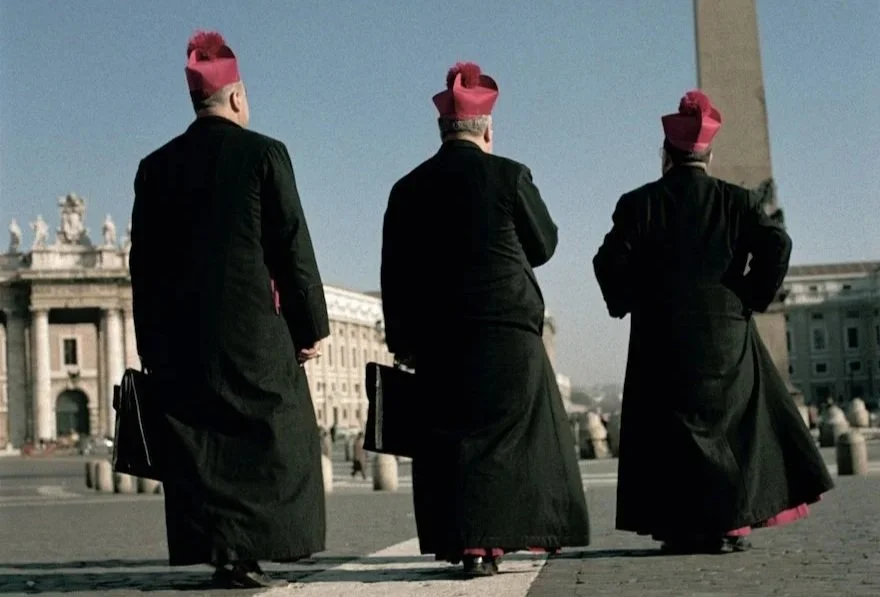
Council Fathers leaving St Peter's during Vatican II, photographed by Lothar Wolleh between 1963 and 1965. The significance of the Council's ecclesiology became progressively clearer in its postconciliar interpretation and implementation—from subsistit in and “elements of sanctification and truth” to separated Christian communities as “means of salvation” and later teaching concerning salvific elements within non-Christian religious traditions.
The Main Objection
The strongest objection is that this comparison exaggerates the difference. A defender of Vatican II can argue:
The Council never denied that the Catholic Church is the one Church of Christ.
It never said all religions are equally true.
It never said religious error saves.
It continued to teach Christ's unique mediation.
It continued to teach the necessity of the Church.
It continued missionary activity.
It merely recognised facts Catholic theology had always acknowledged:
valid Baptism exists outside visible Catholic communion;
Eastern Christians possess valid sacraments;
Protestants possess Scripture and Christian truths;
non-Christians can possess natural and moral truths;
the Holy Ghost can operate outside visible Catholic membership;
and God can save persons who are inculpably ignorant of the Catholic Faith.
Thus, according to this argument, Vatican II did not change the doctrine. It developed a more precise theology explaining how God's grace can operate beyond the Church's visible boundaries without denying that every grace comes from Christ through His Church.
This is the strongest continuity argument.
Response
The objection explains part of the evidence. But it does not resolve the central difficulty.
The controversy is not principally about whether grace can operate outside visible Catholic membership. Traditional theology already recognised that. Nor is the controversy about whether Protestants can validly baptize or Eastern schismatics possess valid sacraments. The question is:
What theological status is attributed to the separated religious community itself?
That is precisely where the terminology changes. Pius XI:
return to the one true Church.
Pius XII:
those divided in faith or government cannot live in the unity of Christ's Body.
Vatican II:
separated communities “as such” possess significance in the mystery of salvation.
Vatican II:
the Spirit uses them as “means of salvation.”
Postconciliar CDF:
Christ's Church is “present and operative” in separated communities.
Dialogue and Proclamation:
men may respond to God's invitation through sincere practice of what is good within their religious traditions.
John Paul II:
the great religions possess “saving elements.”
John Paul II:
“these religions can contribute” toward man's journey to eternal happiness.
That is not merely a new vocabulary for the proposition that God can give grace to an inculpably ignorant non-Catholic.
It assigns a positive ecclesial or salvific role to separated communities and religious traditions themselves. That is the proposition requiring reconciliation with the earlier Magisterium.
What We Can and Cannot Conclude
What We Can Conclude
We can establish directly from primary documents that
Pius XII taught that the Mystical Body of Christ and Roman Catholic Church are “one and the same thing.”
Pius XII taught that persons divided in faith or government cannot live within the unity of that Body.
Pius XI rejected a conception of Christ's Church composed of separated Christian communities and called separated Christians to return to the one true Church.
Vatican II deliberately used subsistit in and recognised ecclesial elements beyond the Catholic Church's visible structure.
Vatican II developed an ecclesiology of differing relationships and degrees of communion.
Unitatis Redintegratio describes separated communities “as such” as possessing significance in the mystery of salvation.
The same document says the Spirit of Christ uses them as “means of salvation.”
Nostra Aetate introduced a markedly positive evaluation of truths, practices and religious aspirations within non-Christian religions.
Subsequent official teaching developed this framework by speaking of the Holy Ghost's activity within religious traditions, “elements of grace,” “saving elements,” and other religions contributing toward man's journey to eternal salvation.
And these developments were not merely unauthorised parish abuses or the inventions of fringe theologians.
They appear in conciliar documents, Vatican documents and papal teaching.
What We Cannot Conclude
We cannot accurately say that Vatican II taught:
All religions are equally true.
It did not. We cannot say that Nostra Aetate explicitly called Hinduism, Buddhism or Islam “means of salvation.” It did not.
We cannot say that postconciliar teaching formally recognises autonomous ways of salvation independent of Jesus Christ. It explicitly rejects that proposition.
We cannot say that recognising valid Baptism, Scripture, truth or grace outside visible Catholic membership originated with Vatican II. It did not.
We cannot infer from the documents alone that every Council Father intended all subsequent developments. Nor do we need to prove hidden intentions.
The objective texts and their subsequent authoritative interpretation are sufficient to establish the theological problem.
Conclusion
What did Vatican II change about the nature of the Church? The answer is considerably deeper than:
it replaced “is” with “subsists in.”
Before Vatican II, the ecclesiological framework presented by Leo XIII, Pius XI and Pius XII was exceptionally clear:
Christ founded one visible Church.
That Church is the Catholic Church.
The Mystical Body and Roman Catholic Church are one and the same thing.
Membership requires unity of Faith and government.
Heresy and schism separate from that visible unity.
Separated Christian communities do not collectively constitute Christ's Church.
Christian unity therefore requires return to the one true Church.
Vatican II retained important parts of that doctrine.
It continued to affirm one Church.
It continued to proclaim Christ.
It continued to acknowledge the Catholic Church's unique position.
It continued to teach the necessity of missionary activity.
But it simultaneously introduced an ecclesiological framework in which:
the Church of Christ “subsists in” the Catholic Church;
ecclesial elements exist beyond her visible structure;
non-Catholics possess varying degrees of communion;
separated religious communities themselves can be “means of salvation”;
and subsequent authoritative teaching could consequently say that:
Christ's Church is “present and operative” outside full Catholic communion;
other religious traditions contain elements of grace; and:
other religions can contain “saving elements” and “contribute” toward man's journey to eternal salvation.
This is not merely a change in tone. Nor can it plausibly be dismissed as nothing more than abuses committed after Vatican II.
The principles appear in the Council's own documents and were developed by the authorities responsible for interpreting and implementing them. The central theological question therefore remains:
Can a separated religious society be simultaneously separated from the one Church of Christ and yet function as a means of salvation?
And regarding non-Christian religions:
Can a religion containing objective denials of revealed truth positively contribute as a religion toward supernatural salvation, rather than God simply saving individuals despite the errors surrounding them?
Those questions become especially serious when compared with the older Catholic understanding of the Church as the one Ark of salvation. If the two ecclesiologies can genuinely be reconciled, that reconciliation must be demonstrated proposition by proposition. It cannot simply be assumed because both sets of documents were issued under the Catholic name.
And if genuine contradiction is eventually established, the implications extend far beyond ecumenism. The Catholic Church is indefectible. Christ's Church cannot become a different religion, cease to possess the unity He gave her, or universally teach her children a false understanding of her own identity and supernatural mission.
The investigation therefore inevitably proceeds to the next questions:
Can Catholic doctrine change?
Can the Church universally promulgate doctrinal error?
What does indefectibility actually guarantee?
What happens when purported Catholic authorities teach doctrines incompatible with the previous Magisterium?
And ultimately:
what does this mean for the identity and authority of the post-Vatican II ecclesiastical structure?
Those questions must be answered from the same principle with which this article began:
establish what the Catholic Church taught first, compare the later propositions directly, and follow the evidence wherever Catholic theology requires it to go.
Primary Sources
Holy Scripture — Matthew 16:18; John 10:16; John 17:20–23; Ephesians 1:22–23; Ephesians 4:4–5; 1 Corinthians 12:12–27; 1 Peter 3:20–21. These establish the biblical foundation of the Church as Christ's one Body.
St Cyprian of Carthage, On the Unity of the Catholic Church (c. AD 251) — A foundational patristic witness concerning the visible unity of Christ's Church and separation from that unity.
Pope Leo XIII, Satis Cognitum (1896) — Essential preconciliar treatment of the Church's unity in faith and government and the impossibility of Christ's one Mystical Body being composed of separated members.
Pope Pius XI, Mortalium Animos (1928) — Particularly important for comparison with Vatican II because it addresses the ecumenical movement directly and insists upon the return of separated Christians to the one true Church.
Pope Pius XII, Mystici Corporis Christi (1943) — Defines the visible conditions of Church membership and explains why those divided in faith or government cannot live within the unity of Christ's Mystical Body.
Pope Pius XII, Humani Generis (1950) — Explicitly reaffirms that the Mystical Body of Christ and Roman Catholic Church are “one and the same thing.”
Pope John XXIII, Address before Vatican II (2 September 1962) and Opening Address (11 October 1962) — Important evidence concerning the stated intention of Vatican II: not formally to introduce a new doctrine, but to present the deposit of Faith through a new pastoral method.
Pope Paul VI, Ecclesiam Suam (1964) — Important contemporary evidence for the developing theology of dialogue and the “concentric circles” through which the Church increasingly described her relationship with other Christians, non-Christian religions and the modern world.
Second Vatican Council, Lumen Gentium (1964) — The principal conciliar constitution on the Church. Essential passages include nos. 8 and 13–16 concerning subsistit in, elements of sanctification and truth, the People of God, incorporation and relationships with non-Catholic Christians and non-Christians.
Second Vatican Council, Unitatis Redintegratio (1964) — Essential for understanding the ecclesiological status Vatican II attributed to separated Christian Churches and communities, particularly no. 3 and its description of them as “means of salvation.”
Second Vatican Council, Nostra Aetate (1965) — Essential for understanding Vatican II's new approach toward non-Christian religions, particularly its positive recognition of what it describes as “true and holy” within them.
Second Vatican Council, Ad Gentes (1965) — Important counterweight demonstrating that Vatican II nevertheless continued to affirm conversion, incorporation into the Church and the necessity of missionary activity.
Pope Paul VI, Address at the Final Public Session of Vatican II (7 December 1965) — Valuable contemporary evidence concerning the Council's pastoral orientation toward modern man, including Paul VI's description of its “boundless sympathy” and “new type of humanism.”
Pontifical Council for Interreligious Dialogue and Congregation for the Evangelization of Peoples, Dialogue and Proclamation (1991) — Important postconciliar development of Vatican II's theology of religions, including the Holy Ghost's activity within religious traditions and the possibility of responding to grace through what is good within them.
Pope John Paul II, General Audience (4 February 1998) — Particularly significant because it explicitly speaks of “saving elements” within the great religions and says that those religions can “contribute” toward man's journey to eternal happiness, while maintaining Christ as the unique Saviour.
Congregation for the Doctrine of the Faith, Responses to Some Questions Regarding Certain Aspects of the Doctrine on the Church (2007) — Provides the strongest official continuity interpretation of subsistit in while simultaneously stating that Christ's Church is “present and operative” in separated Churches and ecclesial communities.
Further Reading
St Robert Bellarmine, De Ecclesia Militante — Classic Catholic treatment of the visible Church, membership and profession of the true Faith.
Cardinal Louis Billot, S.J., De Ecclesia Christi — Important pre-Vatican II systematic ecclesiology concerning the Church's visible constitution and membership.
Msgr Gerard Van Noort, Dogmatic Theology, Vol. II: Christ's Church — Particularly useful for seeing the theological categories ordinarily used immediately before Vatican II.
Fr Joachim Salaverri, S.J., Sacrae Theologiae Summa: De Ecclesia Christi — Detailed scholastic ecclesiology useful for comparison with the terminology adopted at Vatican II.
The most illuminating method is to read Leo XIII, Pius XI and Pius XII first and then read Lumen Gentium, Unitatis Redintegratio and Nostra Aetate without presuming either continuity or rupture in advance.
Related Questions
Did Vatican II Change the Catholic Teaching on Christian Unity?
What Did Vatican II Teach About Ecumenism?
What Did Vatican II Change About Non-Christian Religions?
What Does “Outside the Church There Is No Salvation” Mean?
Can Catholic Doctrine Change or Develop?
What Is the Indefectibility of the Catholic Church?
Can the Catholic Church Universally Promulgate Doctrinal Error?
What Does the Vatican II Crisis Imply About Papal Authority?