How Can Traditional Bishops and Priests Continue the Sacramental Life of the Church?
Short Answer
The Catholic Church does not cease to possess the sacraments merely because her ordinary government is gravely disrupted or the Holy See remains vacant for an extraordinary period.
Holy Orders imprints an indelible sacramental character.
A man who has been validly ordained a priest remains a priest;
a bishop who has been validly consecrated remains a bishop.
The Council of Trent expressly taught the permanence of the sacramental character of Holy Orders, while Pope Pius XII identified the essential matter and form required for the valid ordination of priests and consecration of bishops. Vatican
Consequently, where a traditional bishop's own consecration can be established with moral certainty, and where he validly ordains priests or consecrates other bishops according to the traditional Catholic rite with the necessary matter, form and intention, sacramental power is genuinely transmitted.
But that is only the first question.
A valid episcopal consecration does not by itself make a bishop the ordinary of a diocese.
A valid priestly ordination does not by itself give a priest jurisdiction to absolve sins. Validity, canonical mission, jurisdiction, liceity and prudence are related but distinct matters.
That distinction is particularly important for Confession and Matrimony. The 1917 Code requires jurisdiction for valid sacramental absolution and normally requires proper canonical assistance for marriage. Yet the Church's own law also contains extraordinary provisions: jurisdiction is supplied in common error or positive and probable doubt; every priest can absolve in danger of death; and Catholics unable to obtain an authorised priest for marriage without grave inconvenience can, under specified circumstances, marry validly before witnesses alone. CanonLaw.Ninja
The traditional sacramental apostolate is therefore not based upon the proposition that “necessity makes everything lawful.” It rests upon a more precise Catholic distinction: sacramental Orders remain; ecclesiastical law itself provides certain extraordinary remedies; and genuine necessity and epikeia can affect the obligation of merely ecclesiastical laws without creating sacramental powers or ecclesiastical offices out of nothing.
Why This Question Matters
If the postconciliar crisis has reached the point already examined in this FAQ series, an obvious practical objection follows.
Where are Catholics to obtain Mass, Confession, Confirmation, Extreme Unction, Holy Orders and Catholic marriage?
If the ordinary structures formerly relied upon have been compromised, can bishops simply consecrate successors?
Can priests hear Confessions?
Who gives them jurisdiction?
Can Catholics marry before them?
And after several generations of independent episcopal consecrations, how can anyone know whether a particular priest or bishop is validly ordained at all?
These are not peripheral questions. They concern the preservation of the means of grace instituted by Christ for the salvation of souls.
But they also require unusual precision. It would be an error to reason:
Traditional = valid = jurisdiction = lawful = prudent.
None of those equations follows automatically.
The Church's sacramental theology provides objective criteria for validity. Canon law distinguishes the power of Orders from the power of jurisdiction. The law also provides extraordinary remedies where normal authority cannot be reached.
Prudence then asks a further question:
even where a cleric is probably or certainly valid, is there sufficient evidence, doctrinal soundness, formation and necessity to entrust one's sacramental life to him?
The present crisis does not abolish those distinctions. It makes them more important.
The First Essential Distinction: Orders Are Not Jurisdiction
Four questions should be kept separate.
| Question | What Is Being Asked? | Typical Example |
|---|---|---|
| Validity | Did the sacrament actually take place? | Is this man really a priest or bishop? |
| Jurisdiction | Does he possess the authority required for this particular act? | Can this priest validly absolve this penitent? |
| Liceity / canonical regularity | Was the act performed in accordance with ecclesiastical law? | Was an episcopal consecration performed with the required mandate? |
| Prudence | Is it reasonable and safe to rely upon this cleric? | Is his lineage documented, doctrine sound and ministry trustworthy? |
These questions can yield different answers.
A bishop can be validly consecrated but lack ordinary jurisdiction.
A priest can be validly ordained but normally lack jurisdiction to hear Confessions.
A sacrament may be valid although its administration violated an ecclesiastical disciplinary law. Conversely, someone's apparent canonical standing cannot repair a defect in sacramental matter, form or Orders.
The 1917 Code itself distinguishes the power of jurisdiction from the power of Orders. Canon 209 then states that the Church supplies jurisdiction in specified circumstances—precisely because possessing Holy Orders and possessing jurisdiction are not identical things. CanonLaw.Ninja
This distinction is fundamental to everything that follows.
What Makes Holy Orders Valid?
The sacrament of Holy Orders was instituted by Christ.
It is not merely an appointment to an administrative office.
Trent taught that Holy Orders is truly a sacrament, that it imprints a character that cannot be erased, and that bishops possess the power to confirm and ordain.
Pope Pius XII settled important questions about the essential sacramental sign in Sacramentum Ordinis in 1947.
For priestly ordination, the essential matter is the bishop's first imposition of hands and the essential form is contained in the Preface.
For episcopal consecration, the matter is the imposition of hands by the consecrating bishop and the essential form contains the words beginning:
“Comple in Sacerdote tuo ministerii tui summam...”
Pius XII nevertheless commanded that the remaining ceremonies of the Pontificale Romanum also be faithfully observed. Vatican
Thus, when investigating a traditional priest or bishop, one does not ask merely, “What group is he in?” One asks
whether the consecrating bishop was himself validly consecrated;
whether the ceremony actually occurred;
which rite was used;
whether the prescribed matter and essential form were employed;
whether the minister intended to do what the Church does;
and whether sufficient contemporary evidence exists to establish these facts with moral certainty.
Personal sanctity is enormously important for the priesthood, but holiness is not another sacramental matter or form. Likewise, canonical irregularity does not by itself erase an indelible sacramental character.
What Is an Episcopal Genealogy?
An episcopal genealogy is the documentary chain showing from whom a bishop received episcopal consecration and therefore through whom his sacramental episcopate descends.
It is useful evidence. It is not magic.
A notation saying that someone belongs to the “Thục line,” “Lefebvre line” or “Méndez line” cannot by itself establish the validity of every person later claiming descent from that bishop. Each subsequent consecration is another factual event requiring evidence.
The correct method is therefore to trace the chain link by link.
For each link one should establish the consecrator, recipient, date, place, rite, documentary evidence and any genuine question concerning intention or performance of the rite. Where the ceremony is photographed or filmed, witnessed by competent persons and supported by signed certificates, contemporary records and consistent testimony, the evidential case is correspondingly stronger.
The Church ordinarily required a principal consecrator and two assisting bishops. Canon 954 of the 1917 Code required two assisting bishops unless the Apostolic See dispensed from that requirement. But Canon 954 is framed as a disciplinary requirement; Pius XII identifies the essential sacramental matter as the imposition of hands by the consecrating bishop. The absence of two co-consecrators therefore must not automatically be confused with absence of sacramental validity. Canonlaw
The Principal Documented Traditional Episcopal Lines
The present traditional episcopate did not arise from a single obscure succession. Several unquestionably Catholic bishops consecrated before the postconciliar changes later became involved, directly or indirectly, in preserving traditional clergy.
Archbishop Pierre Martin Ngô Đình Thục
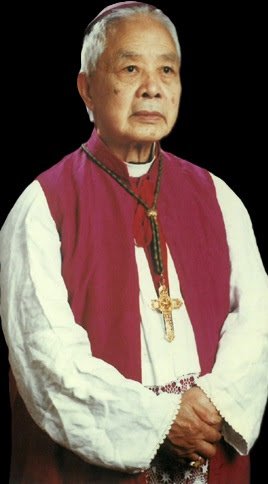
Archbishop Pierre Martin Ngô Đình Thục (1897–1984) — Consecrated bishop in 1938, Archbishop Thục became one of the principal preconciliar Catholic bishops through whom traditional episcopal succession continued during the postconciliar crisis. His later consecrations, especially those performed at Toulon in 1981, became the source of several traditional episcopal lines. The validity of any later claimant, however, must still be established link by link from the evidence.
Pierre Martin Ngô Đình Thục was appointed Vicar Apostolic of Vĩnh Long in 1938 and was consecrated bishop on 4 May 1938 at Phú Cam. His principal consecrator was Archbishop Antonin-Fernand Drapier, O.P.; the co-consecrators were Bishop Isidore-Marie-Joseph Dumortier, M.E.P., and Bishop Dominique Maria Hồ Ngọc Cẩn. His own episcopal status is therefore historically straightforward and entirely preconciliar. catholic-hierarchy.org
The more disputed question concerns particular consecrations performed by Archbishop Thục decades later.
Of special importance are the consecrations at Toulon, France, of Michel-Louis Guérard des Lauriers, O.P., on 7 May 1981, and of Moisés Carmona y Rivera and Adolfo Zamora on 17 October 1981.
These events are not supported merely by later genealogical claims. Published photographs exist; contemporary witnesses gave testimony; Guérard himself acknowledged the ceremony; and Eberhard Heller, who stated that he was personally present, swore that the consecrations were performed by Archbishop Thục according to the 1908 Pontificale Romanum. thucbishops.com
Some traditionalist critics have nevertheless questioned whether the evidence surrounding Archbishop Thục's later actions, including his mental competence and intention, is sufficient to exclude every prudent doubt. That objection should not simply be concealed. One prominent opposing treatment comes from Bishop Clarence Kelly's circle. Scribd
The proper response is evidentiary rather than partisan. Archbishop Thục's own episcopal Orders are not reasonably in doubt. For the principal 1981 Toulon consecrations there is substantial affirmative evidence concerning the fact of the ceremonies, the traditional rite employed and the participants. That creates a much stronger case than the bare assertion “this man is Thục-line.”
But the conclusion must not then be stretched beyond the evidence. Every later descendant of a Thục consecration still requires his own documented link.
Archbishop Marcel Lefebvre
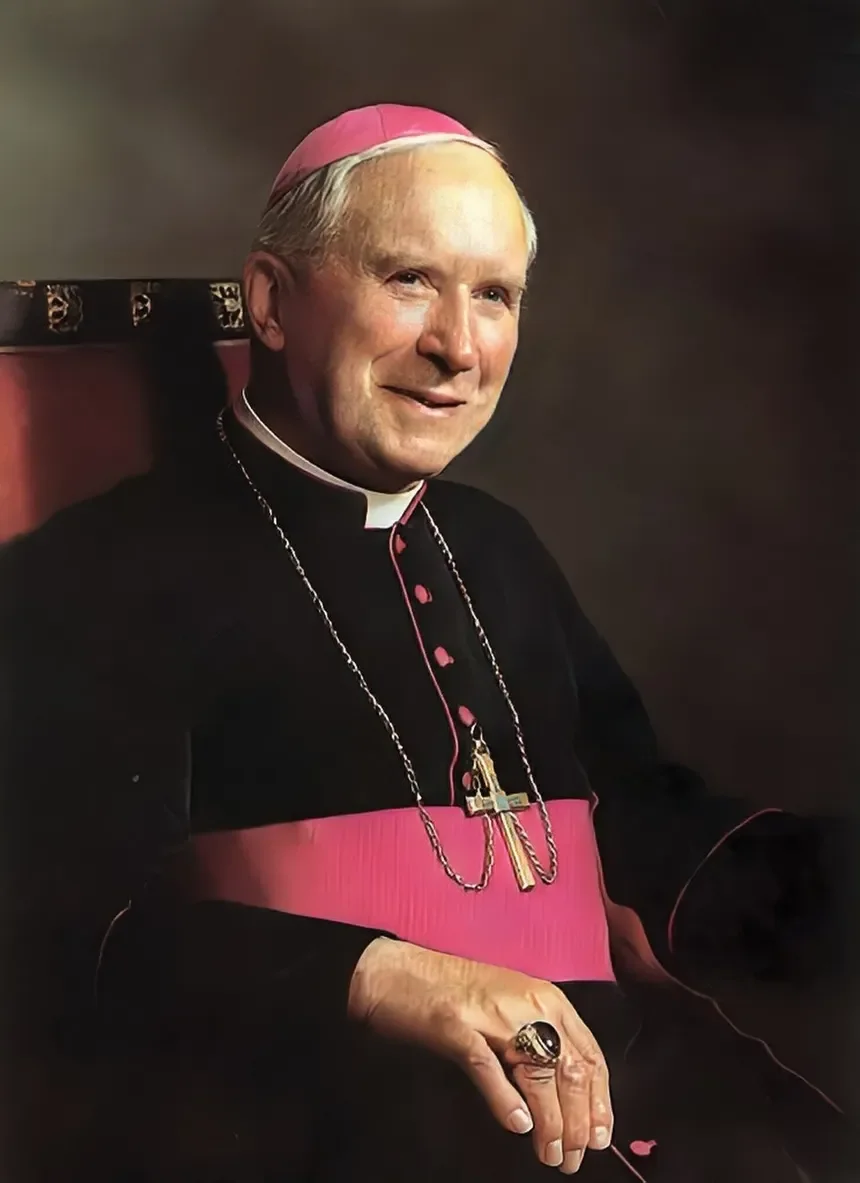
Archbishop Marcel Lefebvre (1905–1991) — Consecrated bishop in 1947, Archbishop Lefebvre became one of the most prominent Catholic bishops to resist the postconciliar reforms. In 1988, assisted by Bishop Antônio de Castro Mayer, he consecrated four bishops at Écône to preserve the traditional priesthood and sacramental life. Whatever judgment is made concerning his recognise-and-resist position, the sacramental validity of those consecrations is a separate question from the canonical and ecclesiological controversies surrounding them.
Archbishop Marcel Lefebvre was consecrated on 18 September 1947 at Notre-Dame in Tourcoing. His principal consecrator was Cardinal Achille Liénart, assisted by Bishops Alfred-Jean-Félix Ancel and Jean-Baptiste Victor Fauret. His episcopal Orders therefore also originate unquestionably within the pre-Vatican II Catholic hierarchy. catholic-hierarchy.org
On 30 June 1988 at Écône, Switzerland, Lefebvre consecrated Bernard Tissier de Mallerais, Richard Williamson, Alfonso de Galarreta and Bernard Fellay. Bishop Antônio de Castro Mayer was present as co-consecrator. The ceremony was public, extensively witnessed and documented, so the historical fact of the consecrations is not seriously disputed. Isidore
The theological disagreement surrounding Archbishop Lefebvre’s recognise-and-resist position is a separate question from the sacramental validity of the Orders he transmitted. Whatever judgment is made concerning his ecclesiological conclusions, that disagreement does not retroactively alter the matter, form, intention or episcopal character involved in the 1988 consecrations. The validity of those consecrations must therefore be assessed according to the Church’s sacramental theology, while questions of canonical authority, jurisdiction and prudence are considered separately.
That lineage has continued. Most recently, on 1 July 2026, Alfonso de Galarreta, with Bernard Fellay as co-consecrator, consecrated Pascal Schreiber, Michael Goldade, Michel Poinsinet de Sivry and Marc Hanappier at Écône. Even the postconciliar authorities' decree concerning those consecrations records the identities of the consecrators and recipients; the dispute concerns authority and canonical legitimacy rather than whether the ceremony occurred. osservatoreromano.va
Bishop Antônio de Castro Mayer
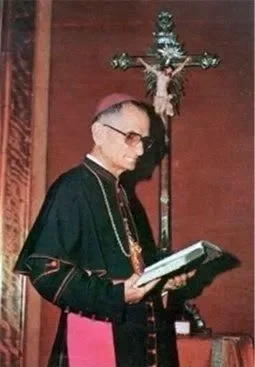
Bishop Antônio de Castro Mayer (1904–1991) — Consecrated bishop in 1948, Bishop de Castro Mayer became a leading defender of traditional Catholic doctrine and liturgy in Brazil. In 1988 he assisted Archbishop Marcel Lefebvre in the consecration of four bishops at Écône, providing an independently documented preconciliar episcopal line. His participation strengthens the historical evidence for the sacramental continuity of those consecrations, while questions of jurisdiction and canonical authority remain distinct.
Bishop Antônio de Castro Mayer provides an important independent point of corroboration.
He was consecrated on 23 May 1948 in São Paulo by Archbishop Carlo Chiarlo, Apostolic Nuncio to Brazil, with Bishop Ernesto de Paula and Bishop Geraldo de Proença Sigaud as co-consecrators. He later became Bishop of Campos. catholic-hierarchy.org
His participation as co-consecrator at Écône in 1988 therefore meant that two bishops whose episcopal consecrations came independently and unambiguously through the preconciliar Catholic hierarchy participated in the transmission of episcopal Orders there.
This strengthens the evidentiary position of the 1988 line. It does not, however, grant those bishops territorial jurisdiction or canonical office merely by the fact of consecration.
Bishop Alfredo Méndez-González
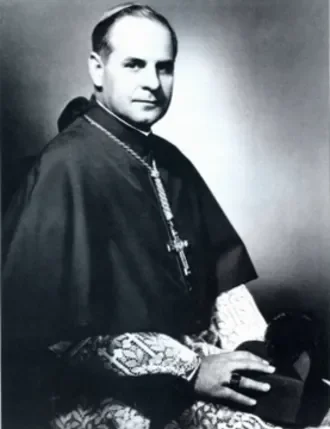
Bishop Alfredo Méndez-González, C.S.C. (1907–1995) — Consecrated bishop in 1960, Bishop Méndez served as Bishop of Arecibo, Puerto Rico, before later supporting the preservation of the traditional Catholic priesthood. In 1993 he privately consecrated Bishop Clarence Kelly using the traditional Roman rite, establishing another documented episcopal line independent of the Thục and Lefebvre successions. As with every later lineage, sacramental validity depends upon the evidence for each individual consecration, while jurisdiction and canonical mission remain separate questions.
A further line worth noting is that of Bishop Alfredo Méndez-González, C.S.C.
Méndez was appointed Bishop of Arecibo in 1960 and consecrated on 28 October 1960 at Sacred Heart Church, Notre Dame, Indiana. His principal consecrator was Cardinal Francis Spellman; the co-consecrators were Archbishop Edwin Vincent Byrne and Bishop Richard Henry Ackerman. catholic-hierarchy.org
On 19 October 1993 at Carlsbad, California, Méndez privately consecrated Father Clarence Kelly.
Here the documentary evidence is unusually specific. A signed attestation reproduced by Kelly's community states that Méndez conferred episcopal consecration according to the traditional rites. Witness attestations record the imposition of hands and expressly reproduce the essential episcopal form specified by Pius XII. congregationofstpiusv.com
The Méndez-Kelly line is therefore relevant because it represents another documented traditional succession whose episcopal origin does not depend upon the disputed 1981 Thục consecrations.
Again, that statement concerns sacramental genealogy. It does not endorse every doctrinal, canonical or prudential position subsequently taken by clergy belonging to that line.
A Genealogy Is Evidence of Orders — Not a Canonical Mission
A bishop does not acquire a diocese merely because another bishop places hands upon him.
Under normal Catholic order, the Roman Pontiff appoints or confirms bishops and gives canonical mission. Canon 953 of the 1917 Code accordingly states that episcopal consecration is reserved to the Roman Pontiff and that no bishop may consecrate another without first obtaining a pontifical mandate. Canon 2370 imposed suspension upon the consecrator, assistants and recipient when a consecration was performed without that mandate. Canonlaw
Notice what the law did not say. It did not say that episcopal Orders conferred without the mandate were sacramentally null. This is a classic example of the distinction between validity and liceity.
A valid bishop who uses the Church's valid rite with the necessary matter, form and intention can transmit episcopal Orders. Whether he was entitled to do so is another question. Whether necessity excused the violation of ecclesiastical law is another question again. Whether the newly consecrated bishop prudently ought to exercise his Orders is yet another.
The emergency traditional episcopate therefore cannot legitimately say, “We have Orders; therefore we possess the dioceses.”
Nor is that necessary to explain the preservation of the sacraments.
Can Emergency Episcopal Consecrations Be Justified?
Under ordinary conditions, Catholics should not create an episcopate independently of legitimate ecclesiastical authority. The requirement of papal mandate protects the Church's visible unity and prevents ambitious or eccentric clerics from generating rival hierarchies.
The problem arises when ordinary recourse itself becomes impossible.
Catholic law has always recognised that legislation is made for the common good and that genuinely exceptional circumstances may fall outside what the legislator contemplated.
Canon 2205 §2 of the 1917 Code expressly recognised that necessity and even grave inconvenience can ordinarily remove the delict arising from the violation of a merely ecclesiastical law. It did not thereby declare every act done under a subjective claim of necessity justified. The existence and extent of necessity remain factual and moral questions. Faculté de Droit Canonique
St Thomas Aquinas explains the deeper principle. Human laws are made for circumstances occurring generally. A case can arise in which literal observance would gravely injure the very common good sought by the law. Where the emergency is manifest and immediate, acting according to the legislator's purpose rather than the bare letter can be justified. This is the principle commonly called epikeia or equity. New Advent
Applied carefully to episcopal consecration, the argument is comprehensible.
The papal mandate exists to preserve the Catholic episcopate in unity and order. It was never intended as a mechanism by which the episcopate could disappear because no legitimate Pope or normally functioning hierarchy remained available to provide successors.
But epikeia has limits.
It cannot alter divine law.
It cannot make invalid sacramental matter valid.
It cannot give a layman episcopal Orders.
It cannot invent an ecclesiastical office.
And it cannot transform every private judgment of “necessity” into a universal licence to consecrate bishops.
Consequently an emergency consecration should be analysed in three successive stages:
Was it valid?
Was departure from ordinary ecclesiastical law objectively justified or at least excusable by genuine necessity?
Was it prudent?
Those questions must not be collapsed into one.
A consecration might be sacramentally valid yet unnecessary and gravely imprudent. Conversely, a genuine necessity cannot repair an invalid rite.
This also explains why indiscriminate multiplication of bishops is dangerous. The purpose of emergency consecration is the preservation of Orders and the sacraments—not the establishment of competing miniature jurisdictions, episcopal dynasties or personal churches.
Necessity Does Not Create Jurisdiction
This is perhaps the most important canonical qualification in the entire article.
One sometimes hears:
“There is a crisis; therefore traditional priests have supplied jurisdiction.”
That is too imprecise.
Necessity does not itself manufacture jurisdiction. The Church supplies jurisdiction according to principles established by her law.
Canon 209 of the 1917 Code states:
In errore communi aut in dubio positivo et probabili sive iuris sive facti, iurisdictionem supplet Ecclesia...
That is: in common error, or in positive and probable doubt of law or fact, the Church supplies jurisdiction for both the external and internal forum. CanonLaw.Ninja
Those words have real juridical content.
Common error does not merely mean that one individual mistakenly thinks that Father has faculties. Classical canonical commentary understands it as an error affecting, or capable of affecting, a community concerning the possession of jurisdiction.
A positive and probable doubt is not a vague feeling or a convenient uncertainty. There must be objective reasons supporting the proposition about which the doubt exists. Canonical scholarship on Canon 209 repeatedly treats the canon as a precise remedy for objectively doubtful jurisdiction rather than an unlimited substitute for canonical mission. Azione Romana
Therefore Canon 209 should neither be denied nor inflated.
The Church genuinely supplies jurisdiction where its conditions are fulfilled. But it should not be rewritten to say:
“Whenever a traditional priest sincerely believes his ministry necessary, he automatically possesses all jurisdiction he requires.”
The canon says no such thing.
What About Confession?
Here the distinction between Orders and jurisdiction directly affects sacramental validity.
Canon 871 of the 1917 Code states that only a priest is the minister of Penance. But Canon 872 immediately adds that, besides the power of Orders, jurisdiction—ordinary or delegated—is required for valid absolution. CanonLaw.Ninja
A validly ordained priest therefore possesses the sacramental priesthood, but that fact alone does not under normal circumstances allow him validly to absolve anyone who approaches him.
How then can traditional priests hear Confessions? There are several distinct canonical mechanisms.
First, where the conditions of Canon 209 genuinely exist—common error or positive and probable doubt—the Church herself supplies the missing jurisdiction.
Second, the Church explicitly legislated for the most extreme emergency. Canon 882 provides that in danger of death every priest, even one not approved for Confessions, can validly and licitly absolve any penitent from any sins and censures. CanonLaw.Ninja
That canon is particularly instructive. The Church does not regard jurisdiction as an arbitrary obstacle to mercy. Where the salvation of a dying soul requires it, the law itself opens the jurisdictional door as widely as necessary.
The more difficult question is the ordinary Confession of a Catholic living for years in a situation where no legitimate ordinary or delegated jurisdiction can practically be obtained.
Traditional canonists and clergy have argued from Canon 209, necessity, canonical equity, analogy of law and the supreme law of the salvation of souls. Those arguments deserve serious consideration. But their theological and canonical status should be described accurately:
Canon 209 itself expressly supplies in common error and positive probable doubt; it does not expressly add “general state of necessity” as a third category.
That precision strengthens rather than weakens the traditional case. It prevents “supplied jurisdiction” from becoming indistinguishable from self-supplied jurisdiction.
Where objective canonical grounds for supply are present, a priest may rely upon them. Where the matter is genuinely doubtful in law and the doubt is positive and probable, Canon 209 itself supplies. In danger of death, Canon 882 is explicit. Where broader necessity arguments are invoked, they should be identified as such rather than falsely quoted as the literal wording of Canon 209.
What About Catholic Marriage?
Matrimony presents a different problem because, in the Latin theological tradition, the man and woman exchange the matrimonial consent that constitutes the sacrament. Nevertheless, the Church imposed a canonical form for validity.
Canon 1094 of the 1917 Code ordinarily required marriage to be contracted before the pastor, local Ordinary or a priest delegated by one of them, together with at least two witnesses. Faculté de Droit Canonique
If that were the whole law, prolonged collapse of ordinary jurisdiction could produce an intolerable result: Catholics could become practically unable to marry.
But the Church herself anticipated extraordinary circumstances.
Canon 1098 provides that where the pastor, Ordinary or delegated priest cannot be had or approached without grave inconvenience, marriage may be contracted validly and licitly before witnesses alone in danger of death and, outside danger of death, when the situation is prudently foreseen to last for a month.
If another priest is available, the canon says that he should be called to the marriage—but expressly preserves the fact that its validity in that circumstance rests upon the exchange of consent before the witnesses. Canonlaw
This is extraordinarily important for Catholics in an ecclesiastical emergency.
A traditional priest does not need to fabricate an office as “parish priest” in order for Catholics to marry. Where Canon 1098 truly applies, the law itself provides an extraordinary canonical form.
There is an additional safeguard. On 26 March 1952, the Pontifical Commission for the Authentic Interpretation of the Code was asked whether Canon 209's supply of jurisdiction applied when a priest lacking the required delegation assisted at marriage. The answer was affirmative; the response was published in Acta Apostolicae Sedis, vol. 44 (1952), p. 497. revistas.unav.edu
Thus there are two concepts which must not be confused.
Canon 1098 creates an exceptional form in which the marriage can be valid before witnesses even without an authorised priest.
Canon 209 can, where its own conditions exist, supply the lacking faculty or jurisdiction associated with priestly assistance at marriage.
This is considerably more precise than saying merely, “necessity gives our priest jurisdiction.”
It also explains why traditional clergy should carefully investigate freedom to marry, possible impediments, previous marriages, baptismal status, consent and witnesses, and should preserve proper documentary records. Canon 1103 §3 itself directs that marriages contracted under Canon 1098 be recorded. Catéchisme de l'Église Catholique
The emergency exists to protect Christian marriage—not to weaken its safeguards.
Does Epikeia Solve Everything?
No. Epikeia is sometimes invoked as though it were a universal canonical solvent: whenever normal law becomes inconvenient, one simply declares an emergency and ignores it.
That is not the Thomistic principle. St Thomas specifically distinguishes a manifest emergency, in which following the letter of a human law would frustrate the common good, from an uncertain case in which the subject ought either to obey the law or seek competent interpretation. New Advent
For the present discussion, epikeia can help explain why a merely ecclesiastical prohibition may not bind in an unforeseen and grave necessity.
It cannot:
create priestly Orders where none exist;
make defective sacramental form sufficient;
give a bishop a diocese;
elect someone Pope;
dispense from divine law;
make a prohibited marriage possible where a divine impediment exists;
or automatically confer the jurisdiction necessary for every jurisdictional act.
Where the Church has already supplied an explicit legal solution—such as Canons 209, 882 or 1098—that provision should be used rather than invoking epikeia as though no law existed.
The Strongest Objection: “Without Canonical Mission, These Are Merely Wandering Clergy”
There is real force in this objection because Catholicism is not Congregationalism.
Christ did not establish a Church in which anyone possessing episcopal Orders may establish his own diocese or anyone possessing priestly Orders may appoint himself pastor. Trent itself distinguishes true Holy Orders from being lawfully sent to exercise ministry.
Traditional Catholics should concede that principle without hesitation. The answer, however, is not that sacramental Orders somehow disappear when ordinary canonical government cannot be accessed.
A bishop validly consecrated remains sacramentally capable of confirming, ordaining and consecrating.
A priest validly ordained remains capable of offering the Holy Sacrifice and administering those sacraments for which jurisdiction is not required for validity.
Where jurisdiction is necessary, the Church's own extraordinary provisions must be examined. This produces an admittedly abnormal situation.
Traditional bishops without ordinary jurisdiction should not pretend to be territorial ordinaries.
Traditional priests should not claim canonical pastorates they have never received.
Emergency chapels should not be rhetorically transformed into dioceses.
But neither does it follow that Catholics must allow sacramental life to disappear while waiting for the restoration of normal authority.
The distinction is between preserving sacramental power during an emergency and claiming to reconstruct the ordinary hierarchy by private authority.
The former can be necessary. The latter does not follow from it.
Why Prudence Still Matters
Even after validity and jurisdiction have been considered, a Catholic must still exercise prudence.
The present crisis has produced clergy of widely differing formation, doctrine, discipline and documentary reliability.
A valid episcopal lineage is no guarantee of orthodoxy.
Orthodoxy is no substitute for valid Orders.
A persuasive website is not an episcopal certificate.
And a cleric's claim that “the Church supplies” is not itself proof that the canonical conditions for supply exist.
Accordingly, a responsible traditional apostolate should be unusually transparent.
The episcopal genealogy should be published or available for examination. Dates and consecrators should be stated precisely. The rite employed should be known. Ordination certificates and reliable witnesses should be preserved. Any genuine controversy in a line should be disclosed rather than hidden. Priestly formation should be ascertainable. Sacramental registers should be maintained. Matrimonial cases should be investigated carefully. And bishops should be slow rather than eager to multiply further episcopal consecrations.
Emergency conditions lower neither sacramental standards nor the obligation of truth.
They raise the importance of both.
What We Can and Cannot Conclude
| We Can Conclude | We Cannot Conclude |
|---|---|
| Holy Orders imprints an enduring sacramental character. | Every man calling himself a traditional priest or bishop therefore has valid Orders. |
| Several traditional episcopal lines originate in unquestionably valid preconciliar Catholic bishops. | Membership in a “Thục,” “Lefebvre” or “Méndez” line automatically proves every later link. |
| A bishop can possess valid episcopal Orders without possessing ordinary territorial jurisdiction. | Episcopal consecration privately creates a diocese, office or ordinary jurisdiction. |
| Lack of a papal mandate concerns canonical authority and liceity; it does not of itself constitute a defect of sacramental matter or form. | Every consecration without a mandate is therefore justified or prudent. |
| Genuine necessity can affect liability under merely ecclesiastical law and can justify epikeia in appropriate circumstances. | Necessity creates sacramental power or unlimited jurisdiction. |
| Canon 209 supplies jurisdiction in common error and positive and probable doubt. | Canon 209 literally says that every priest in a general crisis automatically receives jurisdiction. |
| Canon 882 unquestionably provides extraordinary faculties in danger of death. | The danger-of-death provision can simply be rewritten to cover every ordinary situation. |
| Canon 1098 provides a genuine extraordinary form of marriage when authorised clergy cannot be reached without grave inconvenience. | Traditional priests may disregard marriage law because canonical form no longer matters. |
| Traditional clergy can preserve Catholic sacramental life during an extraordinary vacancy. | This emergency sacramental apostolate is equivalent to the Church's normal diocesan government. |
The Church Has Not Lost the Sacraments
This brings the question back to its theological centre. Christ did not promise that Catholics would never experience persecution, hierarchy compromised by enemies, prolonged vacancy, scarcity of priests, uncertainty or severe disruption of ordinary ecclesiastical life.
He did establish a Church endowed with a sacramental priesthood.
The sacramental character of Holy Orders is not erased when buildings are lost, governments persecute the Church, bishops are displaced or ordinary administration becomes impossible. The same principle explains how Catholic sacramental life could survive imprisonment, exile and missionary isolation in earlier ages.
Within the conclusion already established by this FAQ series, the bishops and priests who rejected the postconciliar transformation in order to preserve traditional Catholic doctrine, worship and sacraments did not thereby invent another religion. Their situation is extraordinary because the crisis is extraordinary.
Yet extraordinary does not mean lawless.
The traditional bishop remains bound by Catholic doctrine concerning the episcopate. The traditional priest remains bound by Catholic sacramental theology. Canonical principles do not cease to exist merely because their ordinary administration is gravely impeded. Wherever the law itself supplies a remedy, that remedy should be followed. Where genuine necessity requires departure from the letter of human law, the departure must serve—not overthrow—the purpose of the law.
Above all, sacramental preservation must never become an excuse for creating a permanent alternative ecclesiology.
The aim is not a federation of independent chapels.
It is the preservation of the Catholic Faith, priesthood, Mass and sacraments until normal Catholic order can be restored under a legitimate Roman Pontiff.
That is why the traditional episcopate is best understood not as the creation of a replacement hierarchy, but as the extraordinary preservation of sacramental Orders during an unprecedented ecclesiastical emergency.
Primary Sources
Council of Trent — Session XXIII, Doctrine and Canons on Holy Orders — 1563. Establishes Holy Orders as a true sacrament, its indelible character, the superiority and ordaining power of bishops, and the distinction between Orders and lawful mission. Council of Trent — Session XXIII
Pius XII — Sacramentum Ordinis — 30 November 1947. Authoritatively identifies the essential matter and form of diaconal, priestly and episcopal ordination in the Roman rite. Pius XII — Sacramentum Ordinis
1917 Code of Canon Law — Canon 209. The Church supplies jurisdiction in common error and positive and probable doubt of fact or law. CanonLaw.Ninja
1917 Code — Canons 871–882. Especially Canon 872 on jurisdiction required for valid absolution and Canon 882 concerning danger of death. CanonLaw.Ninja
1917 Code — Canons 953–954 and 2370. Papal mandate and assisting bishops in episcopal consecration; canonical penalty for consecration without the apostolic mandate. Canonlaw
1917 Code — Canons 1094 and 1098. Ordinary matrimonial form and the extraordinary form available when authorised clergy cannot be obtained without grave inconvenience. Faculté de Droit Canonique
1917 Code — Canon 2205. Necessity, grave fear and grave inconvenience in relation to violations of merely ecclesiastical law. Faculté de Droit Canonique
St Thomas Aquinas — Summa Theologiae, I–II, q.96, a.6; II–II, q.120. Human law in emergency circumstances and the virtue of epikeia. Aquinas — Human Law and Necessity Aquinas — Epikeia or Equity
Further Reading
Francis Sigismund Miaskiewicz, Supplied Jurisdiction According to Canon 209: An Historical Synopsis and Commentary, Catholic University of America Canon Law Studies no. 122, 1940, remains particularly useful because it predates the present traditionalist controversy and examines Canon 209 in its own canonical setting. Google Books
For individual episcopal lines, contemporary certificates, photographs, consecration records and witness affidavits should be preferred to later genealogical charts. Catholic-Hierarchy is useful for verifying the documented preconciliar episcopates of Archbishop Thục, Archbishop Lefebvre, Bishop de Castro Mayer and Bishop Méndez, but its classifications, terminology and ecclesiological assumptions should not be treated as determinative of the theological questions examined in this article. catholic-hierarchy.org
Related Questions
How Can the Catholic Church Continue Without a Pope?
Can Bishops Be Consecrated Without a Papal Mandate in an Emergency?
What Is Supplied Jurisdiction and When Does the Church Supply It?
Are Confessions to Traditional Priests Valid?
How Can Catholics Marry During a Prolonged Vacancy of the Holy See?
How Can We Know Whether a Traditional Priest or Bishop Is Validly Ordained?
Does Sedevacantism Destroy Apostolic Succession or the Visibility of the Church?