Why Do So Many People Reject Catholicism Before Examining It?
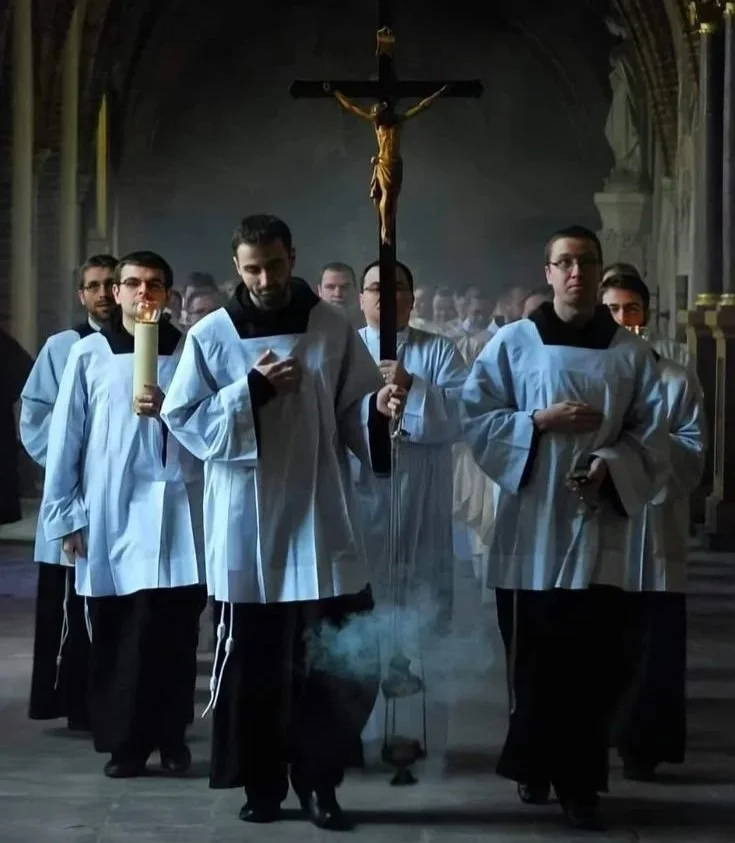
A traditional Catholic procession, led by altar servers carrying the crucifix and incense, gives visible expression to the Church’s worship: Christ goes before His people, while incense rises as a sign of prayer, reverence, and the honour due to God.
Short Answer
Many people reject Catholicism before they have seriously investigated whether it is true. They may know very little about what Catholics actually believe concerning Jesus Christ, revelation, the Church, the Mass, the sacraments, salvation, or the papacy, yet they already possess a vivid picture of Catholicism assembled from other things: the Crusades, the Inquisition, corrupt Renaissance popes, Galileo, clerical sexual abuse, religious persecution, missionary activity associated with colonialism, apparently extravagant churches, supposed hostility to women, strict sexual morality, “Catholic guilt,” superstition, censorship, and unquestioning obedience.
For some people, these are not objections they encounter after examining Catholicism. They are the reason the examination never begins. That makes them important.
Some accusations against Catholics are exaggerated or historically distorted.
Some take complicated events out of their political, cultural, or legal setting.
Some attribute to Catholic doctrine behaviour that Catholic doctrine itself condemns.
Others belong more to inherited polemic than to serious history.
But still others concern genuine wrongdoing, and those things should not be denied, softened, concealed, or explained away.
A priest who sexually abuses a child commits a monstrous crime. A bishop who knowingly shields such a man betrays both his office and those entrusted to his care. A pope who lives immorally gives grave scandal. A Catholic ruler who acts unjustly does not transform injustice into Catholic morality merely because he professes the Faith. A missionary, religious, theologian, politician, parent, or ordinary Catholic who knowingly does evil will answer before God for what he has done.
Catholic morality applies to Catholics too. Indeed, those who have received greater knowledge and greater responsibility may have more to answer for, not less.
Our Lord warned that “unto whomsoever much is given, of him much shall be required” (Luke 12:48), while St Paul reminds every Christian that “every one of us shall render account for himself to God” (Romans 14:12).
But another question must be distinguished from all of this:
Does the wicked behaviour of Catholics prove that Catholicism itself is false?
It does not.
The Bible itself is filled with men who received extraordinary truth, grace, authority, and privilege and nevertheless chose pride, fear, lust, money, ambition, or worldly advantage over God.
Judas betrayed Christ. Peter denied Him.
Ananias and Sapphira lied to the Holy Ghost.
Simon Magus tried to purchase spiritual power.
Aaron participated in the golden calf.
David committed adultery and arranged the death of Uriah.
Solomon received extraordinary wisdom and later fell into infidelity.
Serious scandal existed in the Church at Corinth while the Apostles were still alive.
Christ Himself distinguished the authority attached to a sacred office from the bad conduct of the men occupying it. Scripture therefore gives us no warrant for excusing religious corruption, but neither does it teach that the sin of an officeholder automatically makes false the truth or office he has betrayed.
That is the governing distinction of this article:
The sin condemns the sinner. It does not automatically falsify the truth he abandoned.
For almost two thousand years, Catholicism has passed through empires, invasions, revolutions, schisms, plagues, wars, political intrigue, cultural upheavals, and immense social change. Across such a span, involving billions of human beings from virtually every social condition, one will inevitably find sinners, opportunists, hypocrites, cowards, and scoundrels.
But one will also find saints.
And once Catholic history is examined not merely through those who betrayed the Faith but through those who actually lived it, a very different picture emerges: martyrs, missionaries, monasteries, hospitals, schools, universities, orphanages, scholarship, philosophy, science, sacred art, architecture, music, care for the poor, service to the sick and abandoned, efforts to restrain violence and political power, and above all the conversion and sanctification of souls through Jesus Christ.
Before rejecting Catholicism, therefore, the fair-minded reader should first discover what Catholicism actually is.
Why This Question Matters
Many people never reach the central Catholic claims because inherited images and associations stop them long before they reach theology. They do not begin by asking whether
Jesus Christ really rose from the dead,
whether He founded a visible Church,
whether He commissioned His Apostles to teach in His name,
whether He gave Peter the keys of the kingdom,
whether the Church of the Apostles can still be historically identified,
or whether the earliest Christians believed in doctrines recognisably Catholic.
Instead, other images intervene first. There is the crusader with a bloodied sword, the inquisitorial torture chamber, the corrupt pope surrounded by Renaissance luxury, Galileo standing before an ecclesiastical tribunal, the golden altar beside a starving child, the headline concerning an abusive priest, the severe nun terrifying schoolchildren, or the missionary portrayed as an agent of foreign conquest. Catholicism may also be associated with sexual repression, hatred of women, irrational obedience, fear of Hell, statues, relics, incense, Latin, guilt, and superstition.
If that were the whole picture, one could understand why an intelligent person might recoil. But it is not the whole picture.
Nor does answering these objections require constructing an equally childish counter-story in which every Catholic was noble, every pope was holy, every ruler was just, and every controversial historical action was wise. Catholicism has no need of that kind of apologetic. The truth is strong enough to survive truthful history.
What matters is learning to distinguish categories that are often collapsed together:
doctrine and misconduct,
office and officeholder,
discipline and dogma,
legitimate authority and personal sanctity,
actual history and later legend,
the failures of individual Catholics and what the Catholic Church herself teaches.
There is also a distinction that will become especially important later in this FAQ. A Catholic who violates Catholic teaching presents one kind of problem. An authority claiming to teach for the Church who promulgates something contrary to the Catholic Faith presents a very different theological problem. Bad behaviour and false doctrine are not interchangeable.
We must therefore begin where Scripture itself begins: with fallen human beings receiving holy things.
Christ Himself Did Not Confuse Sacred Authority With Personal Holiness
One of the clearest biblical treatments of this problem appears in Matthew 23.
Jesus Christ was not gentle toward religious hypocrisy. Few critics of corrupt religion have spoken more severely. He accused the scribes and Pharisees of loving honour, burdening others, cultivating appearances, neglecting justice and mercy, and displaying an exterior religiosity while their interior lives were corrupt. His language is startling:
“Woe to you scribes and Pharisees, hypocrites; because you are like to whited sepulchres, which outwardly appear to men beautiful, but within are full of dead men’s bones, and of all filthiness.” — Matthew 23:27
Christ did not protect dishonest religious leaders because exposing them might damage the reputation of religion. He exposed them.
Yet at the beginning of the same discourse He says:
“The scribes and the Pharisees have sitten on the chair of Moses. All things therefore whatsoever they shall say to you, observe and do: but according to their works, do ye not; for they say, and do not.” — Matthew 23:2–3
The distinction is fundamental. Christ did not tell His disciples that because men occupying Moses’ chair behaved hypocritically, the authority attached to that chair therefore ceased to exist. Nor did He tell them that because the men held legitimate religious authority their hypocrisy must be excused. He maintained both truths at once.
There was an objective authority, and there were men who betrayed it.
That distinction gives us a biblical vocabulary for later Catholic history.
A corrupt priest does not make priesthood false.
A sinful bishop does not make episcopacy false.
A pope who behaves scandalously does not, merely by his personal wickedness, make the papal office fictitious.
This is not a convenient Catholic theory invented after scandals appeared. It is already embedded in Our Lord’s treatment of religious authority.
At the same time, Matthew 23 destroys any suggestion that sacred office provides immunity from moral judgment. Christ concludes some of His denunciations with terrifying severity:
“You serpents, generation of vipers, how will you flee from the judgment of hell?” — Matthew 23:33
Sacred office does not lower the moral standard. It raises the responsibility. The priest knows better. The bishop knows better. The Catholic ruler knows better. The religious superior knows better. If a man has received greater light, greater trust, and greater responsibility, his betrayal can be correspondingly greater.
That point must remain before us throughout this article.
Judas Is the Most Obvious Warning
Judas Iscariot was not an outsider who attacked Christianity from a distance. Jesus chose him.
Judas heard Christ teach.
He witnessed miracles.
He travelled with the Apostles.
He lived in extraordinary proximity to Our Lord.
He was entrusted with the common purse.
More strikingly still, Judas was included when Christ sent the Twelve out on mission:
“And having called his twelve disciples together, he gave them power and authority over all devils, and to cure diseases. And he sent them to preach the kingdom of God.” — Luke 9:1–2
Judas therefore received a genuine apostolic vocation. He was not merely pretending afterwards to have been part of Christ’s mission. Yet St John also tells us that Judas was a thief:
“And he was a thief, and having the purse, carried the things that were put therein.” — John 12:6
Eventually he approached Christ’s enemies and asked:
“What will you give me, and I will deliver him unto you?” — Matthew 26:15
One of Christ’s own Twelve betrayed Him for money.
If we applied to Judas the logic sometimes applied to Catholicism, the conclusion would be immediate:
one of Christ’s appointed ministers was corrupt, therefore Christ Himself must have been false.
No serious Christian reasons that way. Judas proves something else entirely.
A real vocation can be betrayed.
Genuine authority can be abused.
Grace can be resisted.
A man can live beside holiness and remain attached to sin.
Judas’s treachery tells us something terrible about Judas. It does not make Christ false.
That simple principle should be remembered whenever someone argues that the discovery of a wicked priest, bishop, or pope somehow settles the truth of Catholicism. Judas stood closer to Christ than almost any corrupt churchman in later history ever could.
And Judas does not disprove Christ.
Peter Shows the Difference Between Failure and Repentance
Peter provides a different but equally important example. He had confessed:
“Thou art Christ, the Son of the living God.”
Christ answered:
“Thou art Peter; and upon this rock I will build my church.” — Matthew 16:16, 18
Yet when the Passion began and identification with Christ became dangerous, Peter denied three times that he even knew Him. The Gospel does not hide this, nor does it soften it. Peter failed precisely where he had insisted he would remain strong.
But Peter’s story did not end at the denial.
He wept bitterly.
He repented.
Christ restored him.
After Pentecost he became one of the great witnesses of the apostolic Church.
This distinction matters.
Judas sinned and despaired.
Peter sinned and repented.
Catholicism does not teach that holiness means a man was never capable of falling. It teaches the necessity of grace, repentance, perseverance, and conversion.
Even after Pentecost Peter remained capable of conduct requiring correction. St Paul writes:
“I withstood him to the face, because he was to be blamed.” — Galatians 2:11
Once again Scripture refuses to turn important religious men into untouchable idols. Peter could be wrong in conduct. Christ’s promise remained Christ’s promise.
Caiaphas Makes the Distinction Even More Striking
Caiaphas presents perhaps the most remarkable biblical example of the difference between personal wickedness and objective office.
He was deeply involved in the conspiracy against Christ. Yet St John records Caiaphas arguing that it was expedient that one man should die rather than the whole nation perish.
Then the Evangelist adds:
“And this he spoke not of himself: but being the high priest of that year, he prophesied that Jesus should die for the nation.” — John 11:51
Caiaphas’s intention was hardly holy. He was helping to bring about the death of Jesus.
Nevertheless, St John explicitly connects the prophetic character of his words with the fact that he was high priest. The significance is difficult to miss. The moral corruption of the man did not mean that the office he occupied had become imaginary.
This does not mean character is irrelevant. It means that the question “Is this man wicked?” and the question “Does this office objectively exist?” are not always the same question.
That distinction will become important when considering corrupt Catholic officeholders.
Scripture Never Pretends That God’s People Automatically Become Good
The same pattern appears throughout the rest of the Bible. Almost immediately after Pentecost, when the Apostles themselves were still governing the infant Church, Ananias and Sapphira attempted to deceive the Christian community over money. St Peter confronted Ananias:
“Why hath Satan tempted thy heart, that thou shouldst lie to the Holy Ghost?” — Acts 5:3
The timing is important. Christianity had barely begun its public expansion and already there was hypocrisy, deception, attachment to money, and severe judgment within the visible Christian community.
Shortly afterwards Simon Magus attempted to purchase spiritual power. St Peter responded with extraordinary severity. The sin eventually gave Christian theology the word simony, meaning the attempted buying or selling of sacred things.
The Church at Corinth offers still more evidence. These were Christians living during the apostolic age, yet St Paul had to confront grave sexual immorality, factionalism, lawsuits among believers, pride, and disorders surrounding communal worship. He writes:
“It is absolutely heard, that there is fornication among you.” — 1 Corinthians 5:1
If serious scandal among Christians were sufficient to disprove Christianity, the religion would already have been discredited before the New Testament was finished.
Nor are the Apostles themselves presented as naturally perfect men.
James and John sought places of honour.
The disciples disputed about who was greatest.
They repeatedly misunderstood Christ.
They fell asleep while He suffered in Gethsemane.
Most fled when He was arrested.
Thomas initially refused to believe the testimony concerning the Resurrection.
Scripture is remarkably unsentimental about human weakness. It does not tell the story of naturally virtuous religious men. It tells the story of grace offered to fallen men.
The Old Testament Had Already Established the Pattern
The same drama runs throughout the Old Testament.
Adam and Eve lived in friendship with God and nevertheless disobeyed Him.
Cain knew God and murdered his brother.
The Israelites witnessed the plagues of Egypt, crossed the Red Sea, and received extraordinary signs of divine providence, yet they turned to the golden calf.
Aaron himself participated in that catastrophe despite his sacred calling.
Moses, who enjoyed an intimacy with God almost unparalleled in the Old Testament, was nevertheless capable of sin and punishment.
David was divinely chosen and greatly favoured, yet he committed adultery with Bathsheba and arranged circumstances that resulted in the death of Uriah.
The prophet Nathan did not flatter him because he was king. He looked directly at the ruler and said: “Thou art the man.” — 2 Samuel 12:7
Solomon received extraordinary wisdom and nevertheless later allowed his heart to be drawn toward false worship.
Saul became jealous, violent, and disobedient. Yet when David was given opportunities to kill him, David continued to recognise Saul as “the Lord’s anointed” until God Himself removed him.
David was not declaring Saul’s behaviour virtuous. He was recognising that a man’s moral collapse and the objective status of his office were not identical questions.
The sons of Eli, Hophni and Phinehas, provide an especially revealing parallel to later clerical corruption. They were priests, but Scripture describes them as “children of Belial.” They abused sacred offerings and behaved immorally. God judged them severely. Yet their corruption did not prove that the priesthood itself was fraudulent. It proved that priests could betray their priesthood.
Even Balaam, whose motives became corrupted by reward and whom the New Testament condemns for loving “the wages of iniquity,” could nevertheless be constrained by God to speak what was true.
The Bible therefore establishes something uncomfortable but essential: receiving holy things does not abolish free will. A man can know God and choose the world, receive authority and misuse it, receive grace and resist it, or know better and behave worse.
The Treasure and the Earthen Vessel
St Paul captures the whole paradox in a single image:
“But we have this treasure in earthen vessels: that the excellency may be of the power of God, and not of us.” — 2 Corinthians 4:7
The treasure is divine, but the vessel is fragile.
Christianity never claims that God acts only through flawless human instruments.
If that were required, biblical history would stop almost immediately. Moses had faults. Aaron failed. David fell. Peter denied Christ. Paul himself had persecuted Christians.
The mystery of grace is not that human freedom disappears. It is that God calls, strengthens, warns, forgives, and sanctifies human beings without turning them into machines.
Some cooperate with grace,
some resist it,
some fall and repent,
some harden themselves,
and some become saints.
This is why the existence of sinners within Catholicism cannot surprise anyone who actually understands Catholic theology.
Catholicism begins from the Fall of man.
It teaches original sin, concupiscence, temptation, mortal sin, the necessity of repentance, and dependence upon divine grace.
The astonishing Catholic claim is not that sinners never enter the Church.
Christ came precisely because sinners need redemption.
The Argument Has a Limit—and It Is an Important One
The distinction between bad conduct and genuine authority must not be extended beyond what it establishes.
Matthew 23 does not teach that a religious authority can proclaim anything whatsoever and must still be obeyed simply because he occupies an office.
There is a fundamental difference between a man violating Catholic teaching and an authority purporting to teach something contrary to Catholic doctrine.
A priest committing adultery is breaking the moral law he is supposed to uphold.
A bishop teaching a proposition contrary to divine revelation raises another question entirely.
A personally immoral pope and a claimant to the papacy who publicly defects from the Faith do not present precisely the same theological problem.
This distinction is especially important for the later parts of this FAQ. When we eventually examine Vatican II, the postconciliar crisis, public heresy, Church membership, ecclesiastical office, jurisdiction, papal authority, and indefectibility, it will not be enough to say that there have always been bad Catholics.
An alleged contradiction in authoritative doctrine cannot be reduced to the personal sin of an officeholder.
For now, however, the narrower principle is enough:
a man’s wickedness does not, by itself, falsify the truth or office he betrays.
That principle clears away a major obstacle to thinking clearly about Catholic history.
Nearly Two Thousand Years of Human History
The scale of Catholic history itself must also be kept in view.
The Catholic Church did not appear fifty years ago with a few thousand adherents. Her historical roots extend to the apostolic age, and the papacy is routinely described by historians as one of the oldest continuously functioning institutions in the world.
Think about what has passed during that span.
The Roman Empire persecuted Christians and then collapsed in the West.
Germanic kingdoms arose.
Byzantium endured.
Islam expanded across lands that had previously been Christian.
Medieval Europe developed.
The Crusades came and went.
The Renaissance transformed intellectual and artistic culture.
The Protestant Reformation fractured Western Christendom.
Enlightenment thought challenged old religious and political assumptions.
Revolutions overthrew monarchies.
Industrialisation transformed work and cities.
Colonial empires expanded and collapsed.
Communism rose.
Two world wars devastated continents.
Modern technology remade everyday life.
Across all of it, generation after generation passed through Catholic institutions. Some Catholics were emperors; others were beggars. Some were scholars; others could barely read. Some were priests, soldiers, merchants, farmers, craftsmen, physicians, monks, mothers, queens, labourers, missionaries, politicians, scientists, or kings.
Once that scale is understood, finding scoundrels in Catholic history becomes tragically unsurprising. One can find greed, ambition, sexual immorality, cowardice, cruelty, favouritism, corruption, dishonesty, political intrigue, and abuse of power because one is dealing with fallen human beings across almost two millennia.
But selecting the worst men from that immense history and presenting them as though they embody Catholicism is not serious historical reasoning.
If Catholicism is to be judged by its fruits, the whole tree must be examined.
And that means we must eventually speak not only about corrupt men, but also about saints.
Catholicism’s Greatest Human Achievement Is the Saint
The deepest Catholic answer to scandal is not statistical. It is spiritual.
The Church does not exist primarily to build hospitals, universities, libraries, cathedrals, or political systems. These can be genuine fruits of Catholic civilisation, but they are not the Church’s final end. Her supernatural mission is the glory of God and the sanctification and salvation of souls.
The highest Catholic achievement is therefore not a building. It is a human being transformed by grace.
Consider St Benedict, whose monastic vision of prayer and work helped shape centuries of European religious life.
Consider St Francis of Assisi, who renounced wealth and sought poverty for the love of Christ.
Consider St Dominic, who devoted himself to preaching.
Consider St Thomas Aquinas, one of the most formidable intellects in Western history, placing his reason entirely at the service of divine truth.
St Vincent de Paul became synonymous with organised care for the poor.
St John of God and St Camillus de Lellis devoted themselves to the sick.
St Jean-Baptiste de La Salle transformed the education of ordinary children.
St John Vianney spent exhausting hours hearing confessions and reconciling sinners to God.
St Damien of Molokai chose to live among people suffering from leprosy when doing so meant accepting isolation, danger, and eventually the disease itself.
St Maximilian Kolbe surrendered his life at Auschwitz in place of another prisoner.
The women of Catholic history tell the same story in another form.
St Agnes chose martyrdom rather than apostasy.
St Clare embraced radical poverty.
St Catherine of Siena combined mystical spirituality with extraordinary public courage and could admonish popes.
St Teresa of Ávila became one of Christianity’s great spiritual writers and reformers.
Countless women religious taught children, served the poor, cared for orphans, entered plague houses, and nursed the sick long before such work carried prestige or financial reward.
These people did not become saints by refusing Catholicism. They became saints by taking it seriously.
That does not mean every person who practises Catholicism becomes a saint. Obviously not. It means Catholicism possesses an intelligible spiritual purpose:
to take the sinner as he is and, through grace, truth, sacrifice, prayer, the sacraments, penance, and charity, conform him increasingly to Jesus Christ.
The Church places before every Christian an astonishing command:
“Be you therefore perfect, as also your heavenly Father is perfect.” — Matthew 5:48
Many refuse, many compromise, and some betray the Faith entirely. But some answer.
And those people become the strongest argument against the idea that Catholicism can be understood merely by cataloguing its scandals.
The Whole Tree Must Be Judged
There is a curious asymmetry in the way Catholic history is often discussed.
A scandalous pope is treated as revealing what Catholicism really is, while a holy pope is regarded as an exception.
An abusive priest counts as evidence against the Church, while the priest who spends sixty years celebrating Mass, hearing confessions, teaching children, visiting hospitals, burying the dead, and living quietly in fidelity apparently counts for nothing.
A cruel Catholic ruler may be offered as evidence that Catholicism encourages oppression. A ruler who restrains his power because he fears divine judgment is scarcely noticed.
A historical Catholic atrocity may be treated as revealing the essence of the Faith, while centuries of orphanages, hospitals, monasteries, schools, universities, missionary work, poor relief, and personal charity are treated as peripheral.
That is not balanced judgment.
It does not follow that the good deeds cancel the crimes. History is not an accounting ledger in which ten hospitals erase one murder.
Rather, the point is methodological. If one wants to know what a religion produces, it is intellectually dishonest to count only those people who violated its moral teaching while ignoring those who lived that teaching heroically.
The bad fruit should not be painted gold.
The good fruit should not be thrown away.
The Crusades and the Inquisition: Why Slogans Are Not Enough
Few subjects have shaped the popular image of Catholicism as strongly as the Crusades and the Inquisition.
Both are treated in greater depth elsewhere in this FAQ because neither can be responsibly resolved in a few paragraphs. But certain principles belong here.
The Crusades did not appear from nowhere in 1095 as an inexplicable decision by peaceful Catholic Europe to invade an historically Muslim Middle East. They arose within a much longer history of Muslim expansion into previously Christian territories, warfare between Muslim powers and Byzantium, difficulties affecting pilgrimage, and an immediate Byzantine appeal for military assistance.
That wider context does not sanctify everything crusaders later did. Crusaders committed atrocities. Political ambition sometimes corrupted religious purposes. Greed, vengeance, factionalism, and brutality appeared within crusading armies. The sack of Constantinople in the Fourth Crusade remains an obvious example of crusading action departing grotesquely from the stated purpose of the expedition.
A serious Catholic history therefore has no need to say that because the Crusades had intelligible historical causes, every crusader action was therefore good. That would simply replace one caricature with another.
The same historical care is required with the Inquisition.
“The Inquisition” was not one timeless institution operating identically for centuries. Medieval inquisitorial procedures, the Spanish Inquisition, the Portuguese Inquisition, and the Roman Inquisition differed in jurisdiction, political setting, procedure, and historical development.
The enormous execution figures found in older polemical literature do not survive modern archival research. That does not mean unjust imprisonment, torture, intimidation, or execution becomes morally unimportant. One innocent person punished unjustly remains an injustice.
Historical correction is not moral indifference.
The principle is simple:
Catholicism should be judged by what actually happened, not by legends invented either to defend it or to attack it.
The answer to anti-Catholic mythology is not pro-Catholic mythology. It is truth.
Did Catholicism Create a Violent World—or Enter One?
The medieval Church is often judged as though she entered a peaceful civilisation and introduced coercion, warfare, and violence into it.
The reality is the reverse.
The Church entered societies already accustomed to warfare, blood feud, slavery, violent punishment, raiding, revenge, and political coercion. The collapse of strong central authority in parts of medieval Europe often left populations exposed to private warfare among armed elites.
The Church did not eliminate this violence. No honest history could claim she did.
But she repeatedly attempted to restrain it.
The medieval Peace of God and Truce of God movements sought, however imperfectly, to protect clergy, pilgrims, merchants, peasants, women, agricultural property, and other vulnerable persons, while restricting warfare during certain times and sacred seasons. Their enforcement was inconsistent and their success varied, but their existence matters because they show ecclesiastical authority being used not merely to bless violence but to limit it.
Behind these movements lay a broader Christian principle: power does not create morality.
A king remained subject to God. A prince could be wrong. A ruler with an army could still commit injustice. Political authority did not become morally absolute merely because it possessed force.
That conviction would have enormous consequences for Western political thought.
Churchmen often failed to live up to it. Some became too entangled in temporal politics. Some pursued power themselves. Some compromised with rulers.
But the existence of a transnational spiritual authority capable, at least in principle, of standing before a king and saying “No” meant that the ruler was not automatically the final judge of good and evil. Caesar was not God, and the king too would stand before judgment.
That was not a trivial contribution to civilisation.
Corrupt Popes and the Difference Between Infallibility and Impeccability
There have been corrupt popes.
In fact around 8–10 out of the 260 popes ( ≈ 3–4%) were notoriously corrupt.
The fact should be admitted without embarrassment.
Some lived scandalously. Some practised nepotism. Some became entangled in Roman family politics or Italian dynastic struggles. Some behaved more like temporal princes than spiritual fathers. Certain Renaissance periods are especially uncomfortable reading.
But to understand what such men prove, one must first understand what Catholicism actually claims about the papacy.
Catholic teaching does not say that election to the papacy makes a man sinless. That would be impeccability.
Nor does papal infallibility mean that every political opinion, diplomatic decision, appointment, administrative act, private judgment, tactical choice, or personal theological speculation of a pope is protected from error. The doctrine concerns a much narrower and more serious matter:
the Church’s protection from error under specified conditions when the Roman Pontiff definitively teaches the universal Church concerning faith or morals.
It is therefore entirely possible, within Catholic theology, for a man to possess the papal office and still be vain, cowardly, politically foolish, personally immoral, or administratively incompetent.
Peter himself already demonstrates that sacred office and personal perfection are not identical.
The more difficult question, treated elsewhere in this FAQ, is not whether a pope can sin. He plainly can. The more difficult question is what happens if someone claiming the papal office publicly defects from the Catholic Faith itself. That moves us from moral failure into ecclesiology, membership, authority, and office.
It must be treated separately.
The Clergy Sexual-Abuse Scandal Must Be Faced Without Evasion
Few contemporary objections to Catholicism carry greater moral force than the sexual abuse of minors by clergy.
This is an area in which defensive apologetics can become repulsive.
The sexual abuse of a child or adolescent by a priest is evil. It is criminal. It violates the victim’s dignity and trust. It gravely contradicts the chastity and holiness demanded by the priestly vocation.
Because a priest represents sacred realities to the faithful, the damage may also become spiritual. A victim may not merely fear another human being; he or she may struggle to separate the abuser from the God the abuser claimed to represent.
Where bishops or superiors knowingly concealed serious abuse, failed to investigate credible allegations, transferred dangerous men without adequate safeguards, intimidated victims, discouraged disclosure, or placed institutional reputation ahead of the safety of children, those failures deserve condemnation as well.
A collar does not make the crime smaller, and a mitre does not excuse cowardice. Nor is “abuse happened elsewhere too” an adequate response to the victim. Comparative statistics may be relevant when someone makes a comparative claim, but another institution’s sins cannot undo what happened in a Catholic one.
Yet once the moral issue has been stated clearly, a historical question remains: when did the modern crisis become especially severe?
Large modern studies of Catholic clerical abuse have found a pronounced concentration of reported offending in the decades around the 1960s, 1970s, and early 1980s, followed by substantial decline. That chronology overlaps the sexual revolution and an extraordinary period of upheaval within Catholic institutions following Vatican II, including changes in seminaries, religious life, discipline, priestly identity, and sexual morality, together with large numbers leaving religious vocations.
This overlap understandably raises questions. But chronology alone does not prove causation.
Abuse existed before Vatican II, and some priests who offended after the Council had been formed or ordained before it. It would therefore be historically irresponsible to write that Vatican II turned priests into abusers.
The more serious question is whether the postconciliar environment weakened some of the disciplines, cultural expectations, forms of oversight, or theological convictions that ought to have helped identify, restrain, punish, or remove dangerous men.
A related question concerns the twentieth-century tendency to approach serious misconduct therapeutically. In some cases, clerics who should have been permanently removed from access to minors were instead treated, rehabilitated, reassigned, or managed internally.
These questions deserve investigation because governance matters.
But there is an equally important limitation. The clergy-abuse crisis should not be turned into a shortcut for proving the larger theological case against Vatican II. The doctrinal case must stand upon doctrine. The ecclesiological case must stand upon ecclesiology.
The victims of abuse should never become rhetorical ammunition.
Their suffering is too serious for that.
Galileo: A Real Failure, but Not the History of Science
The name “Galileo” is sometimes treated as though it settles the relationship between Catholicism and science in one word. The real story is both more interesting and more complicated.
Galileo made extraordinary astronomical observations using the telescope. His work concerning the Moon, Jupiter’s satellites, the phases of Venus, and other phenomena helped overturn older assumptions about the heavens. He became an increasingly forceful advocate of Copernican heliocentrism and was eventually condemned in 1633.
Catholics should not pretend that the affair was handled well. It was not.
An ecclesiastical condemnation became entangled with a scientific question concerning the physical structure of the universe in a manner that later history exposed as deeply mistaken.
But the popular version often removes important context.
At the time, Galileo did not possess every proof later astronomy would develop. One of his favourite physical arguments for the motion of the Earth involved his theory of the tides, which was wrong. The scientific discussion of heliocentrism was still developing, and some objections raised by his contemporaries were not simply quotations from Scripture.
None of this justifies the condemnation.
It does, however, show why the episode cannot honestly be reduced to a cartoon in which science had proved a fact and religion rejected it because priests hated evidence.
More importantly, one seventeenth-century controversy cannot carry the enormous claim that Catholicism and science are natural enemies.
The institution of the university itself emerged in medieval Christian Europe.
Natural philosophy, mathematics, astronomy, medicine, law, and theology were studied in intellectual institutions deeply connected with the Church.
Later Catholic scientific history includes the Augustinian friar Gregor Mendel, whose experiments became foundational to genetics,
and the priest Georges Lemaître, whose work helped lay the foundations of modern cosmology.
Jesuits became prominent in astronomy, mathematics, cartography, and scientific education.
St Albert the Great devoted serious attention to the natural world centuries before the modern scientific revolution.
Catholicism does not teach that scientific discovery threatens God.
Its underlying intellectual principle is almost the opposite. The God who reveals supernatural truth is also the Creator of the natural order. Therefore truth genuinely discovered by reason cannot ultimately contradict truth genuinely revealed by God.
Galileo teaches an important lesson about the danger of churchmen attaching ecclesiastical authority too confidently to unsettled scientific judgments.
He does not establish an intrinsic war between Catholic Faith and science.
The Myth of a Church Afraid of Learning
Another popular image presents medieval Catholic civilisation as a thousand-year campaign against thought. The institutions of the period tell another story.
Monastic communities
copied manuscripts,
maintained libraries,
preserved patristic and classical texts,
and educated clergy.
Cathedral schools became centres of intellectual life.
From this broader environment emerged the medieval university.
Bologna, Paris, Oxford, Cambridge, Salamanca, and other institutions developed different emphases and structures, but all belonged to a civilisation profoundly shaped by Christianity.
Students encountered grammar, rhetoric, logic, arithmetic, geometry, astronomy, law, medicine, philosophy, and theology. Intellectual life included commentary, disputation, translation, synthesis, criticism, and argument.
Medieval education was not modern mass education. Most ordinary people were not university students, and literacy rates were far below those of the present day. But that is very different from claiming that Catholicism wanted people ignorant.
Indeed, the scholastic method itself is difficult to reconcile with the caricature of a Church terrified of questions.
Open the Summa Theologiae of St Thomas Aquinas and one repeatedly encounters:
“It would seem that…”
Aquinas states objections to his own position. Often the objections are powerful. He then distinguishes concepts, establishes principles, develops his argument, and answers the objections individually.
The process assumes that truth does not need to hide from serious questions.
Catholicism certainly teaches that revealed truth possesses authority. But authority and thoughtlessness are not the same thing. A rational creature is expected to use reason.
Catholicism merely rejects the modern assumption that human reason is unlimited and that God could not reveal truths the unaided human mind would never discover for itself.
Did the Catholic Church Hide the Bible?
The accusation that the medieval Catholic Church deliberately hid the Bible from ordinary Christians is one of the most persistent stories told about Catholic history. Like many effective historical myths, it begins with several real facts:
books were sometimes chained in churches and libraries;
vernacular translations were sometimes regulated or prohibited;
and before the modern period relatively few ordinary people owned complete Bibles.
But those facts do not establish the conclusion normally drawn from them. In several important respects, they point in the opposite direction.
The Church did, at various times and places, regulate vernacular translations of Scripture. Certain versions were prohibited when ecclesiastical authorities judged the translation defective, unauthorized, or associated with teachings considered heretical. That is part of the historical record and should not be concealed.
What does not follow is that the Catholic Church therefore wanted Christians to remain ignorant of Scripture.
Vernacular biblical texts existed centuries before the Protestant Reformation.
Scripture circulated in complete manuscripts, partial translations, Gospel books, Psalters, biblical paraphrases, commentaries, devotional works and liturgical books.
German Bibles were printed before Luther's translation appeared.
Long before printing, biblical material was encountered constantly through the Mass, the Divine Office, preaching, religious drama, art, stained glass and the entire structure of the Christian liturgical year.
To understand why private ownership of complete Bibles was nevertheless uncommon, however, the modern reader has to enter a radically different technological world.
A Bible Was Not a $20 Book
Today a complete Bible can be mechanically printed by the thousands, purchased inexpensively, downloaded without charge or carried on a telephone containing millions of times more information than an entire medieval library. It is therefore very easy to assume that if an ordinary medieval Christian did not personally possess a Bible, someone must have been deliberately keeping it from him.
That assumption ignores how books were made.
Before movable-type printing, every page had to be reproduced by hand. A large Bible might contain well over a thousand manuscript pages. The parchment itself could require the skins of scores or even hundreds of animals, after which came the work of scribes, rubricators, correctors, illuminators and binders. A substantial manuscript was not merely something expensive in the way that a modern luxury book is expensive. It represented an enormous concentration of materials and skilled human labour.
The economics surrounding Gutenberg's Bible help put this into perspective. An early Gutenberg Bible could sell for about 30 florins, a sum estimated at roughly three years' wages for a clerk, even though printing had already made reproduction substantially cheaper than copying the same work by hand.
Contemporary evidence illustrates how rapidly printing changed the economics of books. Bishop Giovanni Andrea Bussi of Aleria wrote in 1467 that books obtainable in Rome for twenty gold gulden would only a few years earlier have cost about one hundred—approximately five times as much. Another historical comparison records a printed Bible selling for roughly one-fifth of what the equivalent manuscript had cost.
Expressed only as a modern analogy, a substantial handwritten Bible could therefore represent between $300,000 to $500,000 USD worth of purchasing power or skilled labour in today's economic terms. No exact dollar conversion should be taken literally, because medieval and modern economies are too different. The important fact is the scale: possessing one's own complete Bible was beyond the economic reach of most people for much the same reason that an ordinary household today does not own a priceless manuscript or major research collection.
This was a problem of technology and economics, not evidence of an ecclesiastical conspiracy against Scripture.
Why, Then, Were Bibles Chained?
Here another frequently repeated image becomes revealing.
Medieval and early-modern churches and libraries sometimes chained valuable books to desks or lecterns. To the modern eye, a chained Bible can look sinister: the Church had the Scriptures literally “in chains.”
But the chain did not prevent the reader from opening the book.
It prevented the reader from walking away with it.
Chaining was a normal security system for valuable books. The chain was long enough for the volume to be removed from its shelf, placed on a desk or lectern and read, but not long enough for someone to carry it out of the building. Hereford Cathedral, whose historic chained library survives, describes the system very plainly: the chain allowed a book to be taken down and read at the desk while preventing its removal from the bookcase.
This was not a system devised specifically to restrain the Bible. Medieval libraries chained valuable books of many kinds. Fifteenth-century library regulations explicitly distinguished between chained books available for consultation and unchained books that could sometimes be lent out.
Indeed, the development of the chained reading desk represented an improvement in accessibility. Earlier valuable manuscripts might simply have been kept locked inside chests or cupboards. A book placed upon a lectern and secured by a chain could instead remain physically accessible for consultation while being protected against theft. Historical research on medieval libraries describes the chained book as part of the transition from the library as a storehouse into a place where books could actually be consulted.
So when we encounter a Bible chained to a church desk or lectern, the historically natural interpretation is not:
“The Church chained the Bible so that people could not read it.”
It is almost the reverse:
“This book was so valuable that it was chained in place so that people could read it without someone stealing it.”
A modern analogy would be a valuable reference work secured inside a public reading room. The security device exists precisely because the institution wants the book to remain available to the next reader.
The practice was not uniquely Catholic either. Chained libraries continued well after the Reformation, including in Protestant institutions, because the practical problem had not changed: books remained expensive and theft remained possible. Some Oxford books remained chained into the eighteenth century.
The chain, therefore, is particularly poor evidence for the claim that medieval Catholicism feared the Bible.
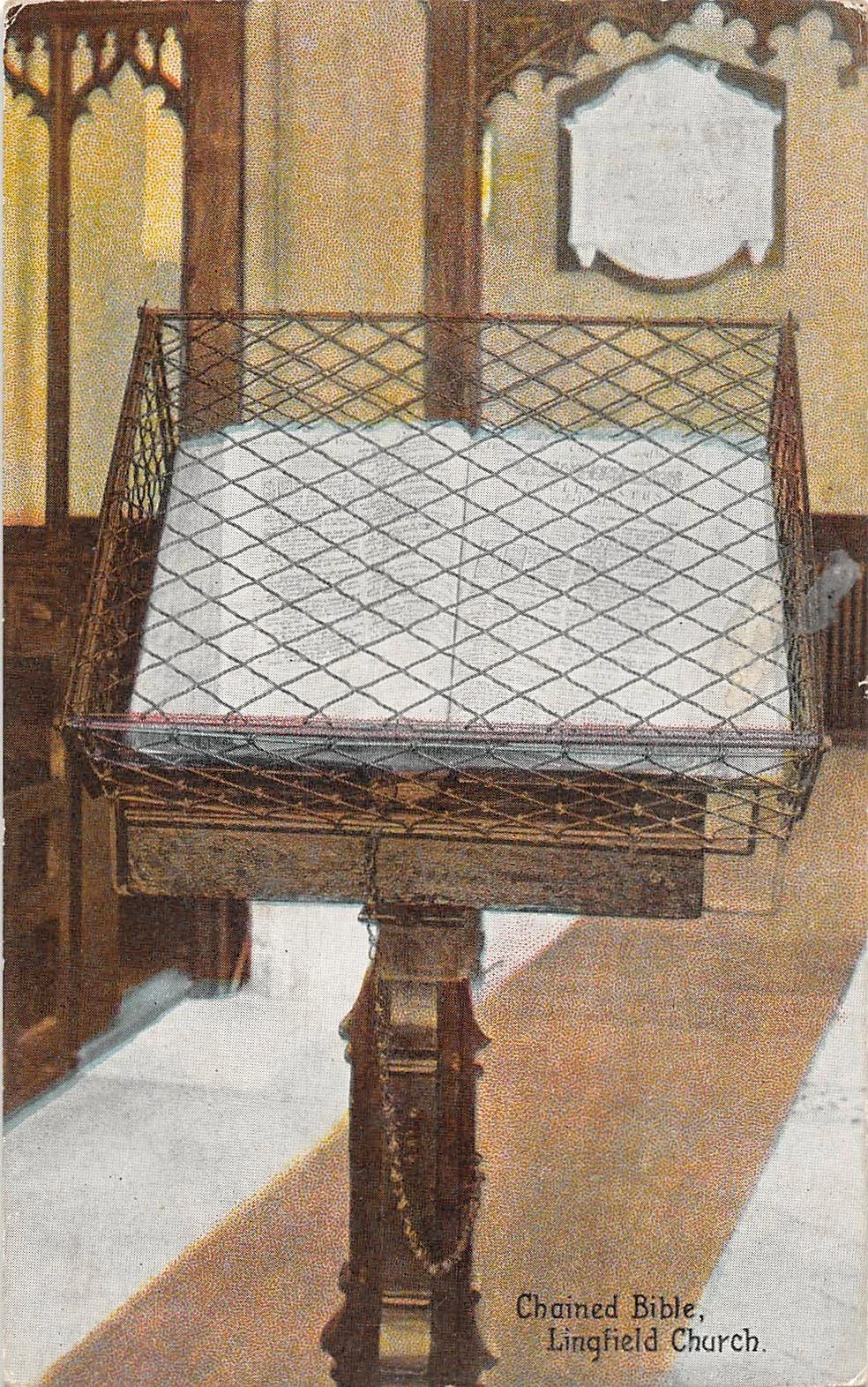
A chained Bible in a medieval church. The chain was not intended to stop people reading Scripture, but to prevent an extremely valuable book from being stolen while still allowing it to be consulted at the lectern or desk.
Most Medieval Christians Encountered Scripture by Hearing It
There is another modern assumption that must be avoided. Christianity existed for many centuries in societies in which large portions of the population could not read fluently. Even if hundreds of thousands of inexpensive Bibles had somehow appeared overnight, universal private Bible reading would still not have been possible.
Christianity consequently transmitted Scripture not only through private reading but through public proclamation, preaching, memorization, liturgy, music and visual representation.
The Mass proclaimed passages from the Epistles and Gospels. The Divine Office immersed clergy and religious in the Psalms and other biblical texts throughout the day. Sermons expounded Scripture. Feast days repeatedly presented the events of salvation history. Biblical stories surrounded worshippers in frescoes, mosaics, carvings, statues and stained glass.
The Christian year itself carried the believer repeatedly through the great biblical events: Advent and the prophecies concerning Christ; the Nativity; the Epiphany; Christ's Passion and death; His Resurrection and Ascension; Pentecost; and the lives of the Apostles and other biblical saints.
For an illiterate medieval Christian, therefore, a cathedral could function in part as the biblical world rendered in stone, glass, music, ritual and preaching.
None of this means that medieval Christians possessed the degree of direct textual access available to someone today. Obviously they did not. Nor does it mean that every restriction placed upon a translation was prudent or that abuses never occurred.
It means something more limited and historically much more defensible:
lack of private Bible ownership is not evidence that the Catholic Church had hidden Scripture from Christianity.
Before printing, books were extraordinarily difficult and expensive to reproduce. Complete Bibles could represent years of income. Where valuable books were made available for consultation, they might actually be chained to the furniture so that they would remain there for the next reader. Meanwhile Scripture was continually proclaimed and explained through the Church's liturgy, preaching, religious life and art.
The serious historical questions are therefore not, “Why did the Catholic Church completely hide the Bible?” because it did not.
The better questions are why particular translations were restricted, whether those restrictions were justified, how manuscripts circulated before printing, how literacy affected access to written texts, and how ordinary Christians encountered Scripture in a largely oral and liturgical culture.
Those questions are worth examining.
The caricature of a Church frightened that Christians might discover the Bible is not.
The Church’s Wealth and the Meaning of Sacred Beauty
Perhaps no objection to Catholicism is as immediately visual as the question of wealth.
A person enters a magnificent basilica or cathedral and sees marble, gold, paintings, mosaics, carved stone, silver, stained glass, embroidered vestments, sculptures, sacred vessels, and architecture on a scale unimaginable in ordinary life.
Then he thinks of a hungry child.
The reaction is understandable: why was this money not simply given to the poor?
The first distinction is between personal luxury and sacred patrimony.
If a churchman steals donations, enriches relatives, wastes money, or lives extravagantly for his own vanity, there is nothing particularly Catholic about defending him.
That is corruption.
But a cathedral is not simply a cleric’s private jewellery collection writ large.
Catholic sacred beauty arises from a biblical conviction that what is offered to God should be worthy of Him. The Old Testament itself describes the Tabernacle in terms of gold, silver, fine fabrics, precious stones, elaborate vestments, skilled craftsmanship, and sacred objects. The Temple likewise embodied magnificence ordered to divine worship.
The Bible therefore does not present a simple opposition between giving beautiful things to God and caring for the poor.
It commands both worship and charity.
This helps explain the mentality that produced the great churches of Catholic civilisation.
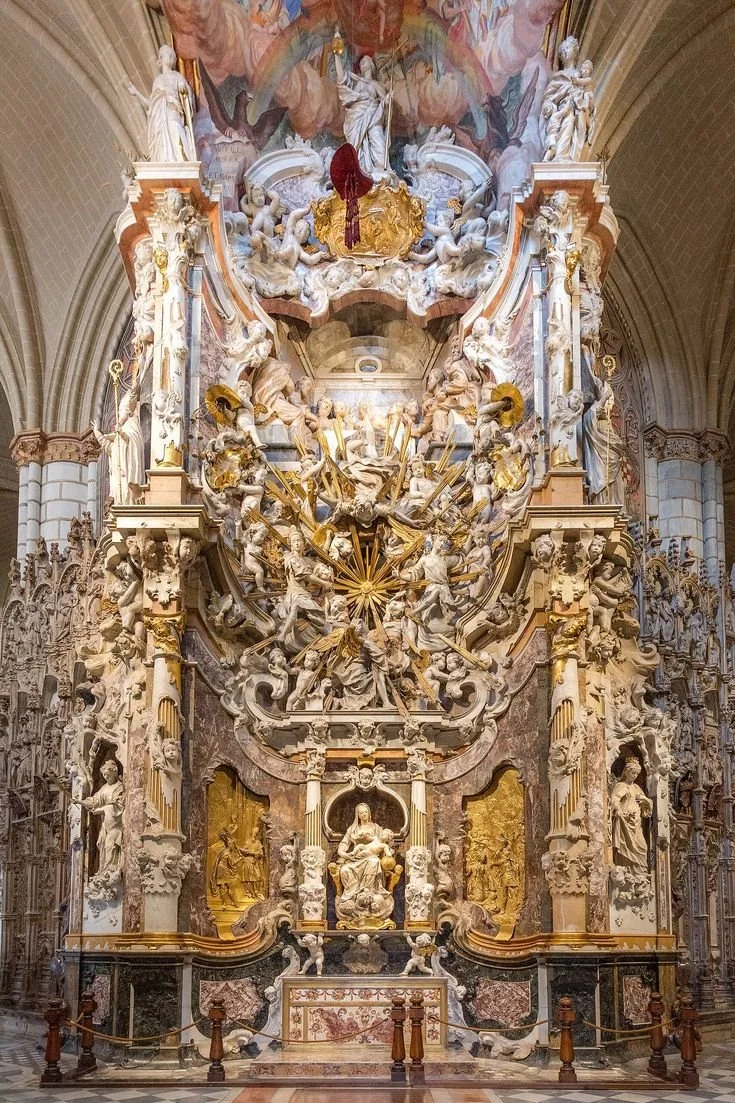
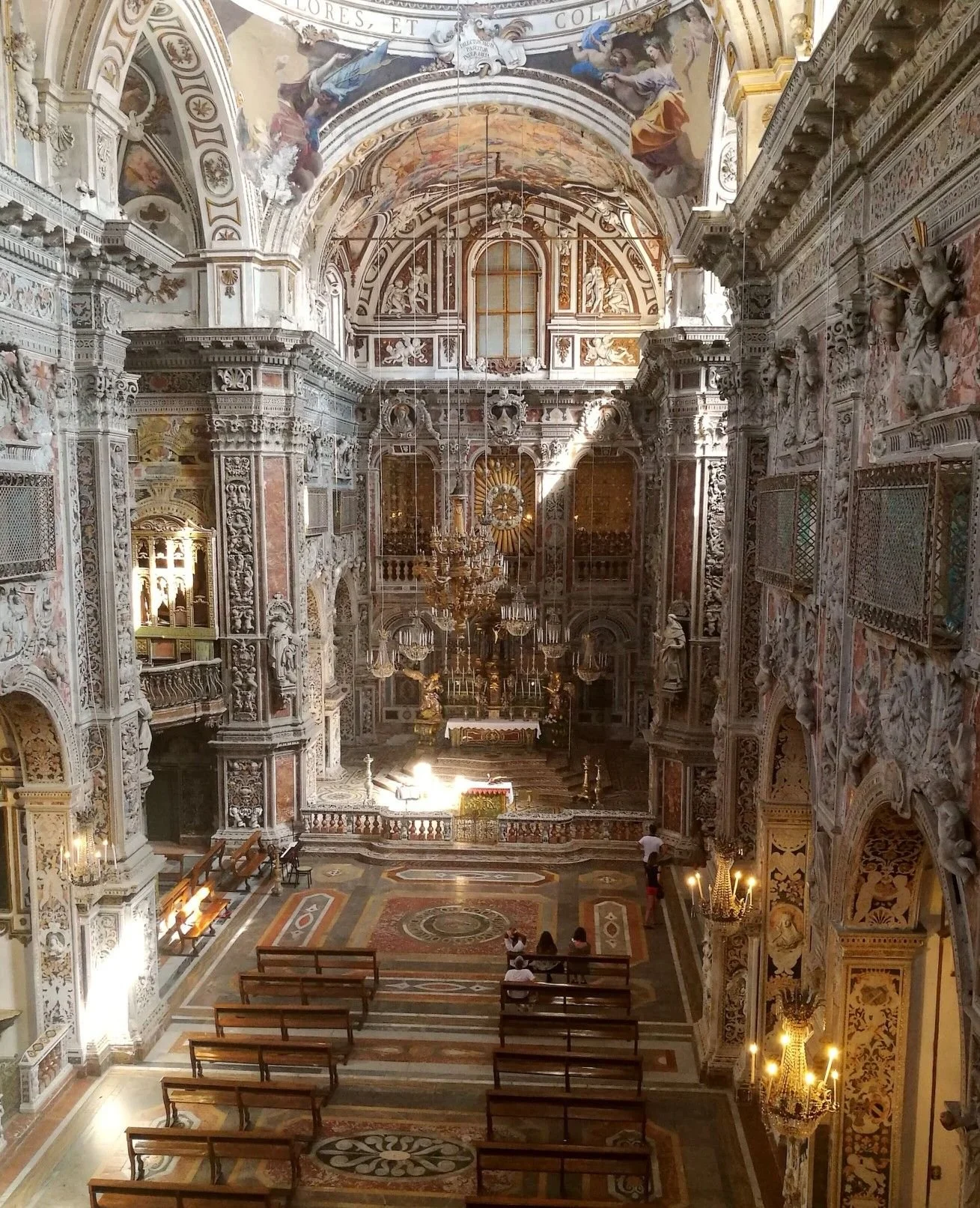
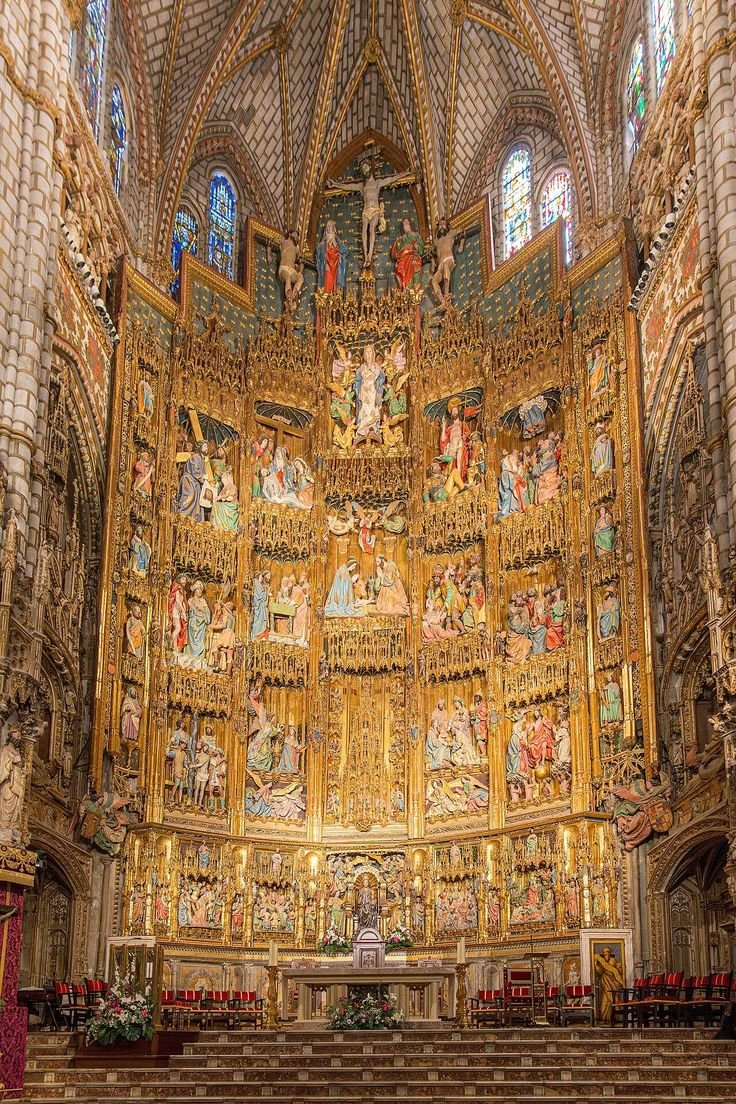
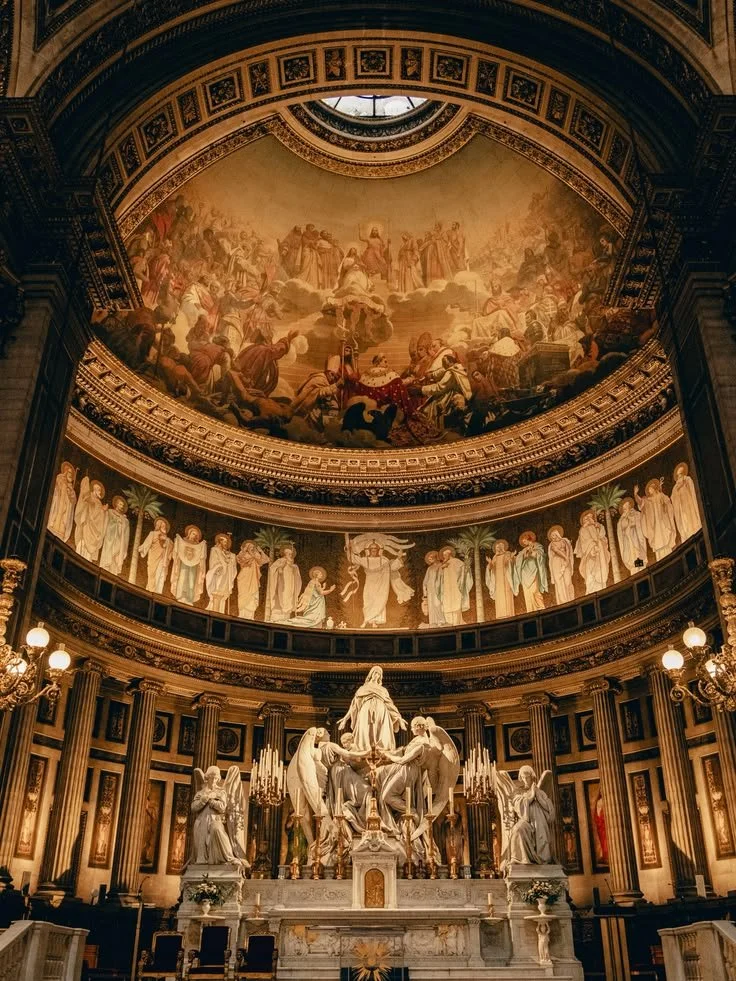
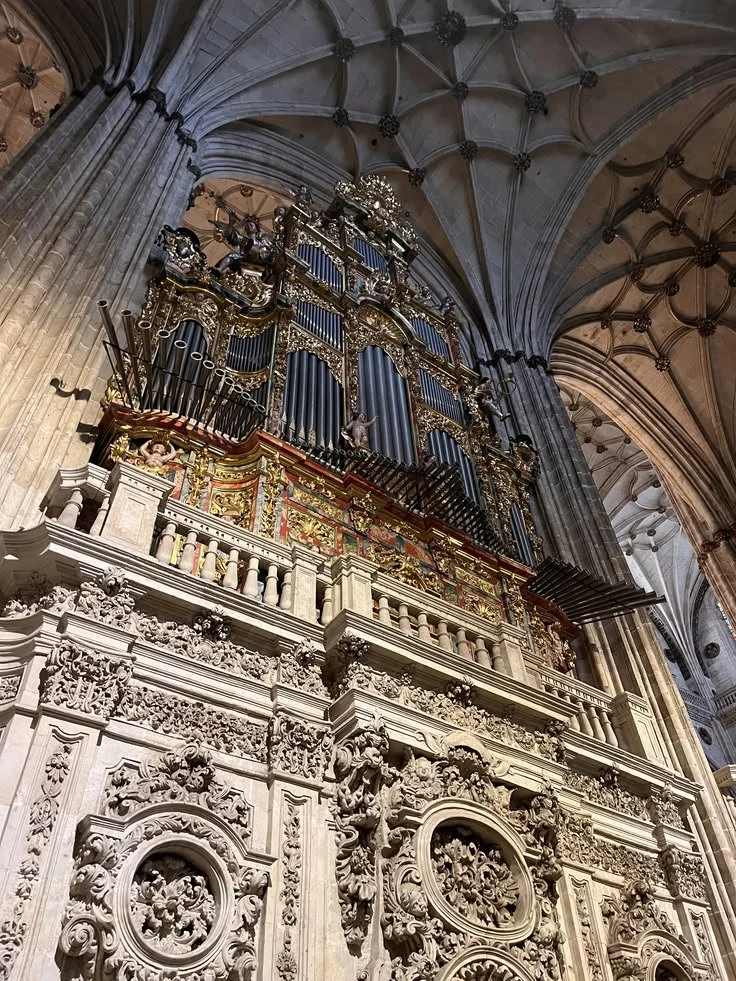
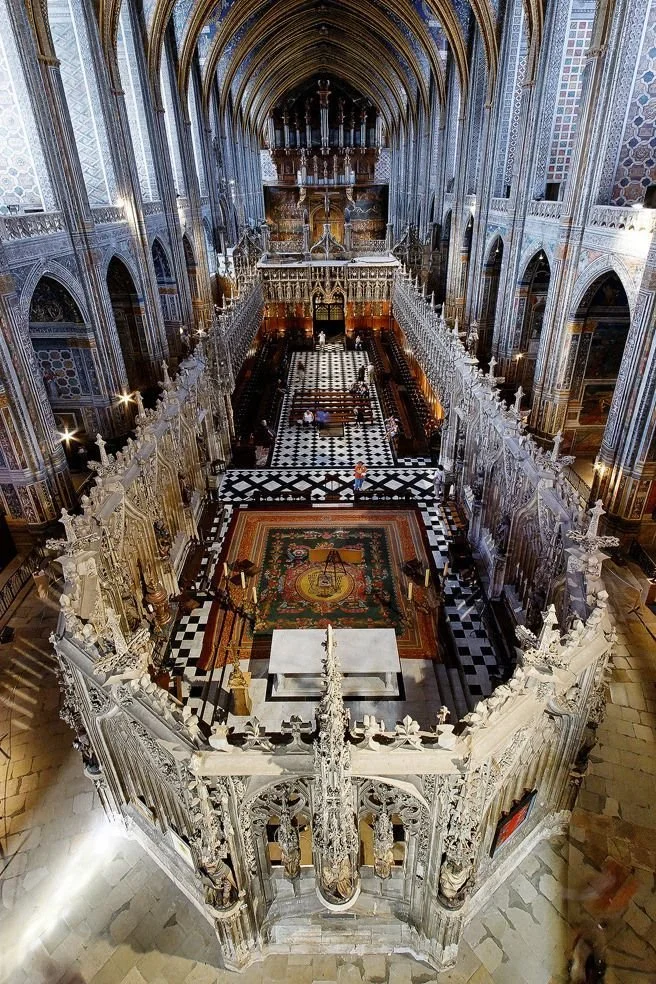
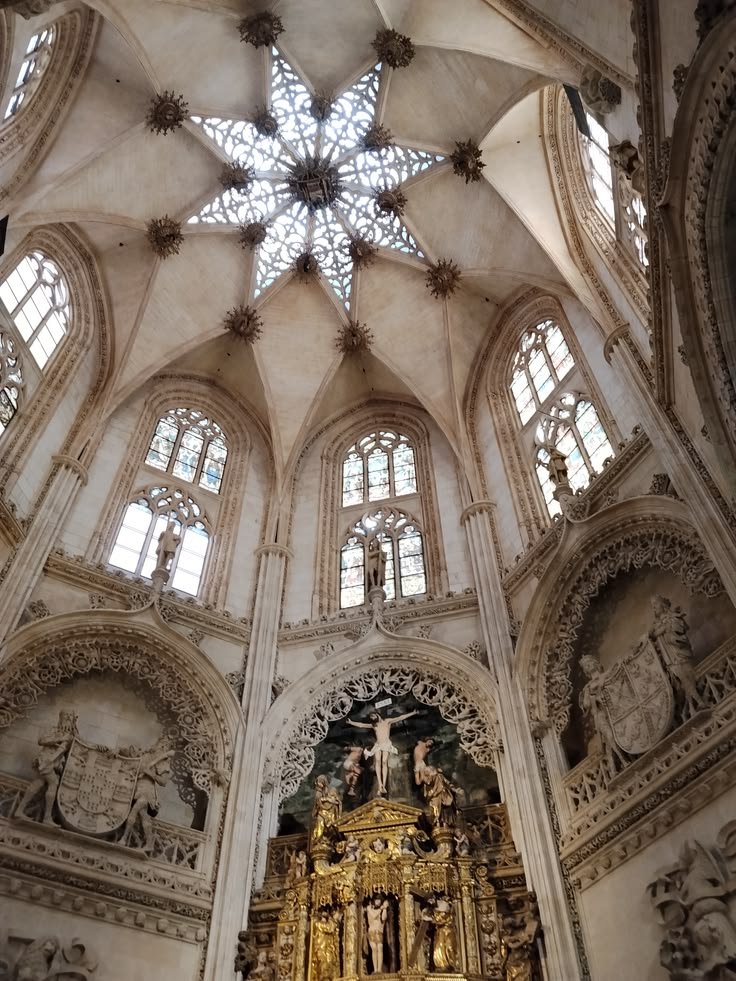
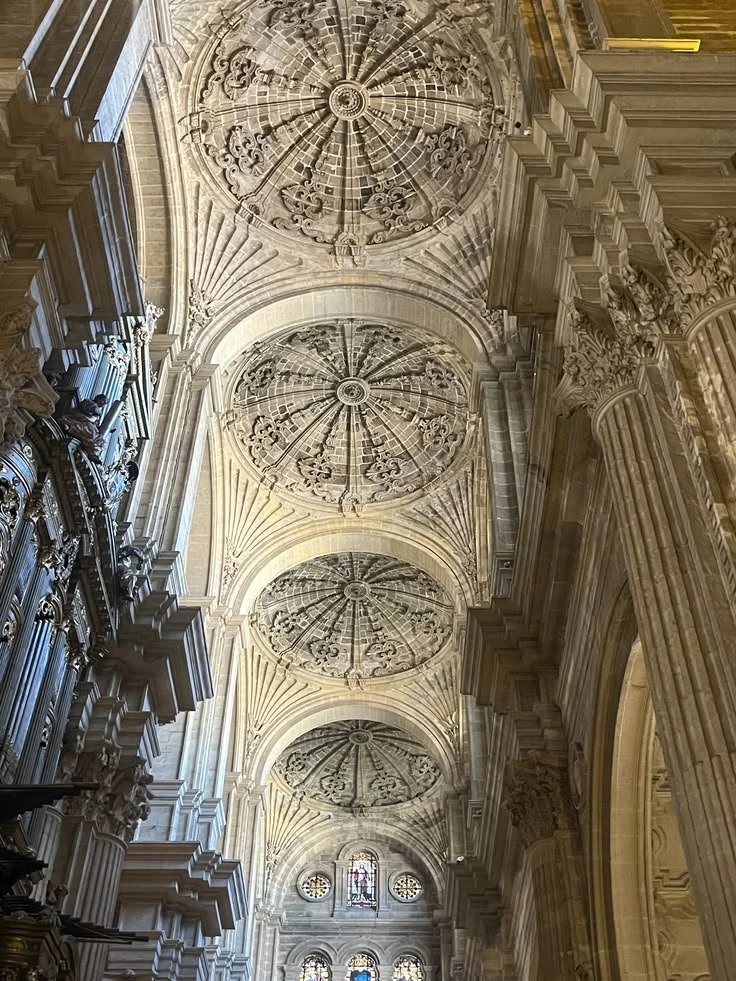
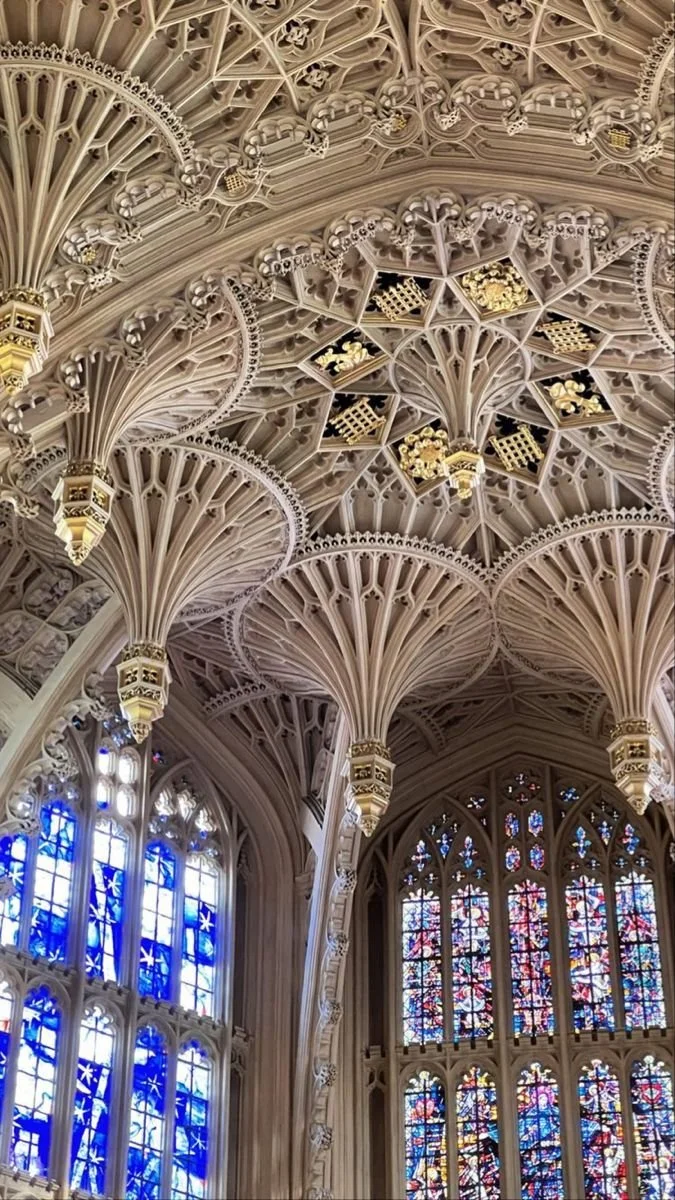
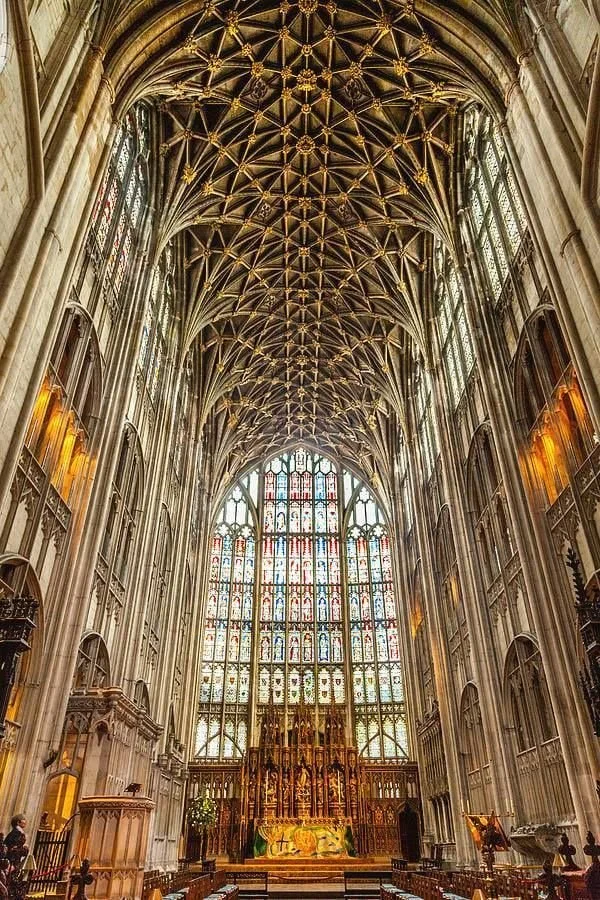
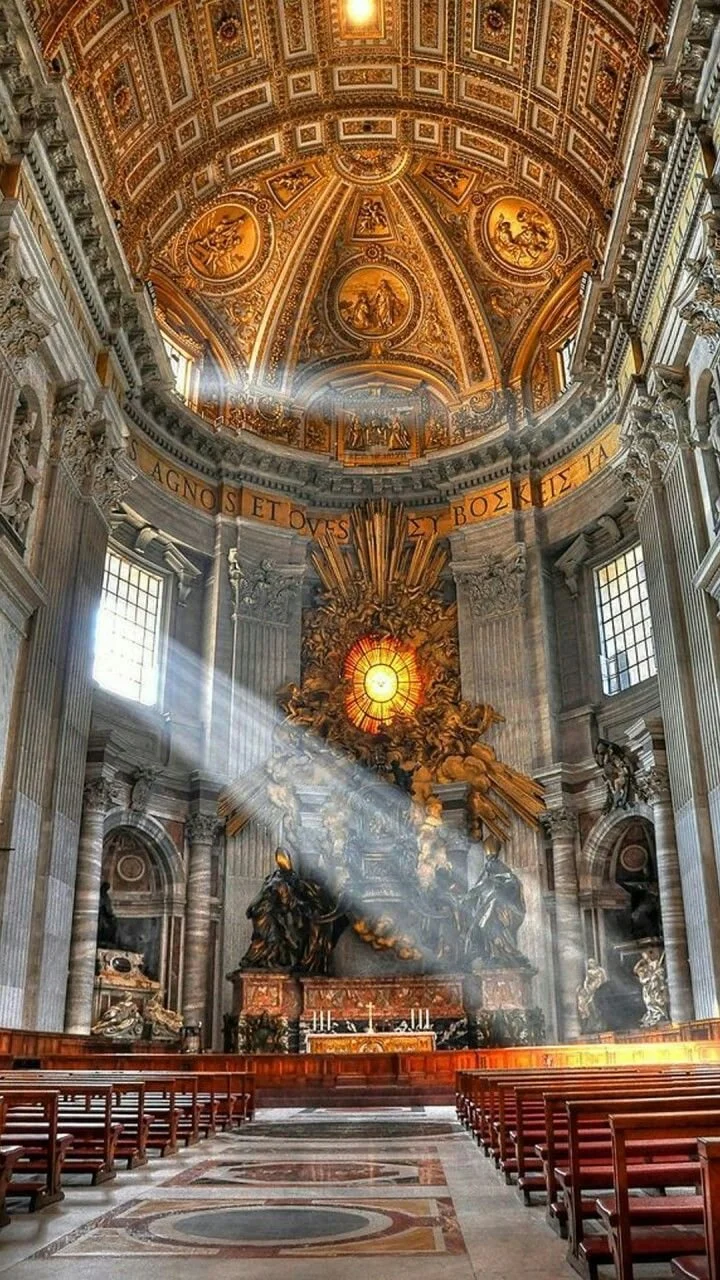
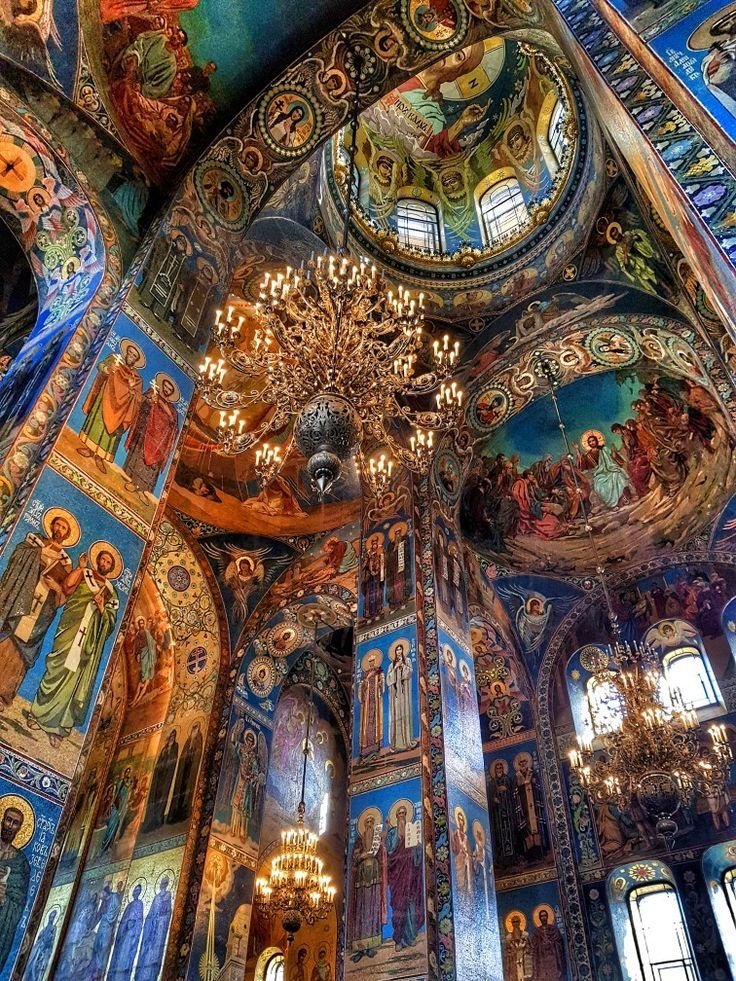
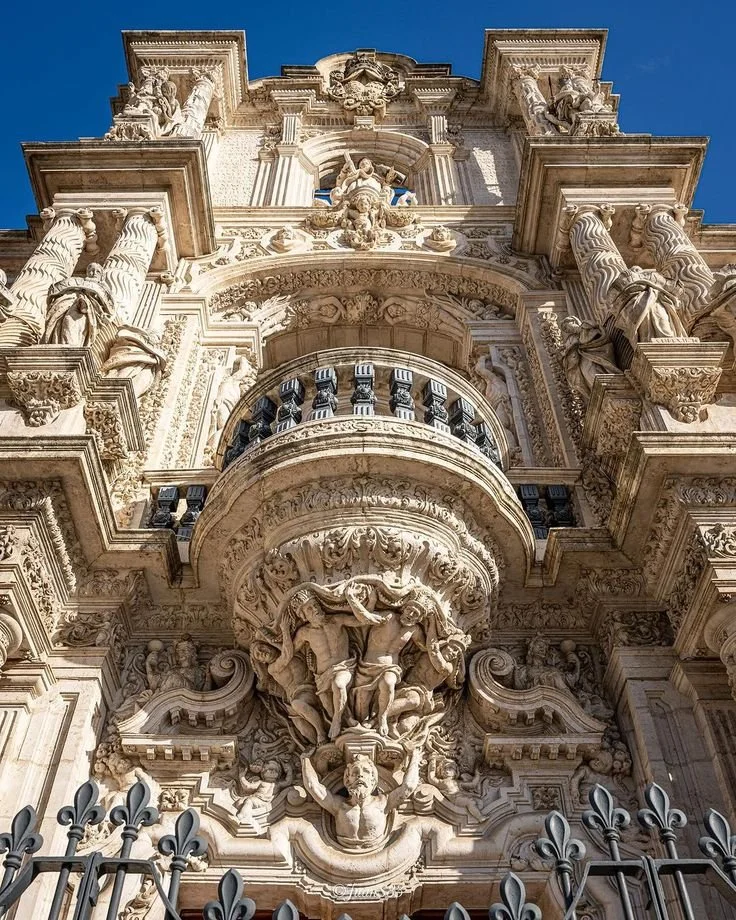
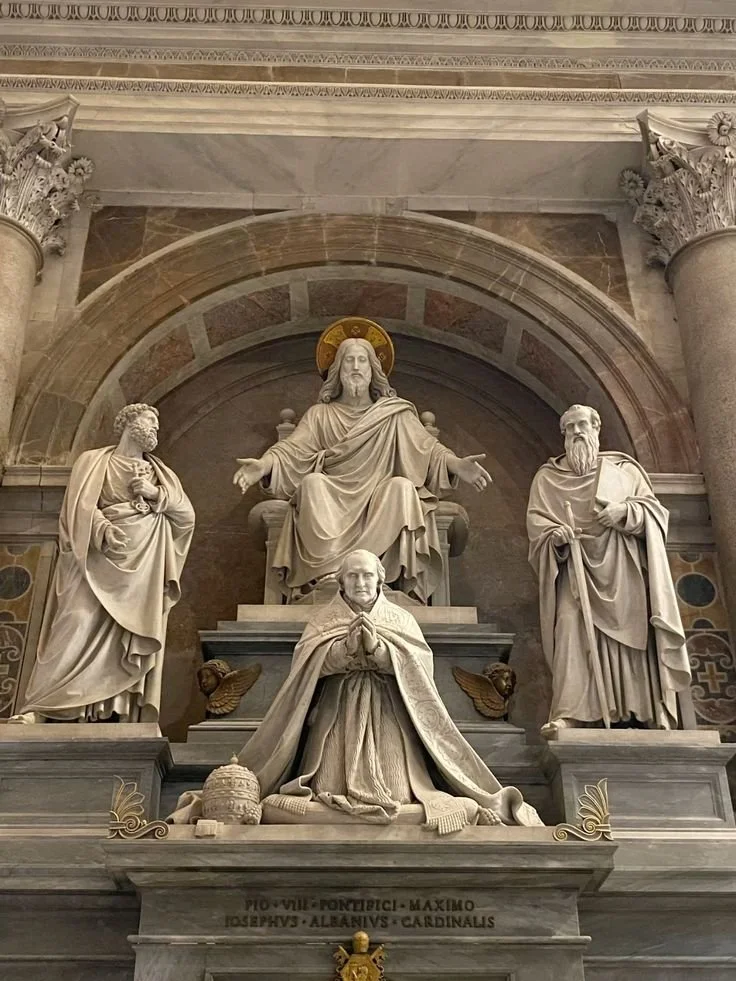
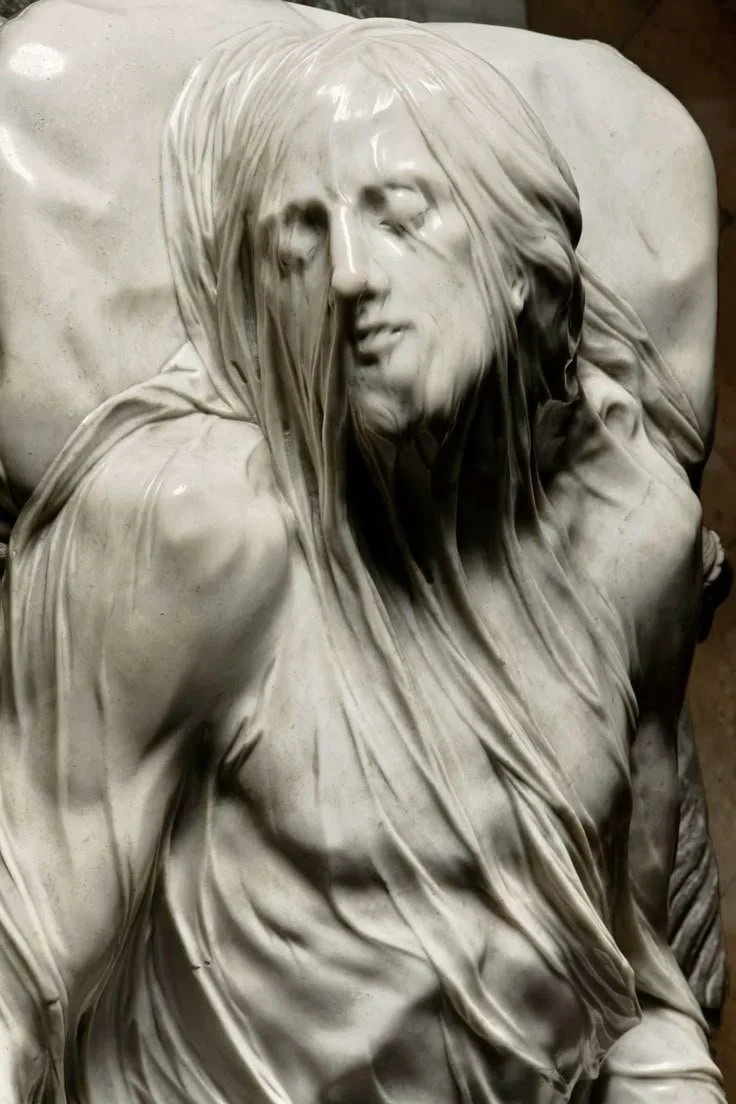
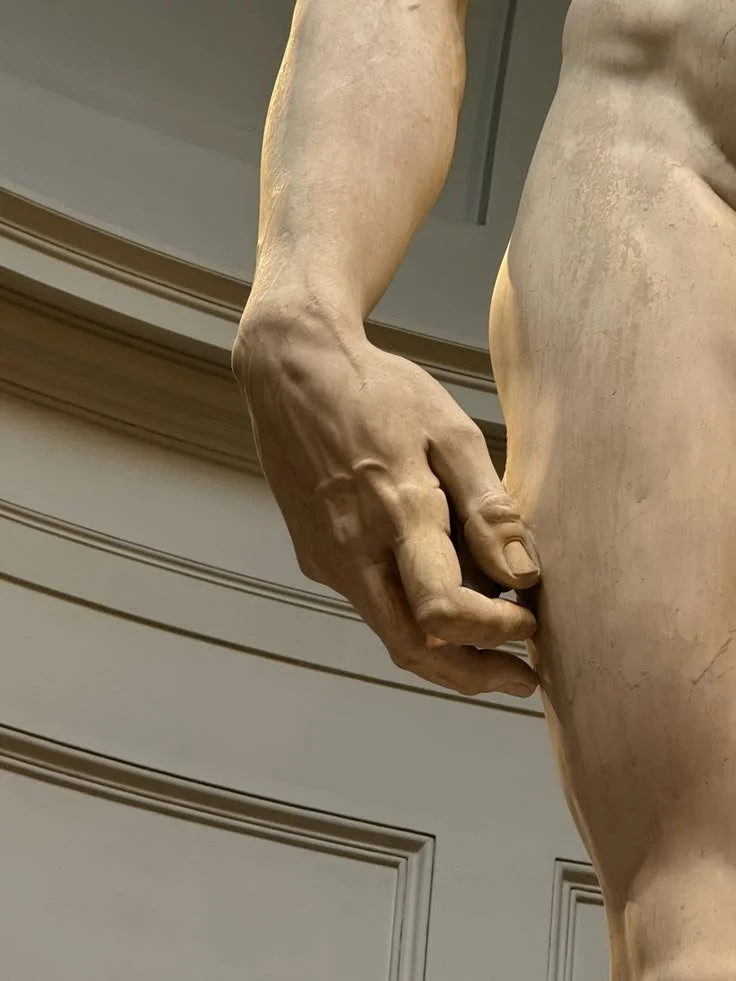
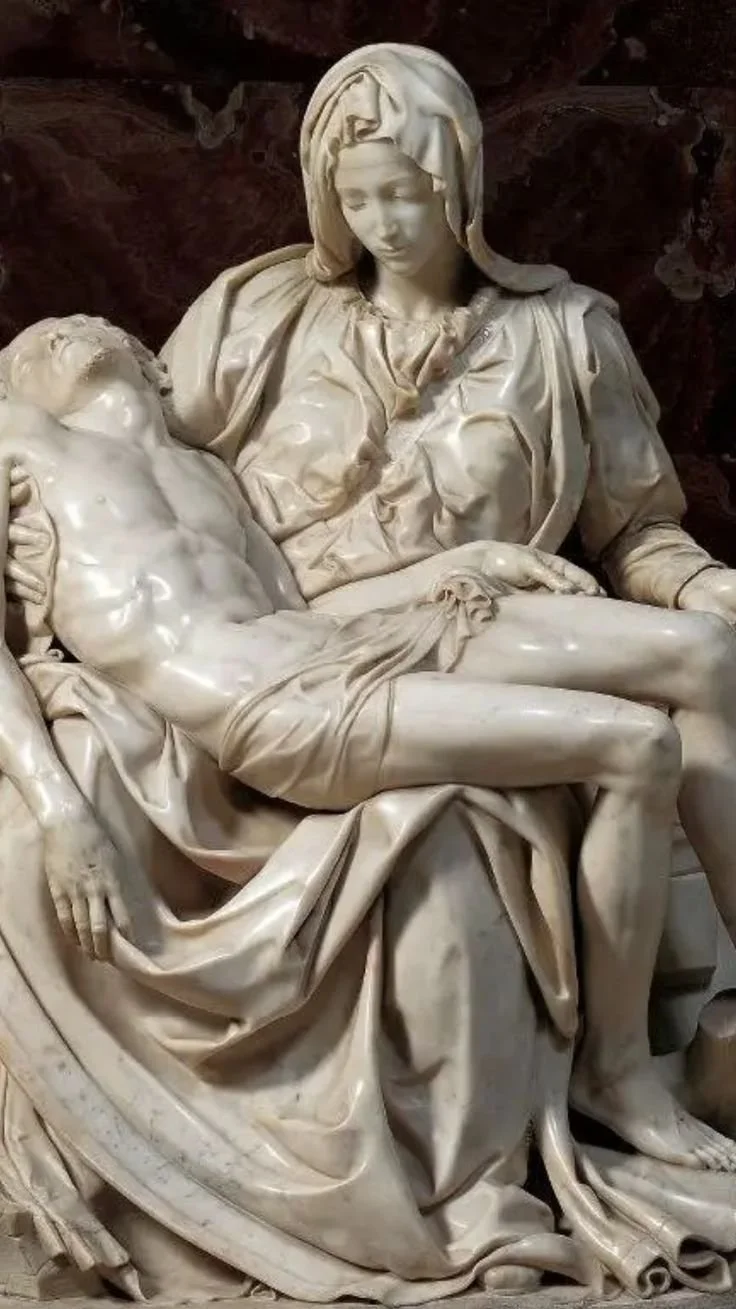
Across centuries, Catholics gave to God the finest work of their hands and minds—raising churches of breathtaking beauty, painting sacred mysteries with reverence, and carving stone and marble into images that lifted the heart toward Heaven. These were not merely works of art. They were acts of faith: the best that man could make, offered to the glory of God.
Their Finest Work Offered to God
A great traditional church is rarely the work of one famous man. It is the accumulated offering of generations.
The architect contributed intelligence and proportion.
The mason contributed strength.
The stonecarver brought patience and craftsmanship.
The woodworker shaped choir stalls, doors, confessionals, and screens.
The glassmaker transformed sunlight into colour.
The painter filled walls and ceilings with the mysteries of salvation.
The metalworker fashioned chalices, reliquaries, and candlesticks.
The musician filled the sacred space with sound.
Many of these craftsmen knew they would never see the finished building. Some carved details high above the ground where few human eyes would ever examine them closely.
Why labour beautifully over something almost nobody would notice? Because, in the Catholic imagination, the ultimate audience was not man. God would see it.
That changes the meaning of craftsmanship. The work becomes more than decoration. It becomes offering.
This is one of the reasons medieval and early modern sacred architecture can feel so different from buildings designed primarily for efficiency or commercial return. It emerged from a civilisation in which a man might give the finest work of his life to something that would outlast his name.
At its best, the cathedral did not say, “Look how important we are.” It said, “Lift up your eyes.”
Beauty Was Also a Form of Catechesis
Catholic sacred art was not merely ornamental. It taught.
The crucifix placed Calvary before the worshipper.
The baptismal font recalled supernatural rebirth.
The altar drew attention toward sacrifice.
Images of martyrs taught courage.
Images of Our Lady taught the mystery of the Incarnation.
Saints surrounding the sanctuary reminded ordinary Christians that holiness was not an abstraction.
Stained glass could present biblical history to people who could not read.
Architecture itself communicated theological meaning. Height drew the eyes upward. Light entered coloured glass and transformed the interior.
Bells called the surrounding community out of ordinary time and toward prayer.
Music could create an atmosphere radically different from the marketplace or the street.
The whole environment said that man does not live by bread alone.
Sacred beauty can be corrupted into vanity. But it can also do something profound: it can lift the mind from creation toward the Creator.
This is why magnificent Catholic art cannot simply be dismissed as money wasted on appearances.
The art had a spiritual purpose.
Beauty and Charity Were Never Meant to Be Enemies
The familiar objection often assumes that Catholic civilisation had to choose between building a beautiful church and caring for the poor. Historically, the same civilisation frequently did both.
The Church that commissioned sacred art also founded hospitals.
The religious community maintaining a beautiful chapel might also nurse the sick.
The monastery with manuscripts and vestments might distribute food, shelter travellers, or care for the dying.
The two activities emerged from the same supernatural vision.
God deserved worship.
The neighbour deserved charity.
Christ Himself united them by teaching that acts of mercy offered to the least of His brethren were offered to Him. That is why Christian charity became institutional.
The Church That Built Altars Also Built Hospitals
Catholic concern for the sick was not limited to occasional almsgiving.
Over centuries it took institutional form in hospitals, hospices, leper houses, orphanages, shelters, homes for the elderly, institutions for abandoned children, religious orders devoted to nursing, and missionary clinics in places where little organised healthcare existed.
The theological motive was not merely humanitarian.
Christ had said:
“I was sick, and you visited me.” — Matthew 25:36
The Christian therefore encountered the sick person differently.
A dying man did not cease to matter because he could no longer contribute economically.
A child without parents was not disposable.
A person suffering from leprosy remained a human being created in the image of God.
The elderly person retained dignity when strength and productivity disappeared.
This supernatural anthropology helped produce institutions devoted precisely to people who could give little or nothing in return. That work did not end in the Middle Ages. Catholic institutional networks continue to operate hospitals, clinics, schools, homes for the elderly, orphanages, and other charitable institutions across the world, especially in poorer and underserved regions.
The existence of these institutions does not prove Catholic theology true.
But neither may they be erased from the historical record while Catholic wealth is discussed as though the Church spent two thousand years accumulating beautiful objects and doing nothing for the poor.
The real history is much larger.
The University Belongs to the Same Civilisational Story

The University of Bologna, founded c. 1088 AD in Catholic Italy. Regarded as the oldest university in continuous operation, Bologna became one of Christendom’s great centres of learning, especially in law. Its history is a reminder that the civilisation shaped by the Catholic Church did not fear disciplined reason: it built enduring institutions in which philosophy, law, theology and the inherited learning of earlier cultures could be studied, debated and transmitted across generations. Faith and reason were not regarded as enemies, but as partners in the pursuit of truth.
Catholicism’s institutional influence extended beyond charity.
The medieval university developed within Christian civilisation.
Bologna became renowned for law.
Paris became a major centre of arts and theology.
Oxford and Cambridge developed their own academic and collegiate traditions.
Salamanca would later become important in theology, law, and debates concerning political and moral questions.
These institutions inherited many intellectual sources: Greek philosophy, Roman law, patristic theology, Arabic scientific and philosophical works, Jewish scholarship, and local legal traditions.
Catholic civilisation did not invent human thought. But it created durable institutions in which these intellectual traditions could be translated, studied, argued over, synthesised, criticised, and transmitted.
This is an enormous historical fact because it directly contradicts the idea that religious faith necessarily fears disciplined inquiry.
The Catholic mind at its best does not ask the student to choose between reverence and reason.
It assumes both can belong together.
Catholicism Shaped More Than Churches
It would be foolish to claim that everything valuable in Western civilisation originated exclusively with Catholicism.
Greek philosophy mattered profoundly. Roman law shaped political and legal thinking. Judaism supplied the sacred inheritance from which Christianity emerged. Islamic civilisation preserved, translated, developed, and transmitted important areas of ancient learning. Germanic, Celtic, Slavic, and numerous local cultures contributed their own institutions and traditions. Later scientific and political developments added still more.
History is not a denominational advertisement. But remove Catholic Christianity from European civilisation and what remains becomes almost unrecognisable.
Catholic influence can be found in education, universities, hospitals, poor relief, natural-law reasoning, philosophy, art, architecture, music, literature, attitudes toward marriage and family, care for the vulnerable, burial of the dead, concepts of moral accountability, and political limits upon rulers.
The Church did not create all of these things single-handedly. But she shaped them immeasurably.
That influence reached beyond Europe through missions, education, healthcare, scholarship, and the transplantation of institutions into other continents.
The history is not uniformly noble. But it is far larger than the stereotype.
The Church Could Tell Kings They Were Wrong
One of Catholic civilisation’s most consequential ideas was that political power is not ultimate.
A king could command armies and still be guilty before God.
He could control courts and still be unjust.
His subjects might kneel before him, but he would eventually kneel before Christ.
This created an important tension between spiritual and temporal authority.
The history of popes and kings is hardly a story of one side always representing principle and the other always representing tyranny. Popes could be political. Bishops could be compromised. Kings could sometimes defend justice better than churchmen.
But the underlying principle mattered.
The ruler did not create morality.
There was a law above him.
The Church could therefore stand, at least in principle, between political power and the claim to moral absolutism. A king could hear that he might possess the power to do something without possessing the moral right to do it.
That idea helped prevent political sovereignty from becoming synonymous with moral sovereignty.
Churchmen sometimes failed to speak when they should have. But the principle remained. The state is not God.
Missionaries and Colonialism: A History That Requires Distinctions
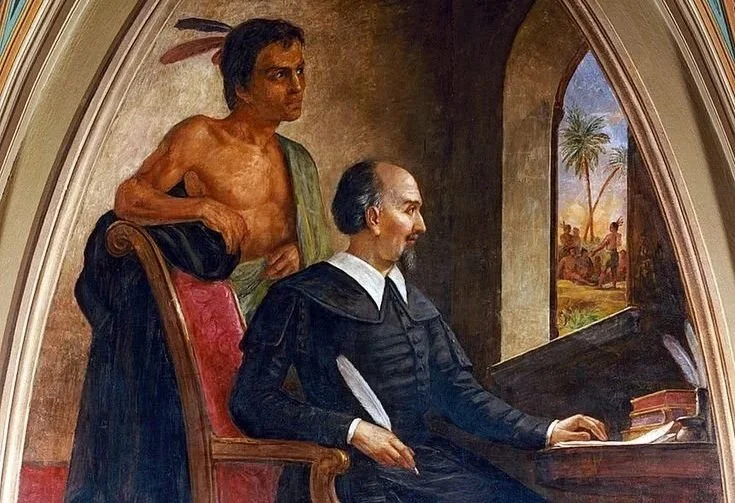
Bartolomé de las Casas (1484–1566), Dominican friar and Bishop of Chiapas. A fierce defender of the indigenous peoples of the Americas, Las Casas condemned enslavement, coercion and colonial abuses, arguing that native peoples possessed human dignity, rationality and rights that Christians were bound to respect. His witness is an important reminder that some of the strongest moral criticism of European misconduct came from within Catholic civilisation itself.
Missionary activity is another area where legitimate criticism and simplistic historical narratives can easily become entangled.
Catholic missionaries often entered territories also occupied by European colonial powers. That overlap created genuine dangers.
Some missionaries became too closely identified with imperial structures.
Some imported European customs as though those customs were themselves articles of faith.
Some participated in unjust systems.
Others failed to challenge abuses strongly enough.
These things should be admitted. But missionary history cannot be reduced to colonialism.
Missionaries also
learned indigenous languages,
produced grammars and dictionaries,
founded schools,
established medical institutions,
defended local peoples,
documented cultures,
and sometimes confronted colonial authorities.
Bartolomé de las Casas is perhaps the most famous example of a Catholic cleric who denounced brutal treatment of indigenous peoples in the Spanish Americas. The wider Spanish theological tradition also produced important debates about conquest, natural rights, political legitimacy, and the dignity of non-European peoples.
None of this means missionaries were always heroic. It means the category “missionary” cannot simply be replaced with “imperial agent.”
The Catholic missionary ideal is theological before it is political.
Christ commanded the Gospel to be preached to all nations.
At its best, the missionary therefore did not travel to make foreigners culturally European.
He travelled because he believed Jesus Christ was Lord and that every human being, whatever his tribe, nation, language, or social status, possessed an immortal soul.
A missionary who confused Christianity with his own national culture could betray that ideal. But the betrayal does not define the ideal.
Women and the Charge of Catholic Oppression
Few modern objections are more culturally powerful than the claim that Catholicism is inherently hostile to women. The male priesthood is often presented as decisive evidence.
But the Catholic argument begins somewhere different.
Catholicism teaches that
man and woman share the same human nature and fundamental dignity;
both are created by God in His image;
both possess immortal souls;
Christ died for and redeemed both;
both are capable of receiving sanctifying grace and the supernatural life of God;
and both are called to the same ultimate destiny: eternal life with God in Heaven.
A woman is not less capable of holiness because she is not a priest. Indeed, the most exalted purely human person in Catholic belief is not a pope, bishop, priest, king, theologian, or male saint. It is the Blessed Virgin Mary.
Catholic theology therefore cannot coherently be reduced to the proposition that men possess greater spiritual worth.
The disagreement concerns something else: whether equality of dignity requires identity of function. Modern societies often assume that if a role is reserved to one sex, the other must necessarily be demeaned. Catholicism rejects that premise.
Its understanding of the priesthood is tied to sacrament, representation, fatherhood, the Incarnation, and the nuptial relationship between Christ and His Church.
This must first be understood.
Catholic Women Were Not Historical Spectators
The actual history of Catholic women also complicates simplistic claims of universal powerlessness.
Abbesses could govern large religious houses, supervise property, oversee schools and hospitals, and exercise considerable influence. Women founded religious communities, hospitals, schools, charitable institutions, and missionary works.
St Catherine of Siena could admonish popes and correspond with rulers.
St Teresa of Ávila became one of Christianity’s great spiritual writers and reformers.
St Clare governed a religious community shaped by radical poverty.
Religious women educated generations of children and cared for the sick in circumstances many modern people would find almost intolerable.
Countless Catholic mothers shaped families and communities without becoming famous.
None of this proves every Catholic society treated every woman justly. Christian societies contain sinners too. It simply demonstrates that the statement “Catholicism has no meaningful place for women because women cannot be priests” is historically and theologically inadequate.
The deeper Catholic questions concern vocation, sex, motherhood, fatherhood, sacrament, and the nature of priesthood.
Catholic Sexual Morality Is Strict Because Catholicism Thinks Sex Matters
Modern sexual culture and traditional Catholic morality begin from very different assumptions.
In much contemporary Western thought, adult consent functions as the principal moral test. If competent adults freely choose an act, there is often assumed to be little left to discuss.
Catholicism asks more questions.
What is the body?
What is sex for?
What is marriage?
Why is sexual union naturally connected with both the unity of husband and wife and the generation of children?
What duties arise when an act can create a new human being?
How do sexual habits shape character, fidelity, family, and society?
What is the relationship between bodily acts and the soul?
Catholicism therefore condemns forms of sexual behaviour modern culture increasingly accepts.
But its underlying view is not that sex is filthy. That would sit strangely beside Christianity’s teaching that God became flesh.
Marriage is holy.
Husband and wife become one flesh.
Children are blessings.
The body can be a temple of the Holy Ghost.
The body itself will rise at the resurrection.
Catholicism does not treat sexuality as unimportant. It treats sexuality as too important to be reduced to recreation.
One may reject the conclusions. But the argument should at least be represented accurately.
Catholic Guilt and the Difference Between Repentance and Psychological Misery
The phrase “Catholic guilt” is often used as though Catholicism were designed to keep people permanently ashamed.
There have unquestionably been distorted presentations of Catholic morality.
Scrupulosity is real.
Bad catechesis is real.
Harsh parents, teachers, priests, or confessors have existed.
A badly formed conscience can turn trivial matters into terrifying burdens.
But Catholic theology does not treat perpetual self-loathing as a virtue. It treats sin seriously because it treats human freedom seriously.
If a person knowingly commits grave evil, the solution is not to pretend evil is meaningless merely in order to protect self-esteem.
Yet Catholicism equally rejects despair. The sacrament of Penance is built around the astonishing possibility that a man can tell the truth about his wrongdoing and still be forgiven.
The Catholic movement is therefore not from sin to endless shame.
It is from sin to recognition,
from recognition to contrition,
from contrition to confession,
from confession to absolution,
and from absolution toward amendment of life.
Catholicism does not say that sin does not matter. Nor does it say that you can never escape what you have done. It says:
Christ died for sinners. Repent and return.
That is a theology of mercy, not despair.
Is Catholicism Merely Medieval Superstition?
To a thoroughly secular person, Catholic devotional life can appear strange. Incense, relics, rosaries, holy water, medals, candles, pilgrimages, sacred vestments, church bells, kneeling, fasting, processions, and Latin can look like remnants of a world modernity has outgrown.
But the disagreement goes deeper than aesthetics. Secular materialism begins by assuming that only the material order is real. Catholicism denies that assumption.
More specifically, Christianity is an incarnational religion:
“And the Word was made flesh.” — John 1:14
God did not save mankind by declaring matter evil. The Son of God assumed a real human body.
Christianity therefore sees material creation as capable of serving spiritual realities.
Water is used in Baptism.
Oil is used in anointing.
Bread and wine occupy the centre of Eucharistic worship.
Human bodies kneel, fast, process, sing, and make the Sign of the Cross.
Incense rises.
Bells ring.
Catholics do not worship holy water. They do not worship statues. They do not worship relics. They believe matter can point beyond itself because matter comes from God.
Someone who has already concluded that the supernatural does not exist will naturally find such practices strange. But that philosophical assumption is precisely part of what Christianity challenges.
Hypocrisy Does Not Disprove the Moral Standard
Some Catholics are hypocrites. Christ Himself condemned hypocrisy ferociously. Yet the accusation contains an interesting implication.
Why does a greedy priest scandalise us? Because Catholicism condemns greed.
Why does an adulterous Catholic shock us? Because Catholicism commands fidelity.
Why does a cruel Catholic contradict his religion? Because Christ commands charity.
Why does a corrupt bishop provoke outrage? Because episcopal office is supposed to be exercised in holiness and justice.
The hypocrite is recognised as a hypocrite precisely because his conduct contradicts the standard he professes.
If Catholicism taught greed, the greedy priest would not be betraying Catholicism.
If it approved adultery, the adulterous Catholic would not be contradicting his creed.
Hypocrisy therefore proves that a man failed his standard. It does not, by itself, prove the standard false.
Catholicism Is Not a Machine for Excusing Sin
The authentic Catholic response to wrongdoing is not “everyone does it.”
Nor is it “he is important, so protect him.”
Nor should it ever be “the reputation of the institution matters more than the victim or the truth.”
Catholicism teaches that
sin is real,
judgment is real,
Hell is real,
repentance is necessary,
grace is real,
forgiveness is possible,
and sanctity is possible.
Every priest will die. Every bishop will die. Every pope will die. Every ruler will die. Every politician will die. Every billionaire will die. Every beggar will die. Before Christ, earthly rank does not purchase innocence.
This is one of Catholic morality’s most severe and most egalitarian implications.
Nobody can bribe God with status.
What Happens When Catholicism Is Actually Lived?
A striking amount of discussion focuses on Catholics who did not live Catholicism.
It is worth asking the reverse question. What happens when someone does?
A wealthy young man may give away his possessions. A brilliant intellect may devote itself to truth rather than vanity. A priest may spend decades hearing confessions, visiting the sick, teaching children, carrying the sacraments to the dying, and burying the dead. A religious woman may spend her life caring for children who cannot repay her. A missionary may cross oceans knowing that he may never see his family again.
A husband may remain faithful when infidelity would be easier. A mother may sacrifice almost invisibly for her children. A victim may forgive someone who does not deserve forgiveness. A ruler may restrain his power because he knows there is a moral law above him. A dying person may receive the sacraments peacefully. A martyr may pray for those killing him.
These lives do not prove Catholic doctrine true merely by existing. But neither can they be excluded when asking what Catholicism produces when Catholicism is actually believed.
The saints are not accidental decorations around the edges of Catholic history. They are what the Church says human beings are supposed to become.
What Catholicism Has Given the World
Once the lens widens from individuals to civilisation, the historical picture becomes still larger.
For centuries, church bells called communities to prayer, monasteries offered hospitality to travellers and preserved books, hospitals received the sick, hospices accompanied the dying, religious communities cared for abandoned children, schools educated generations, and universities debated philosophy, law, medicine, natural science, and theology.
The same civilisation produced philosophers who reasoned about truth, theologians who contemplated revelation, physicians who cared for the sick, missionaries who travelled into unfamiliar lands, craftsmen who raised churches and monasteries, artists who rendered biblical scenes in stone, glass, and paint, and musicians who created sacred works still capable of lifting the heart centuries later.
The confessor told the sinner that failure need not be his final identity.
The preacher reminded the king that kings would answer to God.
Catholicism never created paradise on earth. It never promised to.
But the civilisation it helped shape possessed a supernatural horizon. The poor were not merely economically unsuccessful, the sick were not useless, the orphan was not disposable, the ruler was not divine, and death was not annihilation. Sin could be forgiven, truth existed independently of political convenience, beauty could point beyond itself, and holiness was possible.
History had a centre: Jesus Christ.
Yet Civilisation Was Never the Final Point
Catholicism cannot be proved true by counting hospitals. Atheists can build hospitals. Non-Catholics can create universities. Secular governments can feed the poor.
Catholicism’s ultimate claim is supernatural.
The hospital matters because the sick person possesses an immortal soul.
The university matters because the human intellect is ordered toward truth.
Sacred art matters because created beauty can lead the mind toward the Creator.
Charity matters because Christ identifies Himself with the least of His brethren.
The civilisation is a fruit. It is not the final end.
Christ did not establish His Church merely to make earthly society kinder, more educated, or aesthetically richer. He came to save men from sin, reconcile them to God, sanctify them by grace, and lead them to eternal life.
If Catholicism forgets that supernatural end, even its charitable works can become merely humanitarian.
The Church is not an NGO with vestments. Her final purpose is Heaven.
What We Can and Cannot Conclude
What, then, does the evidence actually permit us to say?
It certainly permits us to say that Catholics have committed grave sins. Clergy have sometimes committed terrible crimes. Catholic rulers have acted unjustly. Some popes have lived scandalously. Missionaries and institutions have sometimes failed the people they were meant to serve.
Those facts should be acknowledged.
It is equally clear that popular accounts of Catholic history are sometimes exaggerated, decontextualised, or simply wrong. The Crusades, the Inquisition, Galileo, Bible translation, missionary history, Catholic wealth, the role of women, and the relationship between Christianity and science are all more complicated than the stereotypes suggest.
Scripture itself demonstrates that access to religious truth and sacred office does not eliminate fallen human freedom. Christ distinguished Moses’ chair from the hypocrisy of the men occupying it. Caiaphas could be corrupt yet still high priest. Saul could behave wickedly while David still recognised his anointed status. Hophni and Phinehas could disgrace the priesthood without proving priesthood false. Judas could betray Christ without making Christ false. Peter could deny Christ without nullifying Christ’s promise. Ananias and Sapphira could lie to the Holy Ghost without disproving the apostolic Church.
The moral failure of a Catholic therefore does not automatically prove that Catholic teaching is false.
At the same time, this argument cannot be used to excuse everything or to evade a doctrinal crisis.
If an individual Catholic commits adultery, he has violated Catholic teaching. If someone claiming authority to teach for the Church promulgates a proposition incompatible with the Faith already taught, the issue changes fundamentally. We are no longer discussing merely a sinner failing to live Catholicism.
We are dealing with questions of doctrine, indefectibility, membership, authority, office, jurisdiction, and the identity of the Church herself.
That is why the later parts of this FAQ examine Vatican II and the postconciliar crisis separately and in depth.
Bad Catholics are one problem. A purported contradiction in Catholic teaching is another. They must not be confused.
Look at the Whole Picture Before You Reject Catholicism
Perhaps the word Catholicism immediately makes you think of Crusades, Inquisition, corrupt popes, Galileo, abusive priests, guilt, money, intolerance, power, and superstition.
If so, you have seen part of the picture.
Now look at the rest.
Look at the martyrs who refused to deny Christ under torture. Look at the monks who prayed, worked, copied books, and educated generations. Look at the missionaries who crossed oceans and mountain ranges knowing they might never see home again. Look at the hospitals, orphanages, schools, universities, philosophical traditions, Catholic scientists, music, sculpture, and architecture. Look at women religious who cared for the sick when sickness was dangerous and unpleasant. Look at priests who spent lives bringing the sacraments to scattered communities. Look at Catholic parents who quietly gave their lives to raising children. Look at men and women who entered plague houses rather than flee them, and at people who forgave enemies who did not deserve forgiveness.
And above all, look at the saints.
They are the strongest answer to the idea that Catholicism can be understood by its scandals alone.
The Greatest Catholic Masterpiece Is a Saint
Notre-Dame is magnificent. Chartres is magnificent. The great Roman basilicas are magnificent. Catholic civilisation produced extraordinary sculpture, mosaics, manuscripts, painting, architecture, poetry, and sacred music.
Yet none of these is its greatest masterpiece.
The greatest Catholic masterpiece is a saint. That is a human being transformed by grace: pride becoming humility, lust becoming purity, greed becoming generosity, anger becoming meekness, cowardice becoming courage, hatred becoming forgiveness, selfishness becoming sacrifice.
The sinner repents, receives grace, and becomes holy. That is what Catholicism ultimately exists to accomplish.
Judas Was Not the End of the Story
Judas stood beside Jesus Christ and betrayed Him. Peter denied Him. Caiaphas plotted against Him. Ananias and Sapphira lied to the Holy Ghost. Simon tried to purchase spiritual power. The Corinthians scandalised the apostolic Church. Aaron participated in the golden calf. David fell into adultery and grave injustice. Solomon fell despite extraordinary wisdom. Saul became violent and disobedient. The sons of Eli disgraced the priesthood.
Scripture hides none of this. That fact itself is significant.
The Bible is not propaganda about the natural goodness of religious people. It is the story of divine grace offered to fallen humanity.
Some men resist it. Some betray it. Some fall and repent. Some harden their hearts. Some persevere. Some become saints.
And God remains God. Truth remains truth. Christ remains Christ.
Christ, Not Scandal, Is the Centre of Catholicism
The ultimate question is therefore not whether one can find a wicked Catholic somewhere in two thousand years of history.
Of course one can.
You can find Judas among the Twelve.
The real questions are much more important.
Who is Jesus Christ? Did He really rise from the dead? Did He establish a Church? Did He give that Church authority? Did He command His Apostles to teach all nations? Did He give Peter the keys? Did He establish sacraments? Did He promise that the gates of Hell would not prevail against His Church? What did the earliest Christians believe? Can the Church they belonged to still be identified?
Those are the questions upon which Catholicism ultimately stands or falls.
They cannot be settled by pointing to Alexander VI.
They cannot be settled by pointing to Galileo.
They cannot be settled by pointing to a criminal priest.
They cannot be settled by pointing to Judas.
Conclusion — Look Again
Catholicism has existed through nearly two thousand years of human history. During those centuries, fallen human beings have brought into its visible structures everything fallen human beings are capable of bringing: ambition, cowardice, greed, lust, pride, vanity, dishonesty, hypocrisy, and betrayal.
Sometimes the scandal has been terrible. Call it terrible. Do not sanitise it.
Christ Himself called religious hypocrites “whited sepulchres” and warned them about Hell. Catholicism does not require us to pretend evil is good merely because the sinner wore religious clothing.
But Christ also taught us not to confuse the wickedness of men with the truth they betray.
Judas betrayed Him. Peter denied Him. Caiaphas conspired against Him. Aaron failed. David committed terrible sins. Saul became wicked. Ananias and Sapphira lied to the Holy Ghost.
None of this made God false.
And none of this is the whole story.
Catholicism also produced men who gave everything away and women who gave entire lives to strangers. It produced missionaries who crossed oceans, martyrs who forgave their executioners, scholars who spent lifetimes seeking truth, and craftsmen who gave their finest work to stone, timber, glass, paint, architecture, and music because God deserved their best.
It produced hospitals for the sick, hospices for the dying, homes for abandoned children, schools for the poor, universities devoted to learning, religious orders devoted to charity, and confessionals in which generations of sinners heard that failure need not have the final word.
It shaped civilisation by insisting that power is not morality, that rulers answer to a higher King, that the poor possess dignity, that the sick remain human beings of infinite worth, that truth is worth seeking, and that beauty can raise the heart above material existence.
And it produced saints. So many saints.
Catholic civilisation has given the world beauty because beauty points beyond itself. It has pursued truth because God is Truth. It has tended the poor because Christ identified Himself with them. It has cared for the sick because every human being bears the image of God. It has educated because the human mind was made for truth. It has sent missionaries because Christ said:
“Going therefore, teach ye all nations.” — Matthew 28:19
It has called sinners to repentance because sin is real. It has proclaimed mercy because Calvary is real. It has preached conversion because eternity is real.
At its best, everything Catholic points beyond itself. The cathedral points upward, the crucifix points to Calvary, the altar points to sacrifice, the hospital points to charity, the university points to truth, the confessional points to mercy, the missionary points to conversion, the martyr points to eternity, and the saint points to God.
Catholicism’s claim is therefore far greater than saying that Catholics have done many good things.
Its claim is this:
Jesus Christ founded a Church to preserve and teach His truth, administer His sacraments, convert sinners, make saints, and lead souls to eternal life.
Human beings within that Church can betray Him. Judas already proved that. But Judas does not make Christ false.
The sins of men do not turn truth into error. The failure of those who resist grace does not erase what grace accomplishes in those who surrender to it.
Scripture presents Christ as the Bridegroom and His Church as His Bride:
“Christ also loved the church, and delivered himself up for it: That he might sanctify it...”
— Ephesians 5:25–26
That is where Catholic history ultimately ends.
Not with Judas.
Not with corrupt popes.
Not with Galileo.
Not with political revolutions.
Not with scandals.
Not with the rise and fall of empires.
But with Jesus Christ.
Christ will return for His Bride.
And so before rejecting Catholicism because of what sinners have done, ask a more fundamental question:
What if, beneath the scandals, caricatures, human failures, misunderstandings, and accumulated prejudices, this really is the Church Jesus Christ founded?
If there is even a serious possibility that the answer is yes, Catholicism deserves more than dismissal.
It deserves investigation.
And if Catholicism is true, it demands far more than intellectual curiosity.
It demands a response.